Oldest Cave Art? 67,800-Year-Old Hand Stencil Discovered in Sulawesi
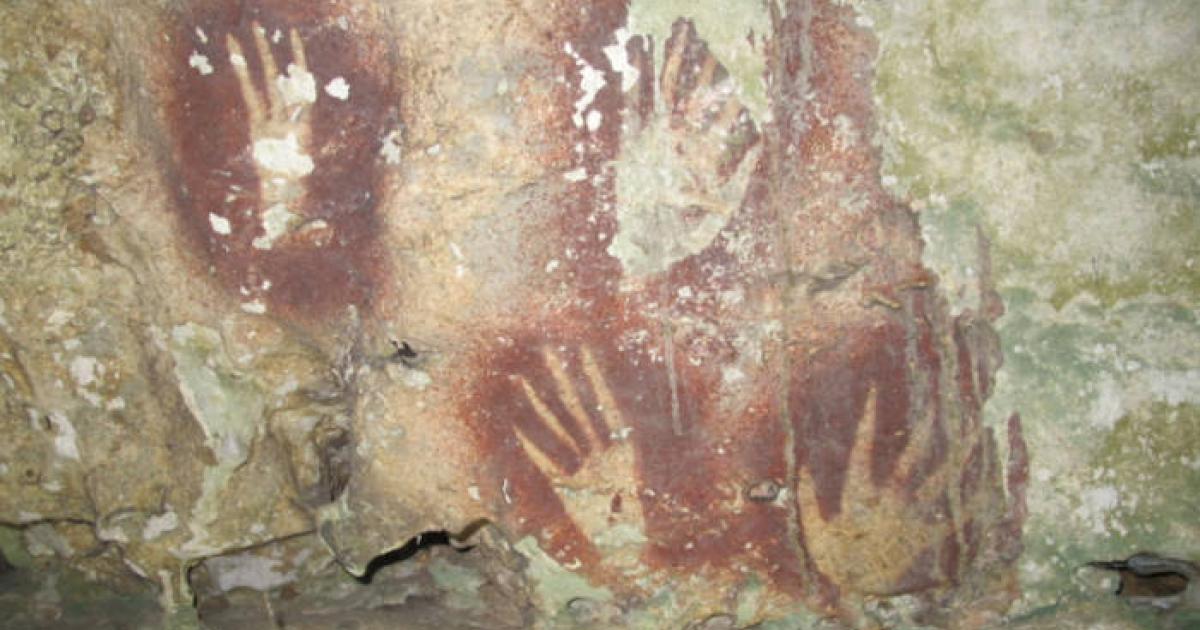
A faint hand stencil concealed on a cave wall in Indonesia has been dated to at least 67,800 years ago, potentially making it the oldest known example of cave art yet identified. The discovery comes from a limestone cave called Liang Metanduno on Muna Island, in southeastern Sulawesi. Researchers say the image was created by spraying pigment around a hand pressed against the rock, leaving behind a distinctive “negative” outline.
The new age estimate, reported in the journal Nature, is based on dating mineral crusts that formed on top of the artwork. Because these deposits developed after the stencil was made, the handprint itself must be at least that old—and could be older. If confirmed, the finding slightly surpasses previously reported minimum ages for some of the world’s earliest cave paintings, forcing researchers to rethink when symbolic behavior first emerged.

The Cave, the Hand, and the “Claw-Like” Fingertips
What makes the Liang Metanduno hand stencil particularly intriguing is its unusual shape. Researchers note that several fingertips appear intentionally narrowed or pointed, giving the hand a claw-like appearance. Similar features have been observed at other Sulawesi sites, suggesting this was not an isolated accident but part of a broader local artistic tradition.
Coverage of the discovery by The Guardian points out that some scholars question whether the pointed fingertips were deliberately shaped or could instead result from slight movement during the application of pigment. Regardless, even a simple hand stencil plays an important role in debates over when humans first began leaving symbolic marks—and which human groups were responsible.

How Scientists Dated the Stencil
Dating cave art is notoriously challenging because pigments often lack organic material suitable for radiocarbon analysis. In this case, the research team dated calcite layers that had formed over the pigment using uranium-series methods, providing a reliable minimum age for the stencil beneath.
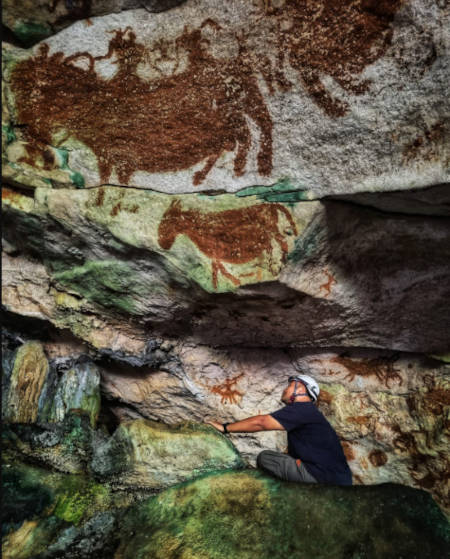
According to reporting by the Associated Press, the study focused on tan-colored hand stencils created by blowing pigment over hands placed on cave walls. Other images found in the wider region—such as animals and human-like figures—proved to be far younger, with some dating to around 4,000 years ago. This contrast suggests that people returned to these caves repeatedly over tens of thousands of years, layering new meanings onto ancient surfaces.