Early Humans Survived Britain’s Harshest Ice Age 440,000 Years Ago

A major archaeological discovery in southern England is reshaping scientists’ understanding of how early humans survived extreme climates. Excavations at Old Park in Canterbury have uncovered evidence suggesting that Homo heidelbergensis managed to live in Britain during one of the region’s most severe ice ages around 440,000 years ago.
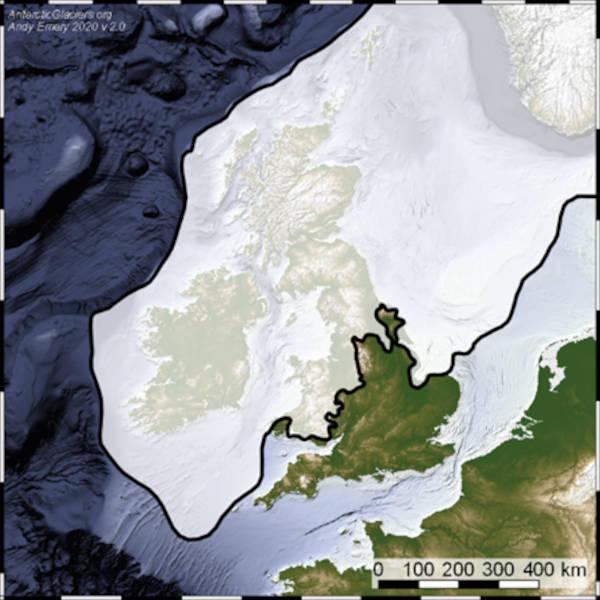
The research, published in Nature Ecology & Evolution by archaeologists from the University of Cambridge, challenges the long-standing belief that early humans abandoned Britain during the harshest phases of the Ice Age. Instead, the new evidence suggests that these ancient populations adapted and survived even during the extreme cold of the Anglian glaciation.
Evidence from the River Stour Valley
The excavation site lies along the banks of the River Stour in Kent. Archaeologists have recovered thousands of Paleolithic stone tools attributed to Homo heidelbergensis, a species widely considered an ancestor of Neanderthals.
Although stone tools had been discovered in the area since the 1920s, new excavations beginning in 2020 revealed sediment layers much older than previously thought. According to researchers, the deepest deposits contain artifacts dating between roughly 712,000 and 621,000 years ago—some of the earliest evidence of human presence in Britain.
However, the most surprising finds came from layers associated with the Anglian glaciation around 440,000 years ago. Within these layers, archaeologists discovered sharp flint tools preserved between river gravels and sands.

Tools Made During the Ice Age
The condition of the artifacts provides important clues about their age. The flint tools have sharp edges and show little sign of erosion, indicating they were likely made at the site and quickly buried. If the tools had been created earlier and later moved by glacial processes, they would show clear signs of damage or abrasion.
This suggests that early humans were actively producing tools at the site during the glacial period itself.
For researchers, this represents strong evidence that human groups were present in Britain during a time when massive ice sheets covered much of northern Europe—conditions once thought too extreme for human survival.
A New View of Early Human Adaptability
The discovery highlights the remarkable adaptability of Homo heidelbergensis. Surviving such harsh climates would have required effective toolmaking, knowledge of local environments, and strategies for securing food and shelter.
Scientists now believe these early humans possessed more advanced survival skills than previously assumed. With brain sizes approaching those of modern humans, Homo heidelbergensis likely developed sophisticated hunting strategies, social cooperation, and possibly shelters to endure severe environmental conditions.
Rethinking Human History in Europe
The findings also reshape our understanding of early human settlement in northern Europe. Instead of abandoning Britain during cold periods and returning during warmer climates, early populations may have remained in the region much longer than once believed.
River valleys such as the Stour may have served as important refuges, offering water, shelter from harsh winds, and access to animals and plant resources.
By combining detailed excavation, sediment analysis, and modern dating techniques, the research team has produced one of the clearest records yet of early human activity in Ice Age Britain.
A Window into Human Resilience
The discoveries at Old Park provide a rare glimpse into how ancient human populations adapted to dramatic climate shifts. Even with relatively simple technology, these early humans appear to have endured environmental challenges that would have been extremely difficult to survive.
As excavations continue, archaeologists expect the site to reveal even more information about life in Britain during the Ice Age—offering new insights into the resilience, ingenuity, and adaptability of some of humanity’s earliest ancestors.