Barney – The Brave Little Heart Who Survived Life-Saving Surgery and Gave His Family New Hope
A heart condition discovered before birth changed everything
For Emma and Perry, the 20-week pregnancy scan was supposed to be a joyful moment. They were excited to learn the gender of their baby and celebrate the life growing inside Emma. Instead, the scan revealed something unexpected that would change their lives forever.
Doctors discovered that their unborn baby boy, Barney, had coarctation of the aorta, a serious congenital heart defect where part of the main artery carrying blood from the heart to the body is dangerously narrowed. This condition can severely restrict blood flow and can become life-threatening without immediate treatment.
The sonographer quickly referred Emma to specialist cardiologists in London. What was meant to be a routine checkup suddenly turned into the beginning of a long journey filled with uncertainty, fear, and careful planning.
Preparing for a life-saving surgery
Because of COVID-19 restrictions at the time, Emma had to attend many hospital appointments alone. During one of these visits, a cardiologist confirmed that Barney’s heart had not developed normally and that he would need open-heart surgery within the first week of life.
The news was overwhelming. For the next 19 weeks of pregnancy, Emma underwent frequent scans, blood tests, and monitoring appointments to ensure Barney remained stable until delivery.
Doctors carefully planned every detail of the birth and the immediate care Barney would need afterward. The goal was simple but critical: give him the best possible chance to survive.
A bittersweet birth during the pandemic
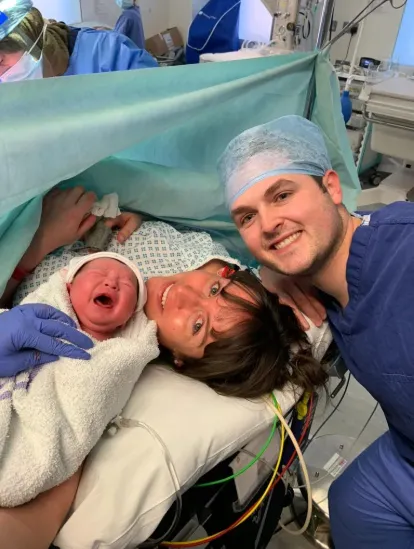
Barney was born via planned cesarean section at 39 weeks on January 25, 2021.
The moment should have been filled with celebration, but the circumstances were bittersweet. Because of strict hospital protocols during the pandemic, Emma and Perry were only able to see their newborn son briefly before he was taken to intensive care for specialized treatment.
The Children’s Acute Transport Service (CATS) team arranged for a few precious minutes at Emma’s bedside so she could see Barney before he was transferred for further care.
Those moments were short, but they meant everything to his parents.
The longest day of a mother’s life
Barney’s life-saving open-heart surgery was scheduled for February 1, when he was just seven days old.
Due to COVID restrictions, Emma had to walk Barney down to the operating theatre alone. She knew that the next time Perry would see their son might not be until he was discharged from the hospital.
The emotional weight of that moment was indescribable.
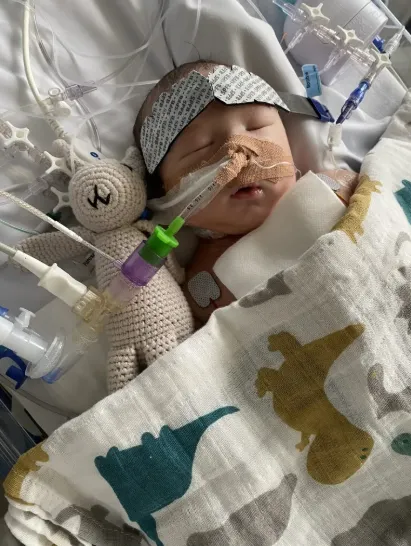
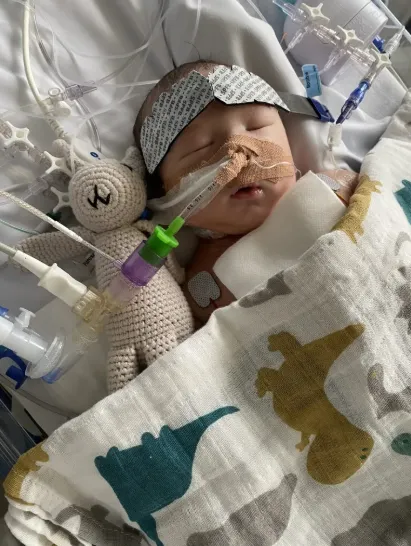
Barney remained in surgery for seven hours. When he finally came out of the operating room, he was connected to ventilators and life-support machines, and his chest was still open to allow doctors to monitor his heart.
For Emma, seeing her tiny newborn in such a fragile condition was heartbreaking, even though nurses reassured her that the procedure had gone well and that Barney was receiving the best care possible.
The challenging days in intensive care
The next four days in the intensive care unit were among the most difficult Emma had ever experienced.
She was recovering from surgery herself while also trying to support her critically ill baby. Every day brought new procedures, new information, and new emotions.
But slowly, Barney began reaching important milestones.
Doctors were able to close his chest.
He was gradually taken off the ventilator.
He began receiving nutrition through a nasogastric (NG) feeding tube.
Each small step forward gave his parents hope that their little fighter was stronger than anyone had imagined.
Adjusting to life on the cardiac ward
Eventually, Barney was stable enough to move to the cardiac ward.
Because overnight care rules allowed only one parent at a time, Emma stayed with Barney while Perry remained in nearby accommodation.
The family developed a new routine: Emma caring for Barney around the clock while Perry supported them in every way possible from outside the ward.
Building a bond with Barney during this time was both beautiful and challenging. His fragile condition meant that physical contact had to be limited, but Emma made every moment count.

Feeding challenges and emotional struggles
One of the biggest difficulties during Barney’s recovery was feeding.
He developed chylothorax, a condition that causes lymphatic fluid to leak into the chest. On top of that, he also struggled with allergies, reflux, and a tongue-tie.
For Emma, feeding her baby became an emotional challenge. Like many mothers, she wanted to nourish and comfort her child, but his complex medical needs made that process incredibly difficult.
Fortunately, support from the hospital’s family liaison team helped her cope. They offered emotional guidance, reassurance, and a reminder that she was not alone on this journey.
Finally going home
After two long weeks on the cardiac ward, Barney’s health began to show clear improvement.
Doctors were encouraged by his progress, and by the time he was just under four weeks old, he was finally allowed to go home.
For Emma and Perry, the moment of leaving the hospital together as a family was unforgettable. After weeks of fear, uncertainty, and hospital routines, they were finally able to bring their son home.
Living with congenital heart disease
Although Barney’s condition required ongoing care, his survival was a powerful reminder of how far he had come.
He continues to receive regular follow-up care at The Royal Brompton Hospital and at his local hospital, ensuring doctors can monitor his heart as he grows.
For Emma and Perry, the experience has changed their perspective on life. They have become more aware of the challenges faced by families dealing with congenital heart disease (CHD) and now appreciate every moment with their son.
A story of courage and resilience
Barney’s journey highlights the importance of early diagnosis, specialized medical care, and emotional support for families facing congenital heart defects.
His survival was made possible by the expertise of doctors, the dedication of medical teams, and the unwavering love of his parents.
Even during a global pandemic, when hospital restrictions made everything more difficult, Barney proved that courage and determination can overcome incredible obstacles.
Today, his story stands as a symbol of hope for many other families whose children are born with heart conditions.
Barney may be small, but his brave heart has already shown the world just how powerful resilience, love, and hope can be.