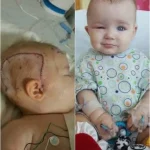
Matilda’s Miraculous Heart: How a Baby Overcame Supraventricular Tachycardia Before Her First Birthday
A routine check that revealed a dangerous condition
What began as a simple prenatal check quickly turned into a life-changing moment for Crissy and her family.
Late in her pregnancy, doctors were performing a routine assessment to check whether the baby was in a breech position. During the examination, medical staff noticed something unusual — the unborn baby’s heart was beating extremely fast, more than 240 beats per minute.
For comparison, a normal fetal heart rate typically ranges between 120 and 160 beats per minute.
The discovery immediately raised alarm.
Further tests revealed that the baby, later named Matilda, was suffering from Supraventricular Tachycardia (SVT), a serious heart rhythm disorder that can cause the heart to beat dangerously fast.
Without treatment, the condition can place severe strain on the heart and may become life-threatening for an unborn child.
Specialist care begins before birth
Following the diagnosis, Crissy was referred to Evelina London, where Matilda’s case was handled by specialists in fetal and pediatric cardiology.
Detailed examinations showed that Matilda’s heart rhythm problems were complex. Doctors identified multiple irregularities, including:
-
Atrial fibrillation
-
Blocked atrial ectopic beats
-
Coupled ventricular beats
-
Intermittent supraventricular tachycardia (SVT)
Because of these complications, doctors carefully planned every step of the pregnancy and delivery.
The goal was to stabilize Matilda’s heart before birth and ensure that medical teams were ready to intervene immediately after delivery.
For one week, Crissy took medication that passed through the placenta to help slow and stabilize Matilda’s heart rate in the womb.
The treatment helped reduce the risk of further complications as doctors prepared for her birth.
A carefully planned delivery
Just one week before Christmas, Matilda was delivered via planned Caesarean section.
The birth itself went smoothly, providing a moment of relief for her family. But the fight for Matilda’s health had only just begun.
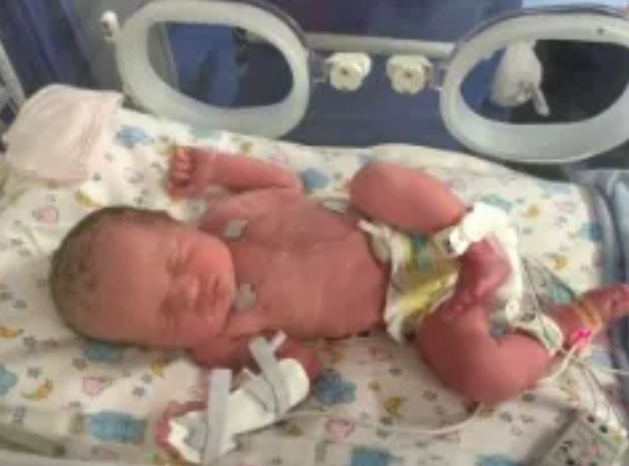
Immediately after delivery, doctors transferred the newborn to the intensive care unit, where she would receive round-the-clock monitoring.
Her tiny body faced constant testing, medication, and medical observation as doctors worked to stabilize her heartbeat.
For the first week of her life, Matilda remained in intensive care.
It was an emotional and exhausting time for her parents, who watched their newborn daughter face challenges that most babies never encounter.
Yet despite her fragile condition, Matilda continued to fight.

A difficult first year
Although Matilda survived the critical early days after birth, her first year of life was far from easy.
She experienced several health challenges, including:
-
Adverse reactions to vaccinations
-
A milk allergy
-
Severe reflux
Each condition required careful management and frequent medical consultations.
At the same time, doctors continued to monitor her heart closely.
Matilda underwent regular electrocardiogram (ECG) tests to track the rhythm and strength of her heart. These tests were sometimes performed while she was crawling or learning to walk, which could be difficult for both the toddler and the medical team.
However, the monitoring was essential to ensure her heart remained stable.
Throughout the process, Matilda’s family and medical team remained committed to supporting her recovery.
A remarkable turnaround
Over time, Matilda’s condition began to improve.
Thanks to consistent medical care, medication, and close monitoring, her supraventricular tachycardia gradually entered remission.
For the first time since her diagnosis, Matilda no longer needed medication to control her heartbeat.
The change marked a major milestone for her family.
Today, Matilda is a healthy and energetic toddler, full of laughter and curiosity. Her once dangerously fast heartbeat has stabilized, allowing her to enjoy the normal activities of childhood.
Each moment of play and joy is a powerful reminder of how far she has come.

Why early detection saved her life
Matilda’s story highlights the critical importance of prenatal monitoring and early diagnosis.
Her condition was detected during a routine scan at 36 weeks of pregnancy. Without that discovery, her heart disorder might not have been identified until after birth, when the situation could have become far more dangerous.
Early detection allowed doctors to:
-
Stabilize her heart rhythm before delivery
-
Plan a controlled birth
-
Provide immediate intensive care after she was born
These steps dramatically improved her chances of survival.
The role of charities supporting heart babies
Matilda’s family also credits organizations that help improve awareness and diagnosis of congenital heart conditions.
One such charity is Tiny Tickers, which provides training for sonographers and resources for families facing similar diagnoses.
By supporting medical education and awareness campaigns, charities like Tiny Tickers help ensure more heart defects are detected before birth, giving babies the best possible chance at survival.
For families navigating congenital heart disease, these organizations also offer emotional support and guidance during an overwhelming time.

A family’s strength through adversity
For Crissy, the journey was filled with emotional challenges.
Watching her daughter face life-threatening episodes, hospital visits, and constant medical monitoring was incredibly difficult. Sleepless nights and anxious days became part of daily life.
Yet through it all, her family remained determined.
They learned how to advocate for Matilda’s care, trust the expertise of doctors, and celebrate the smallest victories.
A steady heartbeat.
A successful medical check-up.
A first smile.
Each moment represented progress and hope.
A story that inspires hope
Today, Matilda’s journey stands as a powerful reminder of the resilience of children and the dedication of families and medical professionals.
Her survival is not only a medical success but also a testament to love, perseverance, and early medical intervention.
Now that her heart beats steadily, Matilda can explore the world like any other child — laughing, playing, and discovering new adventures.
For her family, every step she takes and every giggle she shares is a quiet miracle.
Her story proves that even the smallest hearts can overcome extraordinary challenges when given the right care, support, and chance to fight.