
Incoming Cruise Missile vs Naval ship!
An incoming cruise missile represents one of the most dangerous threats to modern warships—but today’s naval vessels are built with layered, highly automated defenses designed to detect and destroy such threats before impact.
As a cruise missile approaches at low altitude, often skimming just above the sea surface, detection becomes the first critical challenge. Escort ships like the Arleigh Burke-class destroyer use advanced radar integrated into the Aegis Combat System to identify even fast, low-flying targets.
Once detected, the system immediately begins tracking the missile’s speed, altitude, and trajectory. Within seconds, it determines whether the missile is on a collision course and initiates a defensive response.
The first line of defense typically involves long-range interceptors such as the SM-6 Standard Missile, capable of engaging threats far from the ship. If the missile continues inbound, the ship activates additional layers.
Medium-range systems like the RIM-162 ESSM provide a second opportunity to intercept. These missiles are optimized for high-speed, maneuvering targets and can react quickly to changing trajectories.
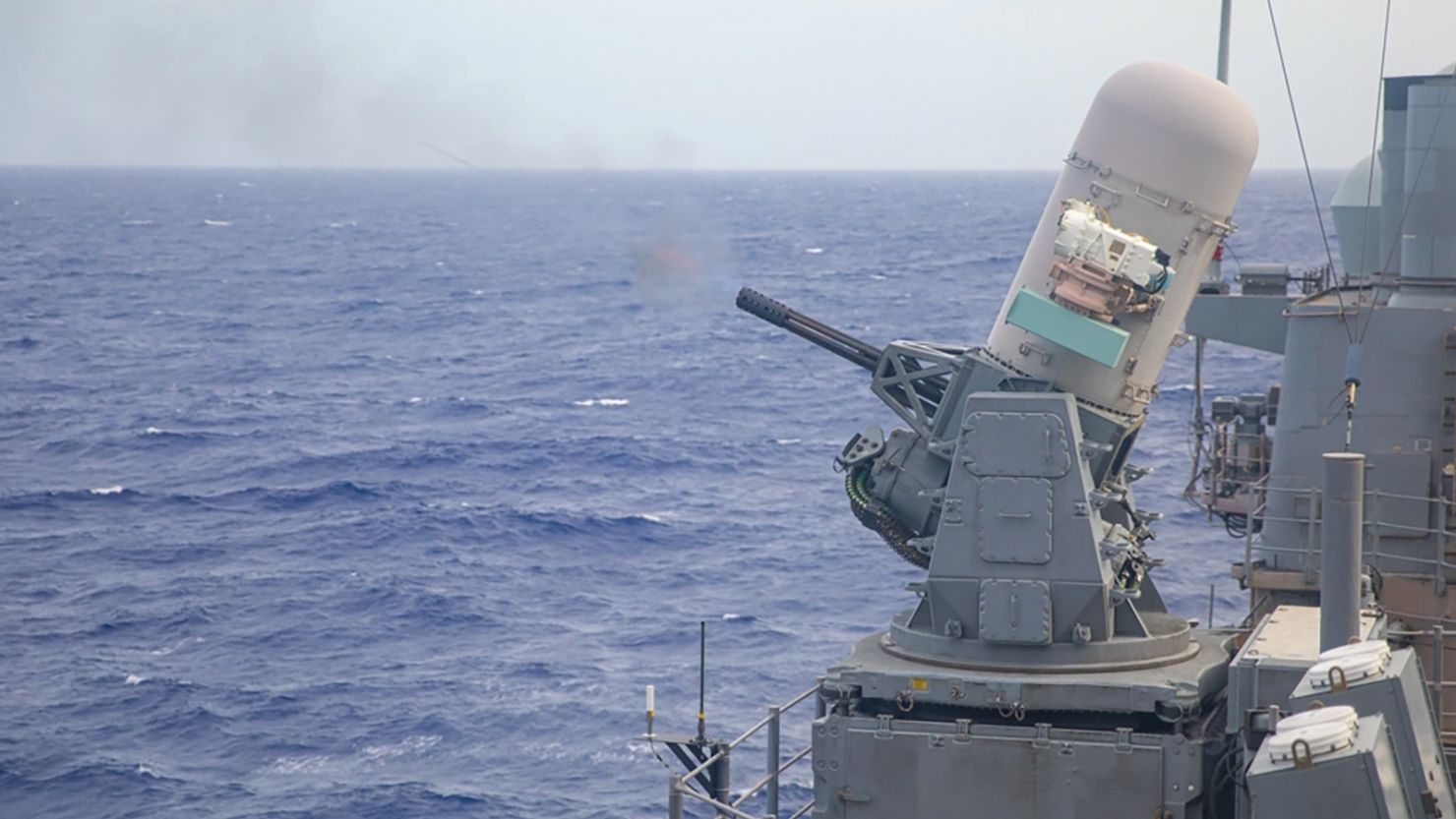
If all else fails, the ship relies on close-in defenses such as the Phalanx CIWS. This rapid-fire system automatically tracks and engages incoming threats at extremely short range, acting as the final protective barrier.