
U.S. Senate Rejects Resolution to Limit Trump’s War Powers
March 26, 2026
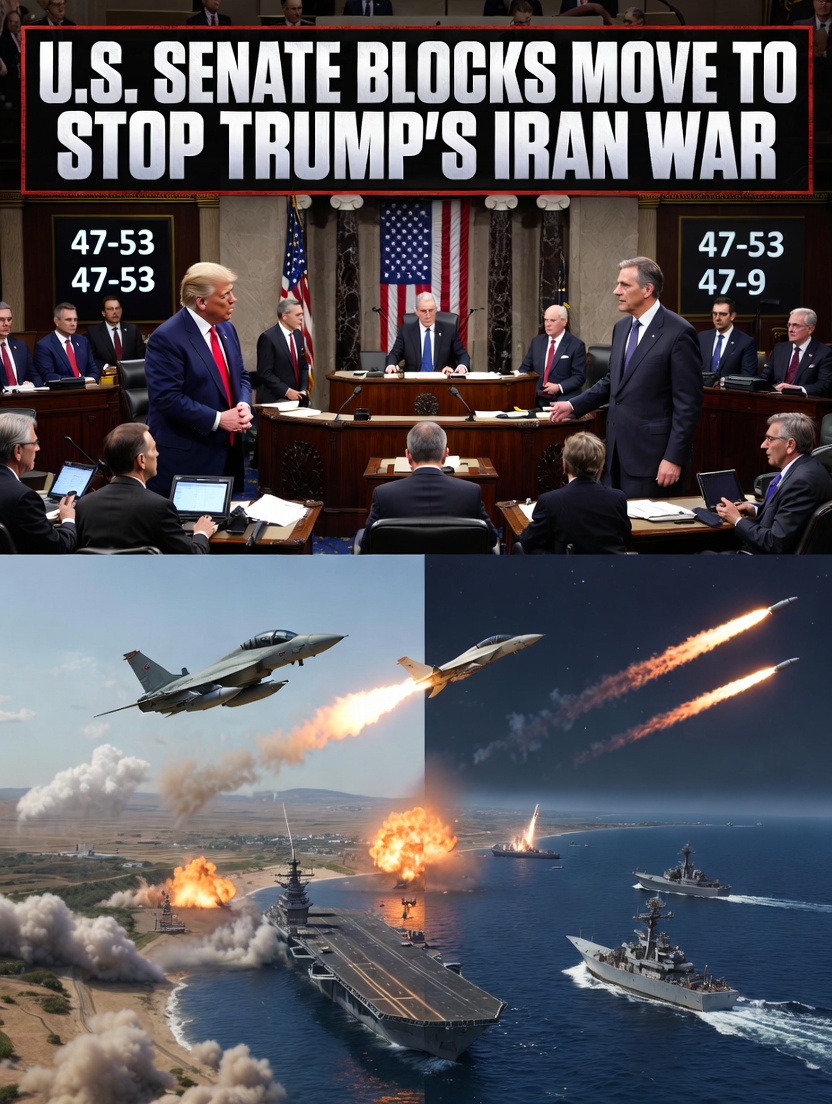
The United States Senate has voted down a resolution that sought to limit President Donald Trump’s authority to conduct military operations against Iran without congressional approval.
The measure failed in a 47–53 vote, falling short of the support needed to pass. The proposal was introduced by Senators Tim Kaine and Rand Paul, who argued that the Constitution grants Congress—not the president—the power to declare war.
Debate Over War Powers Intensifies
Supporters of the resolution warned that unchecked executive military authority could draw the United States into another prolonged and costly conflict. Several lawmakers referenced past engagements such as the Iraq War and the War in Afghanistan as cautionary examples.
“We must not repeat the mistakes of the past,” one supporter stated, emphasizing the human and financial toll of extended military campaigns.

Republican Support for Presidential Authority
Most Republican senators opposed the resolution, backing President Trump’s ability to respond swiftly to emerging threats. They argued that limiting executive power during a time of heightened tensions could weaken national security and hinder military effectiveness.
Proponents of the President’s approach maintain that continued military pressure is necessary to counter Iran’s missile and drone capabilities, which they describe as a growing threat in the region.

Rising Tensions in the Middle East
The vote comes amid escalating conflict in the Middle East, where recent military actions have significantly increased tensions. Analysts warn that the situation remains volatile, with the risk of further escalation looming.
Global leaders are urging restraint, but with divisions deepening in Washington and conflict intensifying abroad, the path forward remains uncertain.