Meet the Gelada, the Grass-Eating Primate of Ethiopia
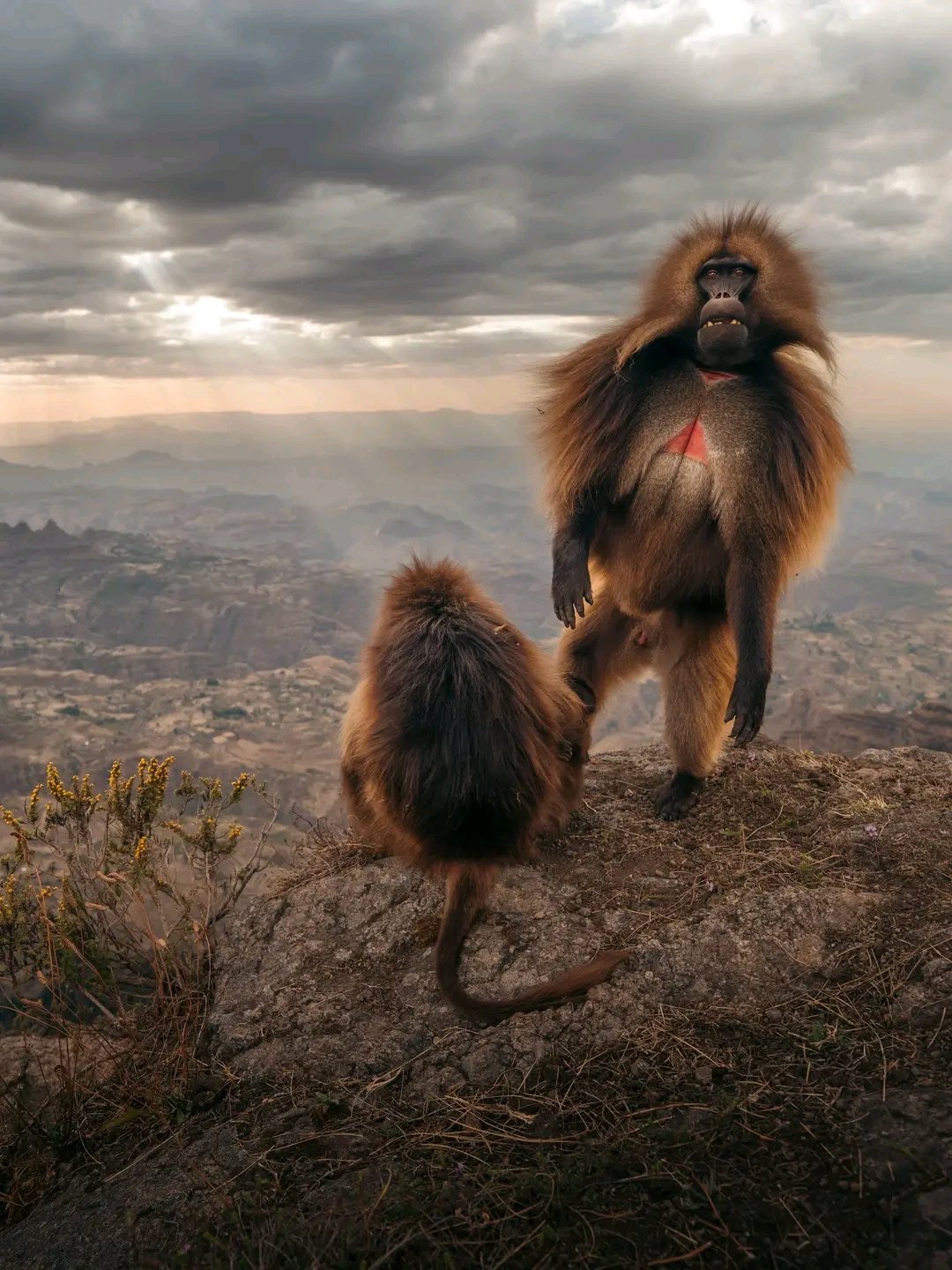
Found only in the high mountains of Ethiopia, the gelada (Theropithecus gelada) is one of the world’s most unique and fascinating primates. Often called the “bleeding-heart monkey” because of the distinctive bright red, hourglass-shaped patch of bare skin on its chest, this remarkable animal stands apart from all other monkeys and apes.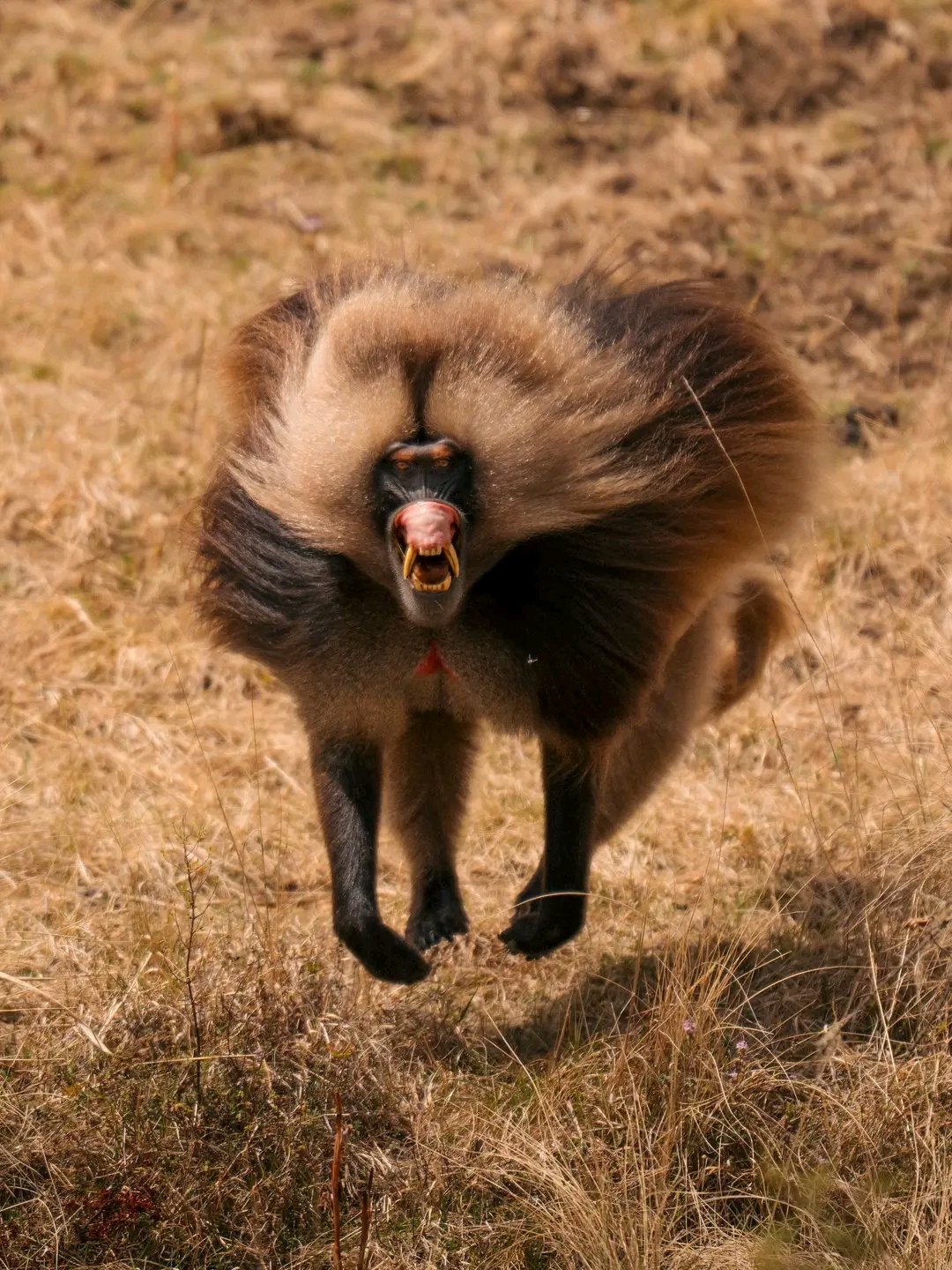
While most primates are fruit-eaters or omnivores, geladas are the only living primate species that are true grazers. Up to 90% of their diet consists of grass. They spend most of their waking hours on the ground, sitting or shuffling across alpine meadows in a distinctive “shuffle gait,” plucking grass blades with their nimble fingers and chewing with specialized teeth adapted for a tough, abrasive vegetarian diet.
Geladas live in some of the highest habitats of any primate — between 1,800 and 4,400 meters (5,900–14,400 feet) above sea level — on the steep escarpments and plateaus of the Ethiopian Highlands. They form massive, complex societies that can include hundreds of individuals, making them one of the most social primates on Earth. These large groups are composed of smaller family units led by a dominant male.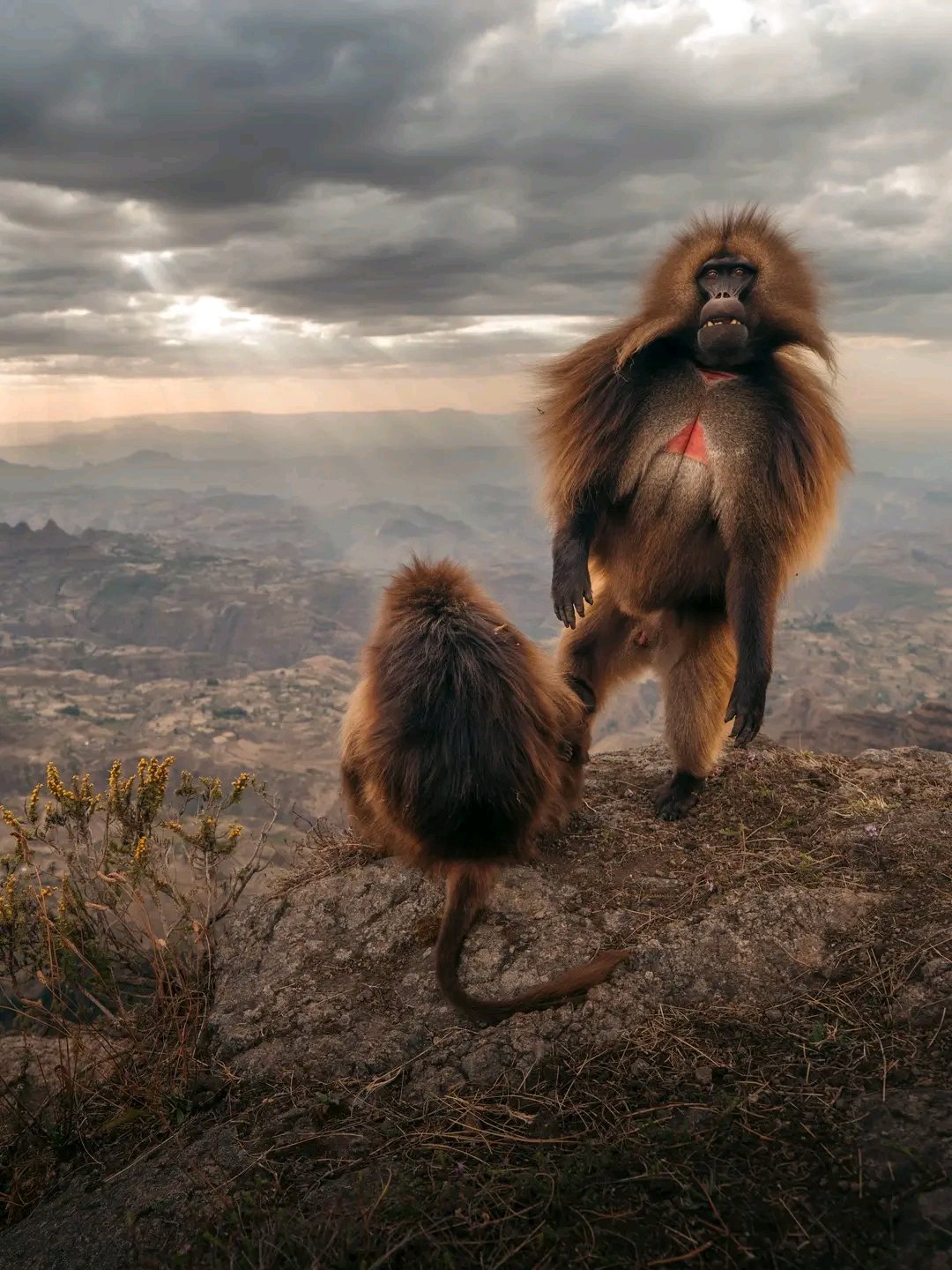
Despite their intimidating canine teeth and dramatic facial expressions (used mainly for communication and displays within the group), geladas are generally peaceful grazers rather than aggressive hunters. At night, they retreat to the safety of steep rocky cliffs to sleep, safe from predators like leopards.
With their shaggy brown coats, long manes (especially in males), and extraordinary lifestyle, geladas represent a living link to ancient grazing primates that once roamed much of Africa. In the rugged highlands of Ethiopia, they continue to thrive as one of nature’s most specialized and charismatic survivors.