“Nike Offered Her a 70% Pay Cut After Pregnancy. Allyson Felix Refused to Stay Silent.”
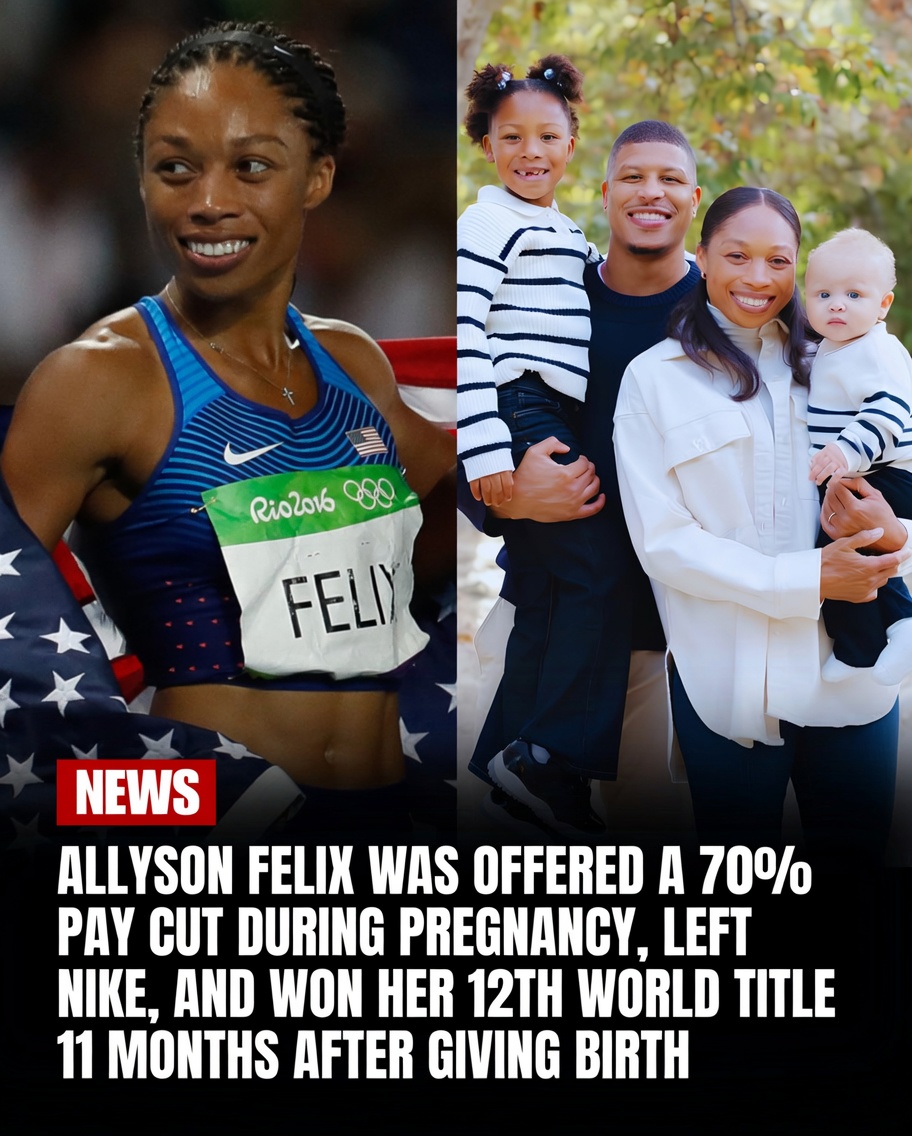
“Nike Offered Her a 70% Pay Cut After Pregnancy. Allyson Felix Refused to Stay Silent.”
By 2019, Allyson Felix had already secured her place as one of the greatest athletes in American history.
With multiple Olympic medals, world championship titles, and a legacy that made her the most decorated track and field athlete the United States had ever produced, she had spent years proving herself on the world stage. Her speed, consistency, and discipline had made her a global icon in sports.
But after becoming pregnant, she found herself facing a battle that had nothing to do with competition.
According to Felix, Nike proposed a major reduction in her sponsorship pay—reportedly cutting it by 70%—while offering no meaningful maternity protections. The message felt painfully clear: even one of the most accomplished female athletes in history could be financially penalized for becoming a mother.
For years, many women in sports had quietly accepted similar treatment, afraid that speaking publicly could cost them contracts, opportunities, or careers altogether.
Instead of staying silent, she publicly shared her experience and exposed the systemic challenges many pregnant athletes were facing behind the scenes. Her decision sparked national conversations about how women in sports were treated during pregnancy and motherhood—particularly by companies profiting from their success while failing to support them during major life transitions.
And people listened.
The backlash against these policies became impossible to ignore. Eventually, Nike announced updated maternity protections for sponsored athletes, extending protections for 18 months so women would not face financial punishment for pregnancy-related performance changes.
But for Felix, the fight was about more than one policy change.
Rather than simply returning to business as usual, she made another major decision: she walked away from Nike completely.
In 2021, she launched Saysh, her own footwear and lifestyle company designed specifically with women in mind. The brand was built not just around performance, but around understanding women’s real experiences—especially the realities often overlooked in traditional athletic industries.
One example became especially meaningful to many mothers: Saysh introduced a maternity return policy allowing women to exchange shoes if their foot size changed during pregnancy, something incredibly common yet rarely acknowledged by major brands.
It was a small detail with a powerful message.
Women should not have to pretend their bodies do not change in order to be supported.
Felix also continued expanding her advocacy beyond business. Through partnerships with Athleta and the Women’s Sports Foundation, she helped fund childcare grants for athlete mothers competing at major events, including the Tokyo Olympics.
For many women, access to childcare can determine whether they are even able to continue competing professionally. Felix understood that support for mothers in sports needed to become structural—not symbolic.
What makes Allyson Felix’s story so impactful is not only her athletic greatness, but what she chose to do with her influence.
She turned personal discrimination into public accountability.
She transformed frustration into reform.
And she used her platform not simply to improve conditions for herself, but to help reshape opportunities for the women who would come after her.
Her legacy now extends far beyond medals and records.
It lives in every athlete who no longer has to choose between motherhood and being valued.