Viral video James Woods said: “So why aren’t you arresting these people for treason?
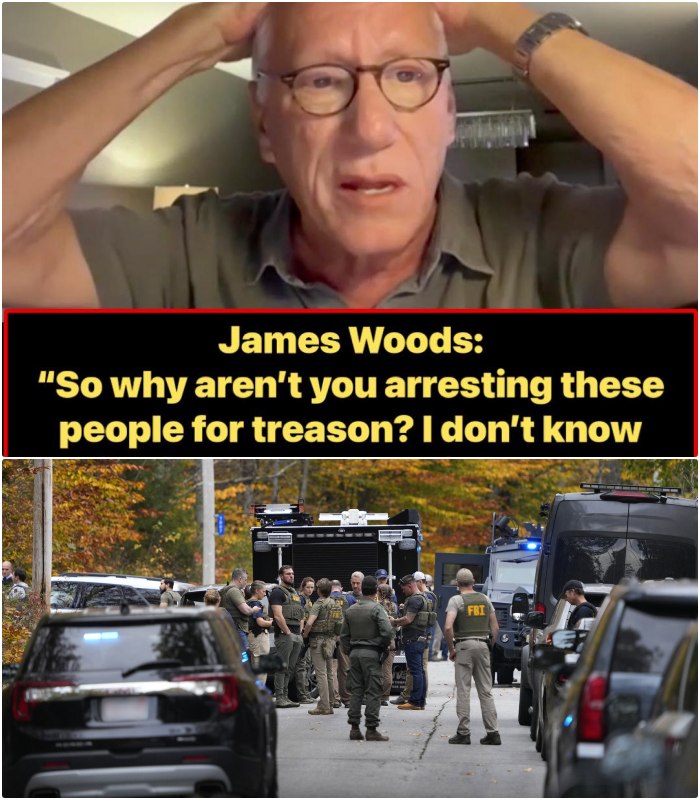
James Woods Ignites Debate with Viral Quote on Alleged Democratic “Coup” and FBI Inaction
In a fiery social media post that quickly went viral, veteran actor and conservative commentator James Woods unleashed a pointed critique of the Democratic Party and the Federal Bureau of Investigation. Woods, known for his outspoken political views, reacted strongly to discussions surrounding past intelligence controversies, particularly those tied to the 2016 Russia investigation.
His exact words, posted on X (formerly Twitter), were: “So why aren’t you arresting these people for treason? I don’t know which is more frustrating, to know that Democrats literally staged a coup against the President of the United States, or to know that the Federal Bureau of Investigation can’t find a single person to indict.”
The statement resonated widely among his followers, amassing hundreds of thousands of views and significant engagement. It was posted in response to a video clip featuring FBI Director Kash Patel, who detailed findings from investigations into the origins of the Russia probe. Patel described how a political party allegedly used foreign intelligence assets, funded opposition research, and misled the FISA court to surveil a presidential campaign.
Context Behind the Outburst
Woods’ comments reference long-standing conservative accusations that elements within the Democratic Party and intelligence community attempted to undermine Donald Trump’s 2016 presidential campaign and subsequent presidency through the “Russia collusion” narrative. Key elements often cited include:
- The Steele Dossier, funded by the Clinton campaign.
- FISA warrant applications on Trump associate Carter Page, later deemed flawed by the Department of Justice Inspector General.
- Claims of improper leaks and media coordination.
Recent declassifications and statements from officials like Patel have reignited these debates, with some viewing the events as an attempted “coup” through lawfare and intelligence manipulation. Critics of this view argue that investigations were legitimate national security inquiries, and that no evidence of criminal “treason” has held up in court. Legal experts note that “treason” has a narrow constitutional definition (levying war against the U.S. or aiding enemies), making such charges extremely rare and difficult to prove in political contexts.
Woods’ frustration with the lack of indictments echoes broader sentiments on one side of the political aisle about perceived two-tiered justice: aggressive pursuits of Trump-related cases contrasted with limited accountability for actions during the Russia investigation era. On the other side, opponents point out that multiple investigations did occur (e.g., Mueller probe, Durham report), though they yielded few high-level convictions.