Scientists Discover Giant 62-Foot “Dinosaur-Eating” Octopus That Ruled the Ancient Seas
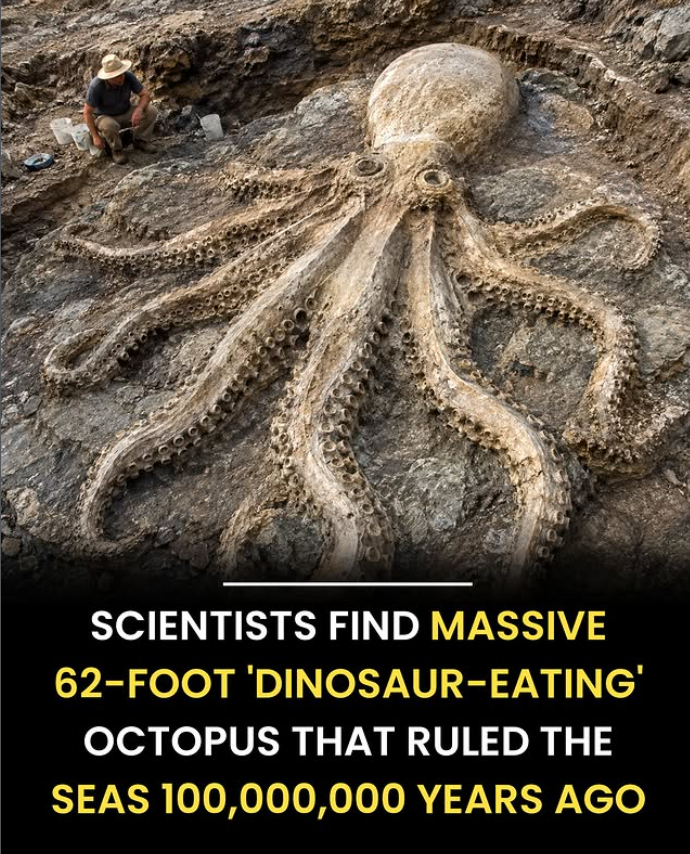
Hokkaido University, Japan — A team of scientists has identified one of the most extraordinary predators ever to swim the oceans: a colossal prehistoric octopus that reached an astonishing 62 feet (19 meters) in length — longer than many modern sperm whales.
The newly described species, Nanaimoteuthis haggarti, lived during the Late Cretaceous period between 72 and 100 million years ago. A second, slightly smaller relative, Nanaimoteuthis jeletzkyi, grew to around 26 feet (8 meters). Both were apex predators of their time.
Analysis of fossilized jaws (beaks) revealed these ancient cephalopods possessed incredibly powerful, bone-crushing beaks. They were more than capable of taking on large marine reptiles, including mosasaurs — the terrifying “T. rex of the seas.”
With long, muscular tentacles lined with powerful suckers, these giant octopuses likely patrolled the ancient oceans with speed, intelligence, and lethal efficiency. Their size and hunting capabilities would have made them dominant forces in the Cretaceous marine ecosystem.
The discovery, based on fossil evidence from British Columbia, Canada, is rewriting what we thought we knew about the scale and sophistication of ancient cephalopods. These were not just oversized versions of today’s octopuses — they were highly intelligent, highly mobile super-predators.
Imagine an octopus the length of a bus, with tentacles strong enough to overpower dinosaurs of the sea.
Nature has always been far more incredible — and terrifying — than we give it credit for. This colossal “dinosaur-eating” octopus stands as one of the most impressive invertebrates to have ever existed on Earth.
Absolutely mind-blowing.
What do you think — would you have wanted to see one of these up close?