The Horned Rattlesnake: A True Desert Ghost

Perfectly camouflaged against the golden sand at sunset, this stunning Horned Rattlesnake (Crotalus cerastes) blends almost seamlessly into the landscape of the Gran Desierto de Altar in the Sonora Desert.
Those distinctive “horns” above its eyes aren’t just for show — they serve a very practical purpose. They help shield the snake’s eyes from sand while it moves through dunes or stays partially buried, waiting in ambush. This adaptation, combined with its rough, sand-colored scales, makes it one of the most effective masters of camouflage in the desert.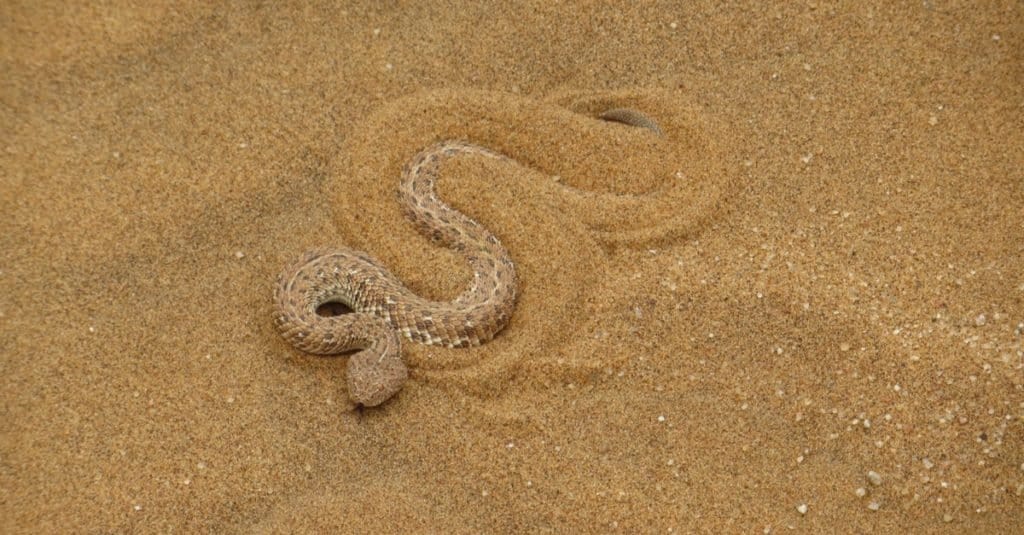
Key Adaptations:
- Sidewinding movement — It travels across loose sand with minimal contact, leaving behind its signature J-shaped tracks.
- Horn-like scales — Protect the eyes from shifting sand.
- Venomous bite — Used to quickly subdue lizards and small mammals.
- Nocturnal habits — Most active during cooler hours to avoid extreme desert heat.
The Horned Rattlesnake is a specialist survivor, perfectly evolved for one of the harshest environments on Earth. Seeing one like this — half-buried and almost invisible — is a rare treat for desert explorers.
A beautiful but highly adapted predator that reminds us how incredible nature’s engineering can be.
True desert ghost.
Would you like to know more about its unique sidewinding movement or other desert snakes?