Couple Raises Son and Chimpanzee as Siblings, Treating Them Exactly the Same – The Outcome Leaves Them Full of Regret
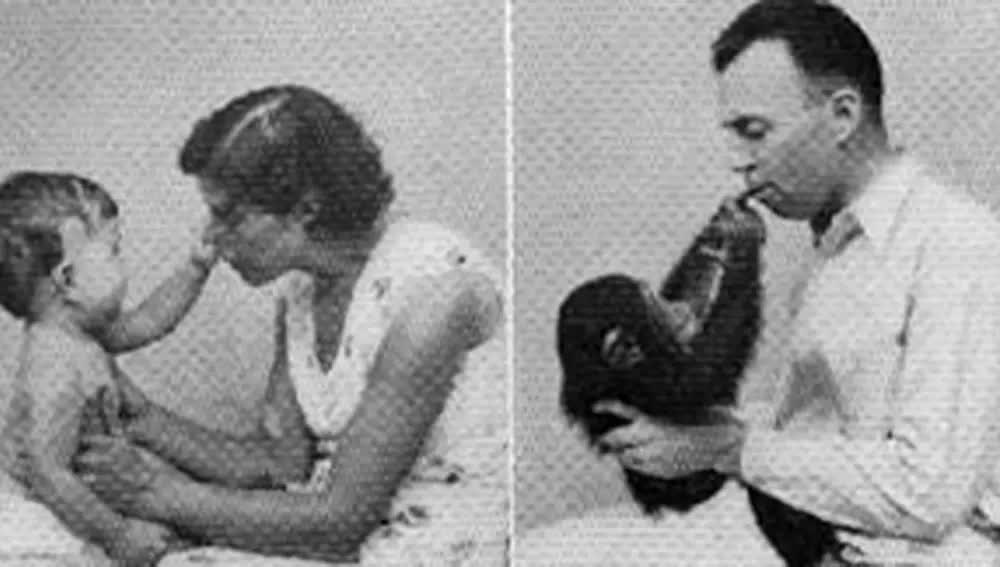
May 23, 2026 – In the early 1930s, a psychological experiment known as “The Ape and the Child” shocked the scientific world. A couple decided to raise their infant son together with a baby chimpanzee, treating both exactly the same — with devastating consequences.
Winthrop Niles Kellogg, a psychologist at Indiana University, was obsessed with the question of nature versus nurture. He wanted to find out whether a chimpanzee raised in a human environment from a very young age could develop human-like behaviors, speech, and intelligence.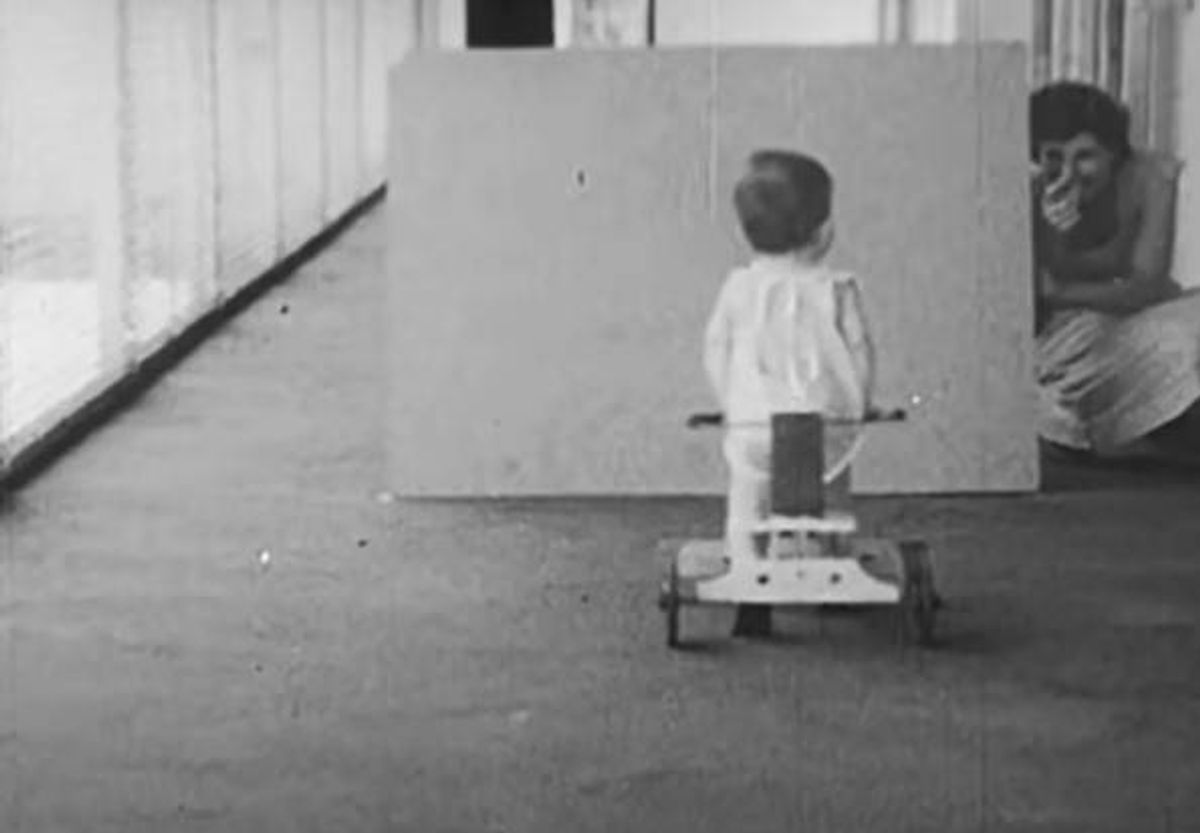
On June 26, 1931, Kellogg and his wife Luella brought home a 7-month-old female chimpanzee named Gua. At the time, their biological son Donald was just 10 months old. The couple turned their home into a live laboratory.
They enforced a strict rule: Gua and Donald must be treated completely equally. Gua was not considered a pet but a full family member — referred to as Donald’s “sister.” The two wore the same clothes, used the same toys, slept in similar beds, and were fed and cared for identically. Everyone in the household was instructed to speak to Gua the same way they spoke to Donald.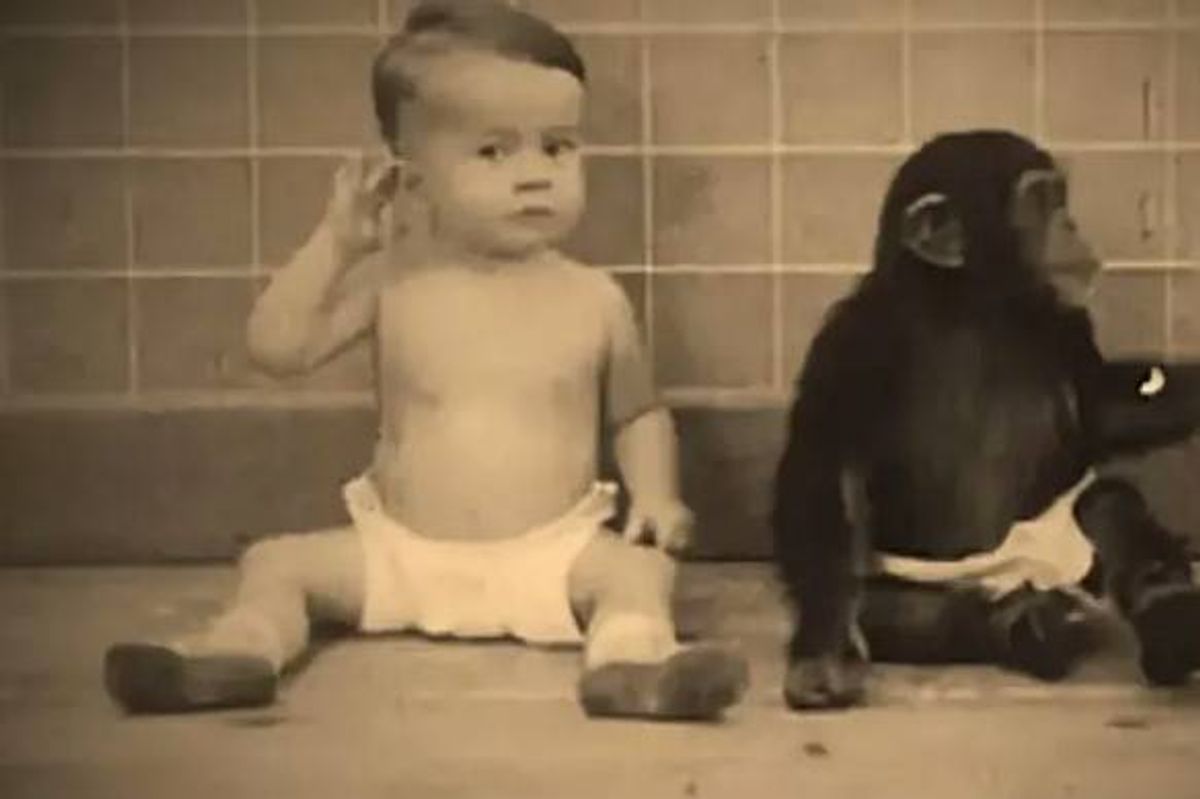
The children underwent daily physical and intelligence tests. Some of these tests were considered harsh even by the standards of the time, such as tapping their skulls with a spoon to compare bone density or firing a gun near them to measure reaction speed.
At first, Gua developed faster than Donald in many areas. She learned to walk upright sooner and responded better to certain commands. However, as time passed, the differences became more apparent. Gua remained a chimpanzee in behavior and never learned to speak, while Donald began imitating chimpanzee sounds and gestures.
After nine months, the experiment was halted. Gua was sent back to a primate research center, where she later died of pneumonia at the age of less than 3 years old.
The impact on Donald was profound and long-lasting. He reportedly struggled with speech development, exhibited ape-like behaviors, and faced psychological difficulties later in life. The family eventually regretted the experiment deeply.
This controversial study remains one of the most infamous cases in psychology, highlighting the ethical limits of human-animal cross-rearing experiments.