The Hidden Details That Change the Mackenzie Shirilla Case forever -“The Crash”
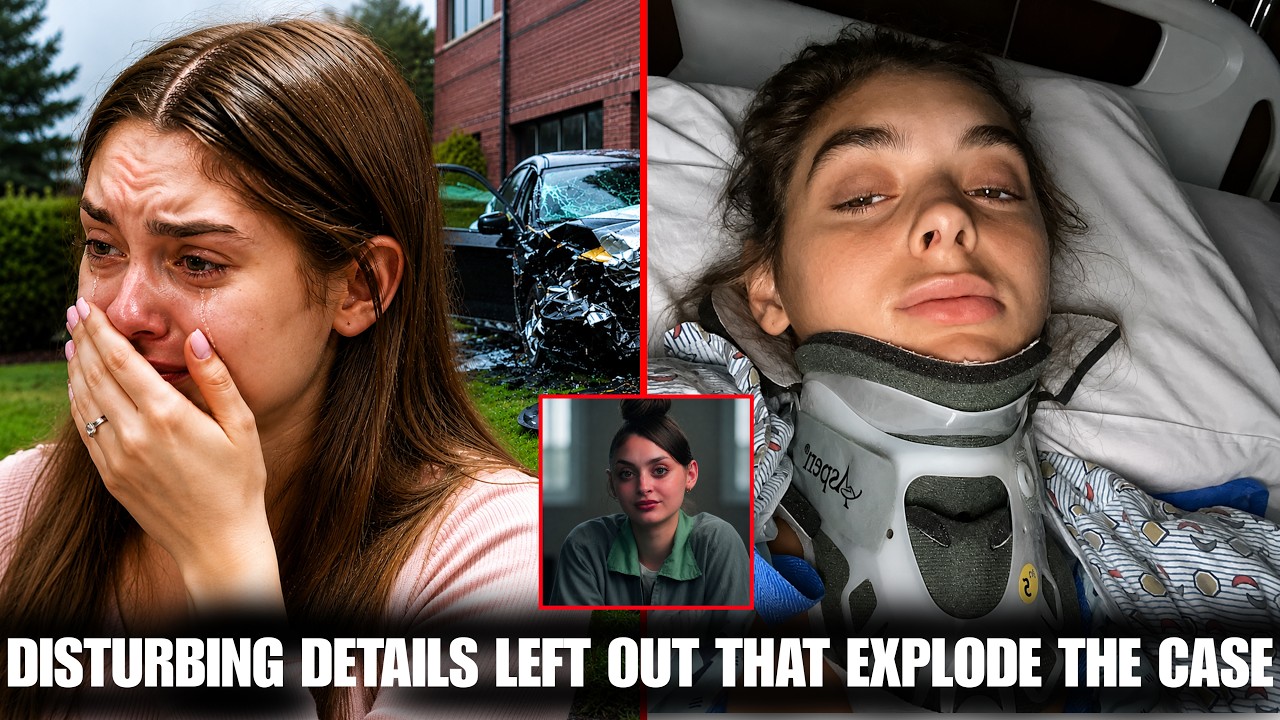
The Crash: What Netflix Left Out About McKenzie Sherilla’s Conviction
When Netflix dropped The Crash in May 2026, it quickly became one of the year’s most discussed true crime documentaries. TikTok filled with reaction videos, Reddit threads exploded with debates, and millions watched 21-year-old McKenzie Sherilla calmly tell the camera from prison: “I’m not a monster.” The film presented a story wrapped in ambiguity—questioning intent, suggesting possible medical issues, and humanizing a young woman caught in tragedy. But like many polished documentaries, it made editorial choices. Significant evidence presented in court, details that shaped a judge’s decision for two concurrent life sentences, received minimal attention or were omitted entirely.
This isn’t about denying McKenzie a voice. It’s about ensuring the full record—black box data, location tracking, prior threats, and post-crash behavior—gets equal airtime. Here are five critical details the viral documentary either skipped, downplayed, or buried, drawn from court records, prosecutor arguments, and testimony.
The Foundation: A Deliberate Impact, Not an Accident
McKenzie Sherilla was born August 2, 2004, in Strongsville, Ohio. By 2022, she was in a volatile relationship with 20-year-old Dominic Russo, whom she’d dated since high school. They lived together in one of his family’s homes. On July 31, 2022, around 5:30 a.m., McKenzie drove her Toyota Camry with Dominic in the passenger seat and their 19-year-old friend Davian Flanigan in the back. They’d been at a graduation party.
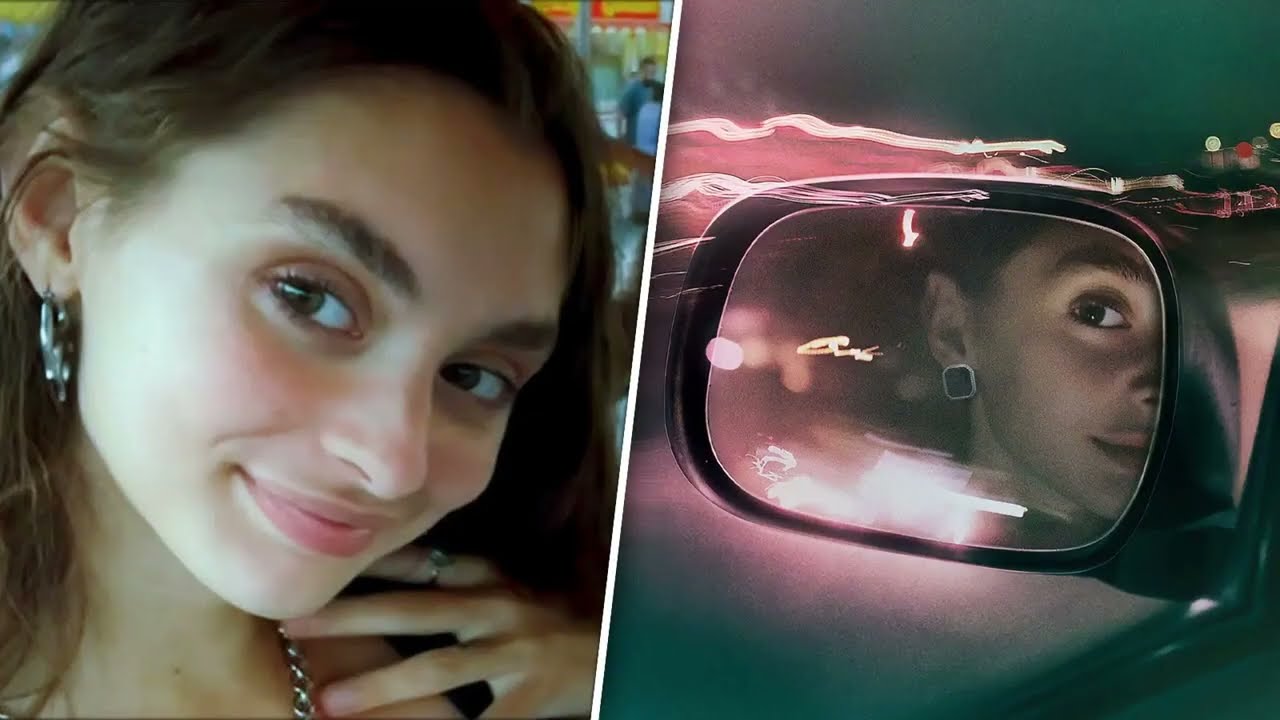
Surveillance footage captured the Camry accelerating to approximately 100 mph into a brick wall at a business park on Progress Drive. No swerve. No skid marks. No braking. Dominic and Davian died on impact. McKenzie survived with fractures and was airlifted to a hospital.
Initial reports called it a tragic accident. The car’s event data recorder (black box) told a different story. In the final five seconds before impact, the accelerator was floored to full capacity. There was zero brake application—not even a tap. The vehicle sped up into the wall.
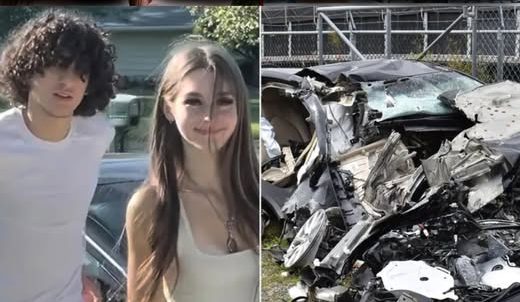
In August 2023, Judge Nancy Margaret Russo (no relation to Dominic) convicted McKenzie on 12 felony counts, including four counts of murder. She received two concurrent life sentences with parole eligibility after 15 years, meaning she won’t see a parole board until October 2037. She is currently at the Ohio Reformatory for Women in Marysville.
This mechanical evidence formed the core of the prosecution’s case: this was not loss of control, but a driver who chose acceleration over braking.
Detail 1: The Pre-Crash Visit to the Site
One of the most damning pieces of evidence barely registered in the documentary: cell phone location data placed McKenzie near the exact business park crash site days before July 31, 2022.
Prosecutors presented this as premeditation, not coincidence. The location was an isolated business park with a dead-end road ending at a brick wall—not a hangout spot or landmark. Life360 and other tracking data reportedly showed patterns consistent with scouting. For a defense claiming blackout or accident, evidence of prior visits undermines the narrative of random tragedy.
Ohio law requires proof of deliberate premeditation for aggravated murder. The location data helped establish forethought, showing this wasn’t spontaneous. The documentary mentioned it briefly in passing without legal context or depth. Paired with black box data showing sustained full acceleration and controlled turns into the wall, the “I don’t remember” defense faced steep challenges. A planned visit followed by precise execution paints a far more calculated picture than the film suggested.
Detail 2: The Concealed Psilocybin Mushrooms
The documentary addressed McKenzie’s marijuana use, including her father Steve’s on-camera comments downplaying it. But it largely glossed over additional drug evidence found at the scene.
Investigators recovered marijuana items in her purse, but also eight grams of psilocybin mushrooms (magic mushrooms) concealed in her clothing. This is a Schedule I hallucinogen capable of causing distorted perception, altered time sense, and unpredictable effects. Eight grams is not a casual amount, and concealment suggests awareness.
Prosecutors noted McKenzie’s regular marijuana use likely meant she wasn’t newly impaired by it, but the mushrooms raised separate questions about her state of mind that night. She was convicted on drug possession and possessing criminal tools counts. The fuller picture—psychedelics hidden on her body at 5:30 a.m.—complicates the “just weed” impression left by the documentary and speaks to the overall environment in the car before impact.
Detail 3: Modeling Ambitions and Public Appearances Amid Grief
While recovering in the hospital, with Dominic and Davian recently killed and their families grieving, McKenzie and her mother emailed a Los Angeles modeling agency. Prosecutors read excerpts in court: McKenzie expressing excitement about opportunities and thanking them for interest. This occurred while the investigation was active and before Dominic’s burial.
A classmate also shared texts where McKenzie requested photos from Dominic’s room for his casket, so he could “be with her forever.” Prosecutors viewed this as managing appearances rather than pure grief. Months later, McKenzie attended a concert in a wheelchair. Her mother later testified this was a rare moment of fun after months of wearing Dominic’s clothes, eating his snacks, and listening to his music, with a shrine including a glowing Beauty and the Beast flower nearby.
The prosecution used these incidents to argue a stunning lack of remorse and immediate focus on McKenzie’s future. The documentary touched on elements lightly but didn’t convey the weight given in court, where they contrasted sharply with the image of a devastated girlfriend.
Detail 4: Prior Threats and a Toxic Relationship
Two weeks before the crash, Dominic called his mother, Christine Russo, reporting erratic and dangerous driving by McKenzie and needing help. During one incident, a friend of the family reportedly overheard McKenzie threaten to “crash this car right now” while Dominic was in the passenger seat. Prosecutors saw this as prior calculation and using the vehicle as a weapon of control.
Court evidence included videos from Dominic’s phone, testimony of constant fights, and reports of McKenzie hitting him. Dominic’s family said he had been trying to break up with her. Recorded calls captured her locking him out and screaming. McKenzie’s mother claimed prior incidents where Dominic allegedly grabbed the wheel, but prosecutors pointed to black box data, location evidence, and acceleration as inconsistent with that narrative.
Judge Russo’s sentencing remarks were unambiguous: McKenzie “had a mission that she executed with precision and the mission was death.” She called her “literal hell on wheels.” These words reflect the totality of evidence, much of which simmered quietly in the documentary’s background.
Detail 5: Life in Prison According to a Former Inmate
The Crash portrayed McKenzie as soft-spoken, emotional, and reflective. Former inmate Mary Katherine “Cat” Crowder, who overlapped with her for about six months at the Ohio Reformatory for Women, offered a contrasting account after the documentary’s release. Crowder shared timelines and went public on TikTok, NewsNation, and the New York Post.
She described McKenzie as having a light demeanor, always glammed up with makeup, at the center of a social clique, giggling, and treating prison like a popularity contest. Crowder claimed McKenzie wanted to emulate Regina George from Mean Girls, had multiple romantic relationships, showed off hickeys, and spoke in a valley girl style. She said the remorseful figure on screen did not match the person she observed.
These are one person’s allegations, and McKenzie’s team has not detailed a public response. However, they align with the prosecution’s trial argument of performed grief. The documentary, filmed earlier, couldn’t include this, but it adds important context for viewers moved by the on-screen portrayal.
The Sentencing Room: A Mother’s Plea Meets Judicial Reality
At sentencing on August 21, 2023, McKenzie’s mother Natalie described her daughter’s grief: months in bed wearing Dominic’s clothes, a shrine, and the concert as a brief escape. She referred to Davian Flanigan as a “new friend” she didn’t know much about.
Judge Russo interrupted: “I’m hearing an awful lot about your daughter. I’m not hearing very much about the two dead people.” When Natalie again called Davian a new friend, the judge asked if that meant his life was worthless. Natalie denied it, but the moment underscored broader themes.
The judge emphasized one person bore responsibility for the pain: McKenzie. Troubled about consecutive versus concurrent sentences to honor both victims, she imposed concurrent life terms but warned McKenzie might spend her life in prison, depending on the parole board.
Appeals, Fallout, and Where Things Stand
McKenzie’s first appeal was denied for being filed one day late. Subsequent appeals, including one in 2025, were also denied. In March 2026, the 8th District Court of Appeals upheld the conviction. The Ohio Supreme Court declined to hear it.
Steve Sherilla, featured prominently in the documentary, was placed on administrative leave from his teaching job at a Catholic school days after release, citing poor judgment. He expressed frustration with editing.
Former inmate accounts and statements from Dominic’s sister Christine (who called McKenzie “rotten to the core”) contrasted with the film’s tone. Dominic’s father Frank showed notable grace, saying he didn’t want McKenzie’s life ruined despite his loss.
The Black Box Doesn’t Lie
The event data recorder remains the most objective evidence: full acceleration, no brakes, sustained to impact. A certified forensic mechanic confirmed no mechanical failure. POTS (postural orthostatic tachycardia syndrome), raised by the defense, was considered but deemed inconsistent with the data showing deliberate control.
Why This Matters
The Crash is well-crafted and brought attention to the case. Documentaries curate stories, and choices about emphasis shape public perception. The pre-visit to the site, concealed mushrooms, modeling emails, prior threats, and prison behavior details provide critical context for the judge’s “mission” conclusion.
Dominic Russo, 20, dreamed of stocks, crypto, and a clothing line. Davian Flanigan, 19, was a friend who trusted the wrong ride home. They got into a car before sunrise on July 31, 2022, and never returned.
Whatever your view after watching the documentary, the courtroom record offers a fuller picture. Two young men lost their lives. Their names—Dominic Russo and Davian Flanigan—deserve to anchor the story. Facts matter more than narrative polish.