The Burrow That Preserved an Impossible Partnership
Title: The Burrow That Preserved an Impossible Partnership
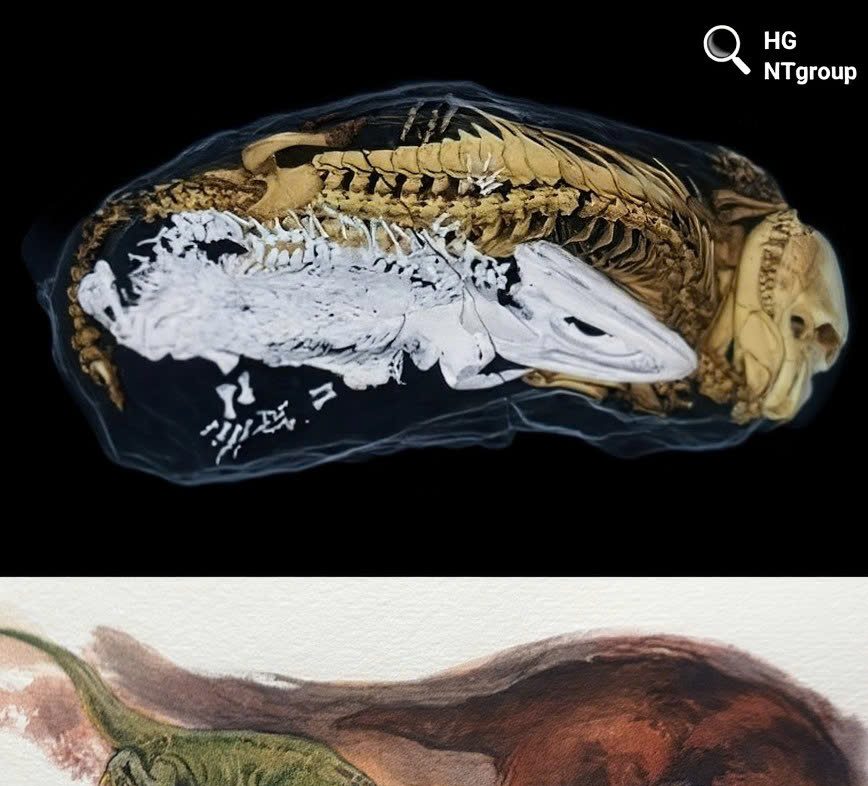
Buried beneath ancient rock for more than 252 million years, a small fossilized burrow has revealed one of the most remarkable survival stories ever discovered from Earth’s distant past.
The find dates to the aftermath of the Permian-Triassic extinction event, the largest mass extinction in the planet’s history. During this catastrophic period, ecosystems collapsed, climates shifted dramatically, and the vast majority of species disappeared.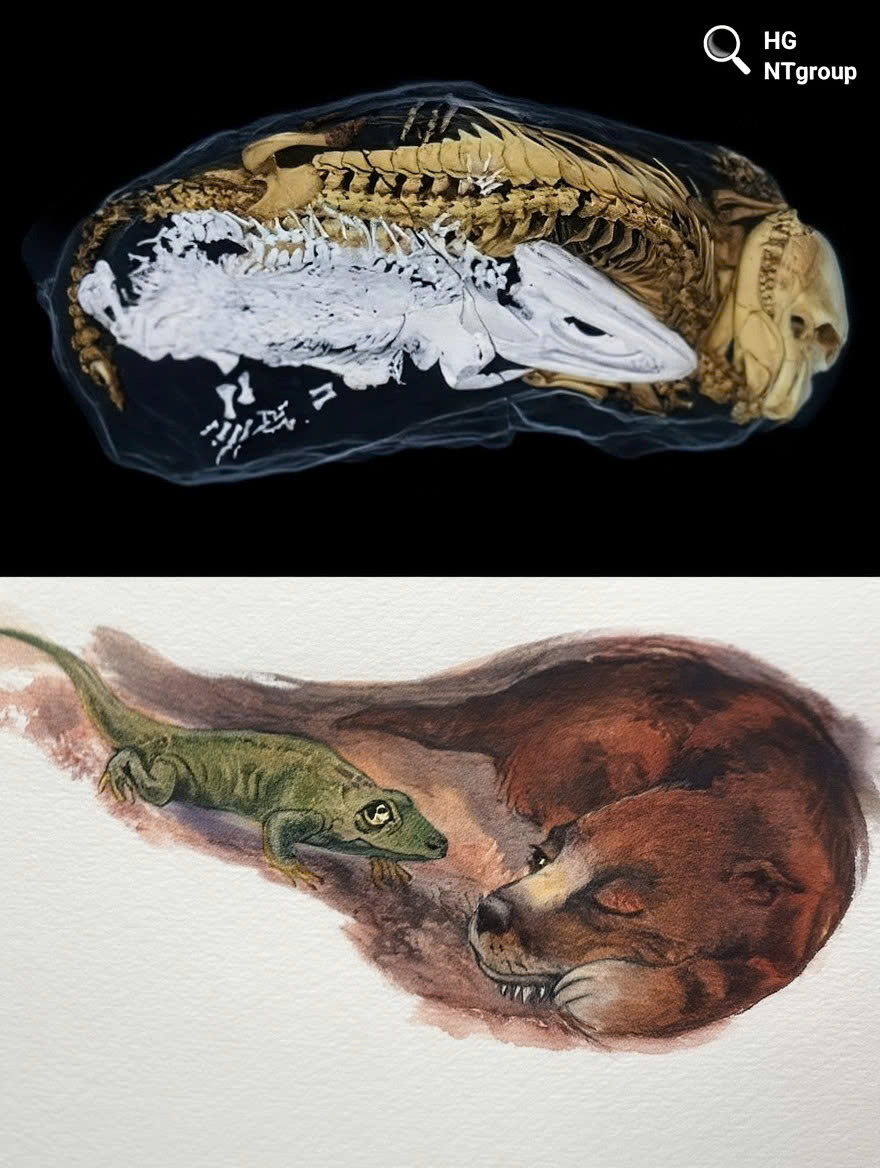
Inside the burrow, researchers uncovered the fossilized remains of two very different animals resting side by side.
One was a small amphibian known as Broomistega. Evidence from its skeleton revealed signs of significant injuries that had begun to heal, suggesting it had survived a traumatic event before entering the shelter.
The other occupant was Thrinaxodon, a mammal-like predator that would normally have been expected to view a smaller animal as potential prey.
Yet the fossils told a different story.
The positions of the skeletons showed no signs of conflict or struggle. Instead, both animals appeared to have been resting peacefully within the same underground refuge when a sudden flood swept through the area, filling the burrow with sediment and preserving the scene for hundreds of millions of years.
Scientists believe the injured Broomistega may have entered the burrow seeking protection while recovering from its wounds. Surprisingly, the resident Thrinaxodon appears to have tolerated its presence.
Researchers continue to debate exactly why this occurred. Some suggest the predator may have been in a state of reduced activity, similar to torpor, while others propose that the unusual environmental pressures of the time may have encouraged behaviors rarely seen under normal conditions.
Whatever the explanation, the discovery offers an extraordinarily rare glimpse into prehistoric behavior rather than anatomy alone.
Fossils typically preserve bones and physical structures. Finding evidence of a possible interaction between two ancient animals is far less common and provides valuable clues about how creatures adapted during periods of extreme environmental stress.
The fossilized burrow serves as a snapshot from a world struggling to recover from catastrophe—a moment frozen in time when survival may have depended on flexibility rather than aggression.
In an era when life on Earth faced its greatest crisis, two unlikely neighbors shared the same shelter beneath the ground.
And after 252 million years, their silent story continues to challenge what we thought we knew about survival in the ancient world.