The Pattaya case involving 17-year-old Thai girl Tunchanok Donhomla and Australian man Simon Peter Carman has moved from a shocking death investigation into a wider international story about justice, accountability, and the dangers faced by vulnerable young people in Thailand’s nightlife districts.

The Pattaya case involving 17-year-old Thai girl Tunchanok Donhomla and Australian man Simon Peter Carman has moved from a shocking death investigation into a wider international story about justice, accountability, and the dangers faced by vulnerable young people in Thailand’s nightlife districts.
As of July 4, 2026, the latest confirmed reports say Simon Peter Carman, an Australian man, remains in custody in Thailand after being charged in connection with the death of 17-year-old Tunchanok Donhomla in Pattaya. The case first drew international attention after the teenager was reported missing and later found dead inside a suitcase near railway tracks. Thai police say CCTV footage played a major role in tracing the suspect’s movements before his arrest.
According to AP News, police said Tunchanok was last seen on security footage entering a condominium in Pattaya with Carman. Later, Carman was allegedly seen leaving the building alone with a large suitcase, placing it on a motorbike, and heading toward a deserted area near the railway. He was arrested at Bangkok’s Suvarnabhumi airport before boarding a flight to Perth, Australia. After the suitcase was found, police added more serious charges, including murder and concealment of a body. Carman has denied the charges and remains in custody with legal representation.
The murder charge is especially serious because Thai law allows the death penalty in cases of premeditated murder. At this stage, however, the legal process is still unfolding. A court date has not yet been clearly announced in the available confirmed reports, and investigators are continuing to review evidence. Police have described CCTV footage, witness accounts, and forensic findings as key parts of the investigation.
Carman has reportedly claimed that the death happened during a confrontation. In police questioning footage referenced by AP, he said the girl threatened him while he was trying to give her money. Thai authorities, however, have charged him with murder, and prosecutors will now have to test the evidence in court. Because the case is ongoing, the allegations remain legally unproven until a court reaches a verdict.
The case has devastated Tunchanok’s family. Her relatives have spoken publicly about their grief and their demand for justice. Reports say she had recently arrived in Pattaya from Kalasin, a poorer province in northeastern Thailand. Her death has sparked sorrow not only because of the violent nature of the case, but also because she was still a teenager with a future ahead of her.
The Guardian’s July 3 report expanded the story beyond the criminal case itself, focusing on Pattaya’s long-standing reputation as a center of sex tourism and the risks faced by underage girls and vulnerable workers. The report said Tunchanok’s death has highlighted broader concerns about exploitation in Thailand’s nightlife economy, where poverty, tourism demand, and weak enforcement can leave young people exposed to danger.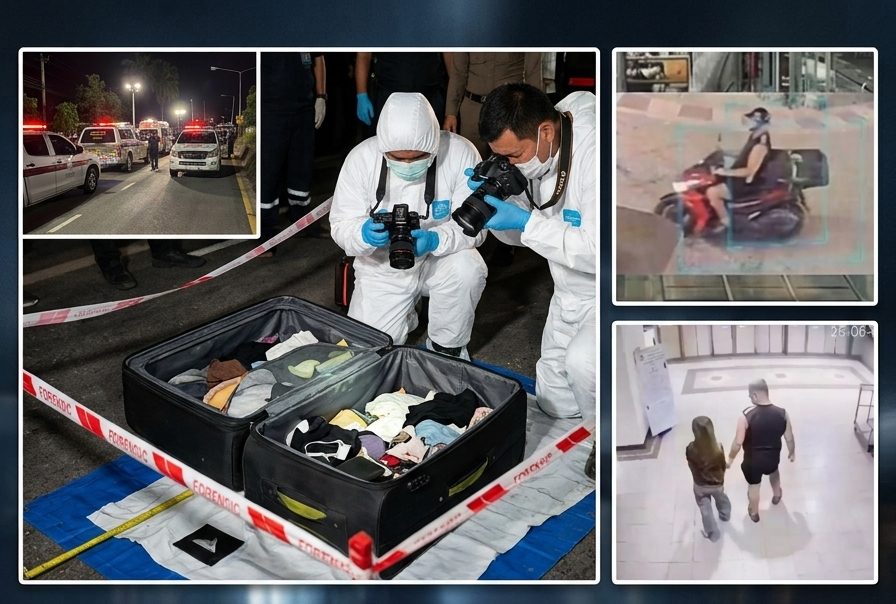
Pattaya has long tried to reshape its image as a family-friendly beach destination, but its nightlife industry remains a major part of the city’s identity. The Guardian reported that prostitution is illegal in Thailand, but the industry often operates openly. Experts and advocacy groups argue that this creates a dangerous gray zone: workers may be visible, but still lack protection, and minors can be exploited under the surface of a normalized commercial sex market.
This is why Tunchanok’s case has become more than a crime story. It has reopened painful questions about how young girls from poorer provinces end up in tourist areas, who is responsible for protecting them, and whether Thailand’s legal and social systems are strong enough to prevent exploitation. Activists say that when sex tourism becomes normalized, abuse can become easier to hide.
Australian officials are also watching the case because Carman is an Australian citizen. Australia opposes the death penalty, but Thai authorities control the criminal process because the alleged crime happened in Thailand. If convicted, Carman could face a severe sentence under Thai law. For now, the case is expected to continue through investigation, evidence review, and eventual court proceedings.
The latest development, therefore, is not only that Carman remains accused and in custody, but that the case has widened into a national and international conversation. It is about one teenager’s death, one grieving family, and one suspect facing serious charges. But it is also about Pattaya, poverty, foreign tourism, and the systems that failed to keep a young girl safe.
For Tunchanok’s family, the center of the story is still simple and heartbreaking: a 17-year-old girl left home and never returned. As the legal case moves forward, the world is watching to see whether the investigation will bring truth, accountability, and justice.