Baby Luka’s Extraordinary Journey: Facing Bilateral Cleft Lip and Palate with a Rare Tessier 3 Cleft
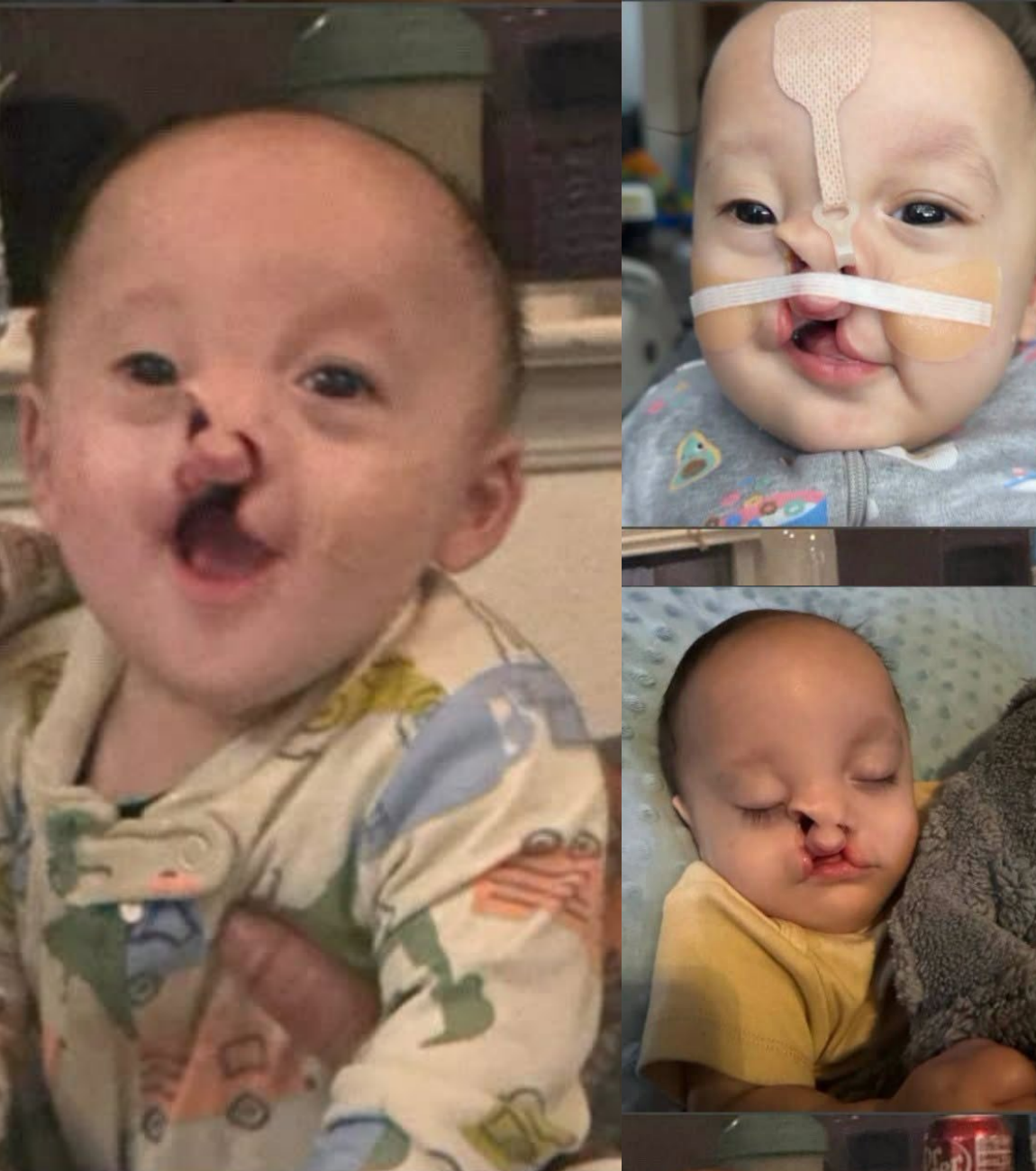
At just six months old, baby Luka has already confronted challenges that most people never face in a lifetime. Born on August 10 alongside his twin brother, Josiah Jr., Luka entered the world with a bilateral cleft lip and palate combined with the exceptionally rare Tessier 3 cleft—a complex craniofacial anomaly that has defined his earliest months. While his twin grows and develops beside him, Luka’s path has centered on specialist care rather than the typical milestones of infancy. His family describes him as showing remarkable strength from the start: “From the very beginning, he has shown us what true strength looks like.” Yet the road has been complicated. Planned procedures have been postponed due to recurring illnesses and insurance-related hurdles, extending an already demanding journey.
A bilateral cleft lip and palate is a congenital condition in which the upper lip and the roof of the mouth fail to fuse properly on both sides during early fetal development. This affects feeding, speech, breathing, and facial appearance, and typically requires staged surgical repairs beginning in infancy. The Tessier 3 cleft, also known as an oro-nasal-ocular or nasomaxillary cleft, is far rarer and more complex. Classified under the Tessier system of craniofacial clefts, type 3 involves disruption at the junction of the frontonasal and maxillary processes. It typically extends from the upper lip through the nasal ala toward the medial canthus of the eye, often involving the lower eyelid, lacrimal system, and underlying bone. Overall craniofacial clefts occur in approximately 1.43 to 4.85 per 100,000 births; Tessier number 3 is considered among the rarest and most surgically challenging of these. These anomalies can impact multiple functions—eating, speaking, breathing, vision, and facial growth—and frequently require a multidisciplinary team including plastic surgeons, otolaryngologists, ophthalmologists, and other specialists.
Luka’s medical team anticipates three to four procedures this year, with additional interventions likely as he grows to support feeding, speech, breathing, and overall development. Surgical approaches for Tessier 3 clefts are highly individualized and often staged. They may include soft-tissue flaps such as Reiger dorsal nasal flaps for alar repositioning, cheek advancement, medial canthopexy, eyelid reconstruction, and traditional cleft lip repair techniques adapted for the complexity of the defect. Bone grafting, orthodontic care, and further refinements may follow in later childhood and adolescence. Beyond the operating room, the family faces significant practical burdens: uncovered medical costs, travel for specialist appointments, temporary housing during hospital stays, and time away from work. “As parents, asking for help is one of the hardest things we’ve ever had to do,” they have shared. “But Luka deserves for us to be with him every step of the way.”
Despite the setbacks, Luka continues to inspire those around him with quiet determination. His story highlights both the medical complexity of rare craniofacial conditions and the resilience of families navigating them. With ongoing specialized care and community support, the hope is that Luka will gain the functional and developmental foundations needed to thrive.
Sources Star Connect Facebook posts detailing Luka’s condition and early challenges (July 2026).