A Holiday Henna Tattoo That Left a Young Girl with Lifelong Scars
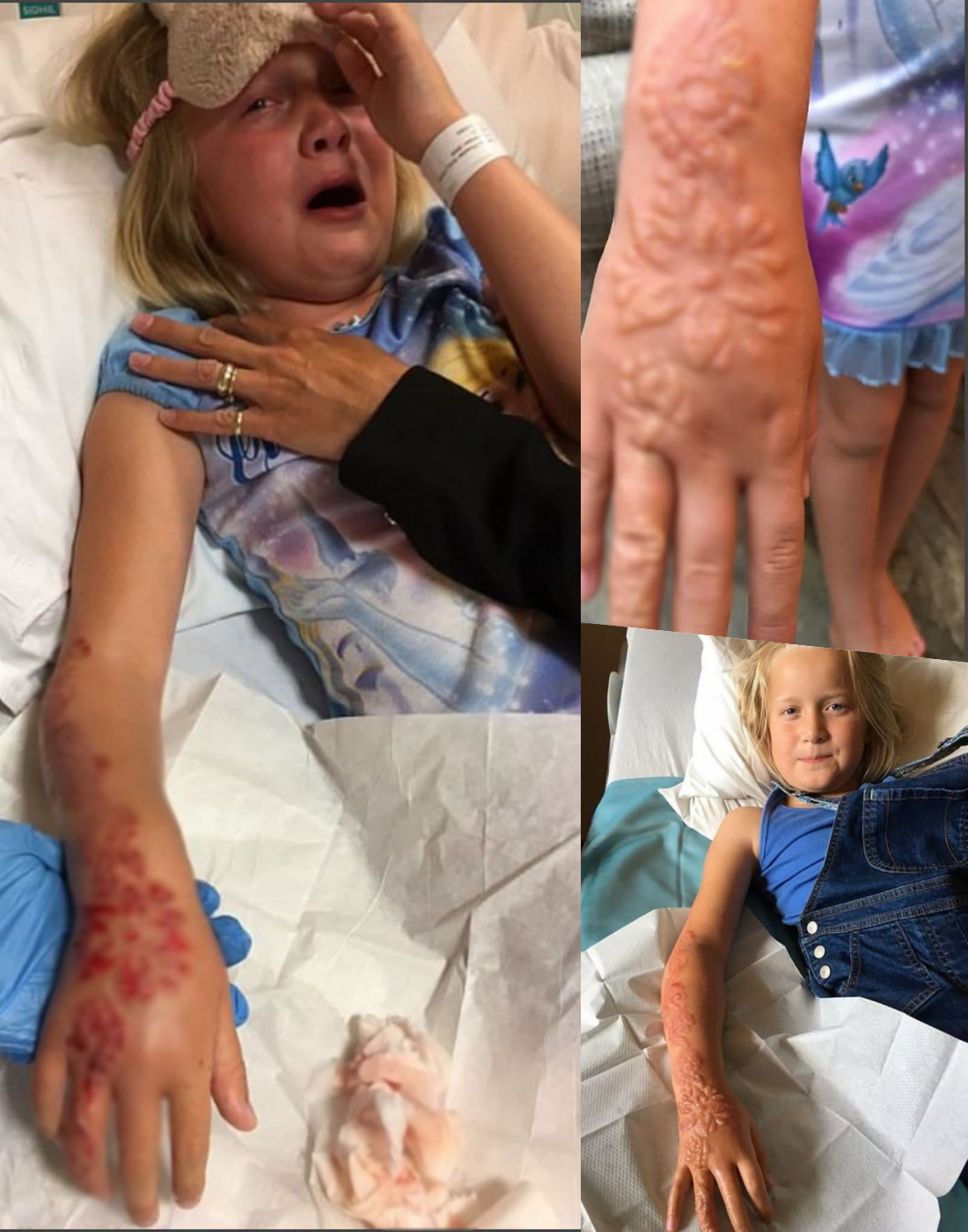
A young girl’s holiday memory turned into a painful lesson she may carry for life. While on vacation in Hurghada, Egypt, seven-year-old Madison Gulliver from the Isle of Wight was treated to a henna design as a reward for good behaviour. Her father, Martin, paid for the temporary tattoo at the hotel’s in-house salon as a treat after her mother Sylvia had spent two days in hospital with a gallbladder infection. Madison was delighted with the intricate pattern that stretched from her fingertips to her elbow. Days later, that joy gave way to intense discomfort.
Shortly after the family returned to the UK, Madison’s skin began to itch. A raised patch appeared along the outline of the design, then rapidly developed into painful, fluid-filled blisters that spread across her hand, fingers and forearm. The family sought medical help repeatedly. Initial steroid creams failed to control the reaction. Tests on the fluid from the blisters revealed a high pH level, confirming a chemical burn rather than a simple allergic rash. Doctors identified the cause as para-phenylenediamine (PPD), a potent chemical often added to “black henna” to create a darker, longer-lasting stain. True henna is reddish-brown and far less reactive; the black version can contain dangerous concentrations of PPD that trigger severe contact dermatitis and chemical burns, especially in children.
Madison was referred to a specialist burns unit. Because the thick blisters would not soak away, surgeons carefully cut them off to reach the damaged skin beneath. She cried in pain during the procedure but remained cooperative. The injury left her with significant scarring along her arm. She was required to wear a pressure bandage for at least six months in an effort to minimise the long-term marks, and she was referred for ongoing scar management. The scars are expected to be permanent.
Her parents expressed deep regret and shock. Martin acknowledged that he had not known the risks of black henna and felt the salon bore responsibility for applying a chemical substance to a child’s skin. The hotel initially suggested the reaction was due to Madison’s individual sensitivity, but later apologised and instructed the beauty centre to stop offering henna tattoos. The family sought no compensation; their focus remained on Madison’s recovery and on warning other parents about the dangers of black henna, particularly on holiday.
What began as a simple temporary decoration became a serious chemical injury that required hospital care, specialist treatment and lasting physical reminders. Madison’s experience highlights the hidden risks that can turn an ordinary holiday treat into a medical emergency—and the importance of understanding exactly what is being applied to a child’s skin.
Sources Metro.co.uk and News.com.au reports (August 2017) detailing Madison Gulliver’s black henna reaction in Hurghada, Egypt, the chemical burns caused by PPD, hospital treatment including blister removal, and statements from her father Martin Gulliver.