Toddler’s ‘Cold’ Turned Out to Be Sepsis — Loki Whiteside Lost a Leg but Survived
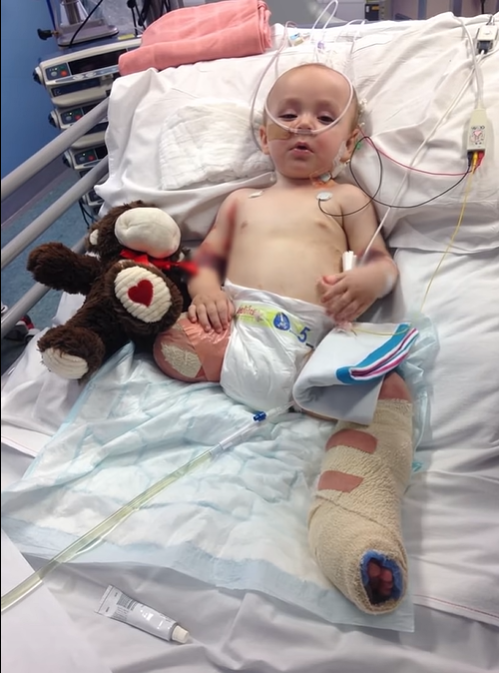
Seventeen-month-old Loki Whiteside was running around the house playing with his cousins when his mother, Naomi, noticed his temperature rising. Believing it was nothing more than a common cold, she took him to the doctor.
The GP immediately recognised the warning signs of septicaemia and arranged for Loki to be rushed by ambulance to Birmingham Children’s Hospital. What had appeared to be a mild illness was in fact rapidly progressing sepsis that soon developed into life-threatening septic shock.
Sepsis occurs when the body’s response to an infection damages its own tissues and organs. In severe cases it can cause blood pressure to drop dangerously low, reducing oxygen delivery to the extremities. Circulation to Loki’s limbs was critically compromised. Doctors worked urgently to save as much tissue as possible, but they were ultimately forced to amputate his right leg above the knee. His fingertips were also at risk, but medical teams managed to save them.
Naomi, from Sutton Coldfield, later described the sudden change: “One minute he was playing with his cousins, running round the house, the next minute he was in intensive care being treated for septic shock.” For the first two weeks in intensive care, she and her partner Rob did not see their son smile. It was, she said, the hardest thing she had ever faced.
Loki spent weeks in hospital, including time on the burns unit, requiring round-the-clock care for skin damage and scarring caused by the poor circulation. Nearly three weeks after admission, his characteristic smile finally returned. Although he would need ongoing support and adaptation to life with one leg, his condition stabilised and he began to recover.
Naomi was pregnant with the couple’s second child at the time. She emphasised how grateful the family was that Loki’s life had been saved, noting that the outcome could have been far worse.
Loki’s case highlights how quickly sepsis can escalate in young children and how easily its early symptoms can be mistaken for a routine viral illness. Prompt recognition by the family doctor and rapid transfer to specialist care were critical to his survival. Health authorities continue to urge parents and clinicians to remain alert to the signs of sepsis, which can include high fever, lethargy, mottled or pale skin, and rapid deterioration.
Sources
- Birmingham Mail / Birmingham Live and The Sun reports