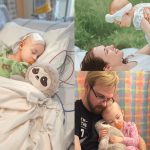
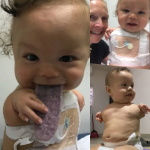
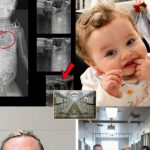
Born with Ultra-Rare Hallermann-Streiff Syndrome, Baby Feyre’s Family Navigates Life with a Tracheostomy
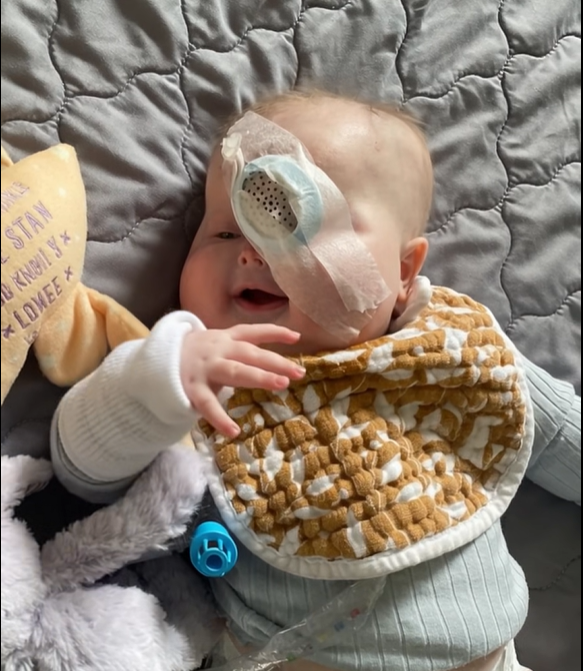
Seven-month-old Feyre was born with Hallermann-Streiff syndrome, an extremely rare genetic condition estimated to affect fewer than one in a million people worldwide. From her first moments, severe airway complications made it impossible for her to breathe safely on her own.
Hallermann-Streiff syndrome is characterized by distinctive craniofacial features, including a small jaw, thin pointed nose, sparse hair, dental anomalies, eye abnormalities such as cataracts or microphthalmia, and proportionate short stature. One of the most critical challenges is upper airway obstruction caused by the underdeveloped jaw and facial structure, which can lead to life-threatening breathing difficulties, especially in infancy.
Feyre spent 103 days in the neonatal intensive care unit as doctors worked to stabilize her. When her airway issues proved too severe for non-invasive support, surgeons performed a tracheostomy — creating a surgical opening in the neck and inserting a tube to bypass the obstruction and secure her breathing.
Her mother, Jessica, brings a unique perspective to the situation. Throughout her career she has cared for children living with tracheostomies and ventilators. She never imagined that the specialized knowledge she used professionally would one day become essential for her own daughter.
Tracheostomy care requires constant vigilance: suctioning to keep the airway clear, monitoring for infection or tube complications, and managing equipment at all times. For families, it transforms daily life while offering the stability needed for growth and development. Many children with Hallermann-Streiff syndrome who receive early airway support go on to make developmental progress, though ongoing multidisciplinary care remains essential.
Feyre’s story highlights both the fragility and the resilience of infants born with this ultra-rare syndrome. While the condition presents lifelong medical considerations, advances in airway management and supportive care allow many children to thrive beyond the critical early months. For Jessica and her family, each day with Feyre is a reminder of the strength required — and the specialized skills that now serve their own child.
Sources
- NORD