Born Different, Living Fully: Understanding Phocomelia

Born with an incredibly rare condition called phocomelia, some children enter the world with arms that develop differently, their hands positioned close to their shoulders or chest.
Phocomelia is an extremely uncommon congenital limb condition that occurs during early pregnancy. In this disorder, the intermediate segments of the arms or legs fail to form properly. As a result, the hands or feet may attach directly to the trunk or to very short residual limb segments, creating a flipper-like appearance. It can affect one or more limbs and varies widely in severity.
While the condition became widely known decades ago due to the thalidomide tragedy of the late 1950s and early 1960s—when the drug caused thousands of cases of severe limb malformations—most cases today are not linked to that medication. Current occurrences are usually sporadic or related to rare genetic factors, vascular disruptions during fetal development, or other unknown causes. True phocomelia is estimated to affect fewer than one in 100,000 births.
Children with phocomelia often have otherwise typical development and intelligence. Modern medical care focuses on supporting function and independence. Occupational and physical therapy help maximize the use of existing limbs. Adaptive devices, specialized clothing, and, in some cases, prosthetics can assist with daily activities. Surgical interventions are sometimes considered to improve mobility or positioning, though many children adapt remarkably well without them.
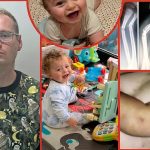
The baby in the accompanying photos illustrates the characteristic presentation of upper-limb phocomelia while also showing the joyful, expressive nature common in young children with the condition. Families frequently emphasize that these children approach life with curiosity, determination, and happiness, learning creative ways to interact with the world.
Early diagnosis, multidisciplinary support, and a focus on abilities rather than limitations allow many individuals with phocomelia to lead active, fulfilling lives. Awareness of the condition continues to grow, helping reduce stigma and ensuring that affected children receive the resources and encouragement they need to thrive.
Sources
- Clinical descriptions of phocomelia from medical resources including WebMD, StatPearls/NCBI, and peer-reviewed case reports.
- Epidemiological data noting the rarity (approximately 0.62 per 100,000 births) and distinction from historical thalidomide-related cases.
- The provided images and accompanying explanatory text illustrating a contemporary case of the condition.