Lindsay Clancy Trial: Judge Restricts Public Access to Sensitive Evidence as High-Profile Case Begins
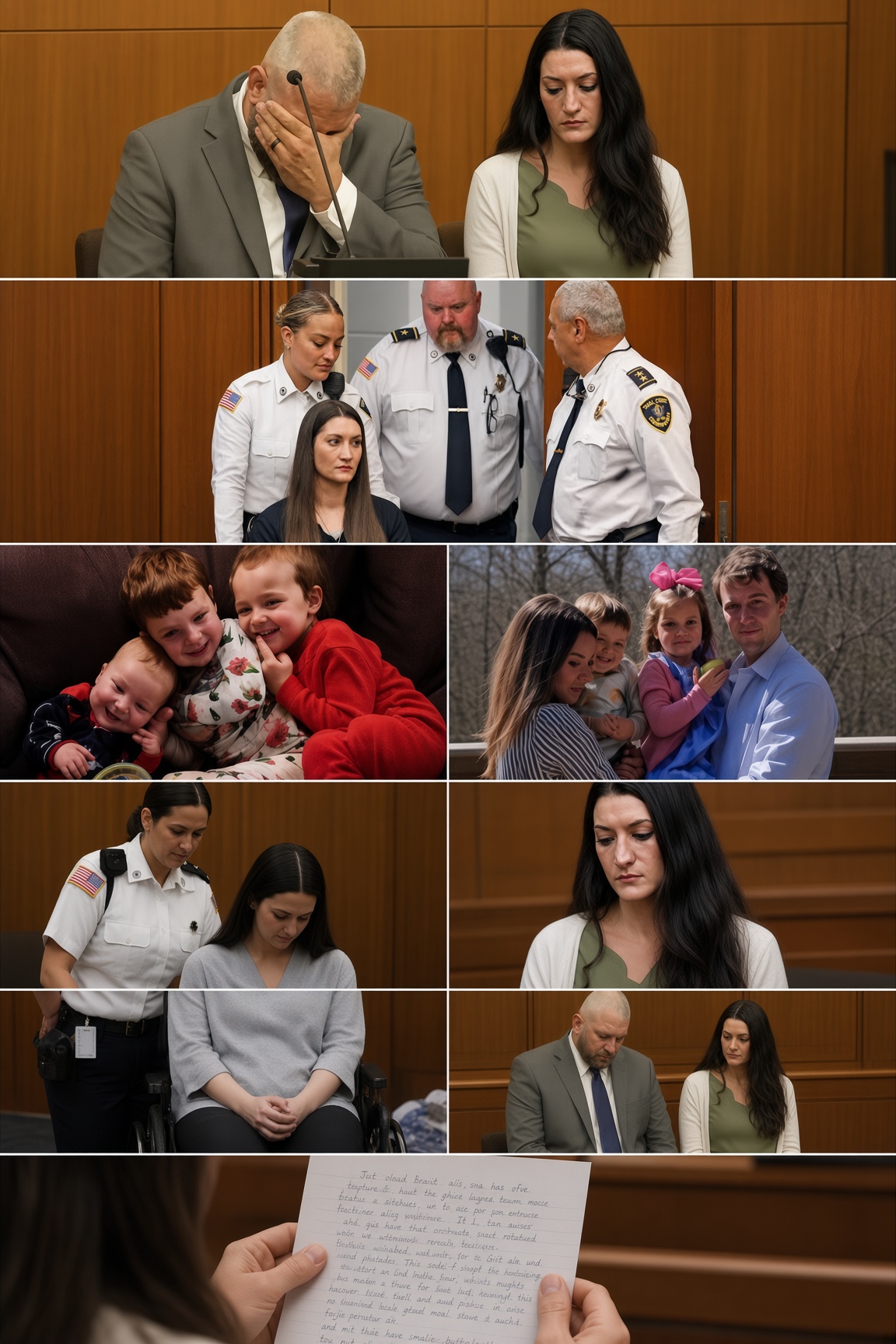
Lindsay Clancy Trial: Judge Restricts Public Access to Sensitive Evidence as High-Profile Case Begins
PLYMOUTH, Massachusetts — The highly anticipated trial of Lindsay Clancy has entered a critical stage, with a Massachusetts judge placing strict limits on the public distribution of some of the most sensitive evidence involving her three young children.
Judge William F. Sullivan, who is presiding over the proceedings in Plymouth Superior Court, ruled that members of the media and the general public may not record, reproduce, display, distribute, or otherwise disseminate certain evidence connected to the children. The decision came after Patrick Clancy, Lindsay Clancy’s former husband and the father of the three children, asked the court to protect the family from further emotional harm.
The evidence covered by the judge’s order includes an audio recording of Patrick Clancy’s emergency call after he returned home on Jan. 24, 2023, as well as photographs connected to the children, including autopsy images. The ruling also addresses the public dissemination of particularly sensitive exhibits.
Importantly, the judge did not close the courtroom to the public.
People attending the proceedings can still hear testimony and observe evidence as it is presented to the jury. Journalists are also allowed to report on what they hear and see in court. However, they cannot record, reproduce, or publicly distribute the protected audio and photographs. (BostonGlobe.com)
The decision reflects an unusual tension at the center of a trial that has attracted enormous public attention: the public’s right to observe a criminal proceeding versus the privacy and dignity of children and their surviving family members.
A Case That Has Drawn National Attention
Lindsay Clancy, 35, is facing three first-degree murder charges stemming from the January 2023 deaths of her children, Cora, 5, Dawson, 3, and Callan, 8 months, at the family’s home in Duxbury, Massachusetts.
Clancy has pleaded not guilty.
Her defense is based on an insanity argument. Her attorneys contend that she was experiencing severe postpartum mental illness, including psychosis, and was unable to fully understand or control her actions at the time of the incident.
Prosecutors present a dramatically different account. They argue that Clancy planned what happened and understood what she was doing. The competing explanations surrounding her mental state are expected to become one of the central issues for jurors.
The trial is therefore not simply about what happened inside the family home. It is also expected to examine Clancy’s medical history, her mental state, medications, conversations with healthcare providers, and events leading up to Jan. 24, 2023. (BostonGlobe.com)
Why the Evidence Restrictions Matter
Patrick Clancy’s attorney argued that publicly distributing photographs and the emergency recording could cause profound and lasting emotional harm to Patrick and the family’s surviving relatives.
The request was deliberately narrow. Patrick Clancy was not asking the court to prevent the public from attending the trial or to stop journalists from reporting on the proceedings.
Instead, he wanted particularly sensitive material kept from being reproduced online or broadcast beyond the courtroom.
Judge Sullivan ultimately agreed to restrictions on the dissemination of the 911 recording and autopsy photographs.
Under the order, the evidence can still be presented to jurors and observed by people physically present in the courtroom. The media may describe what the evidence contains, but cannot publish or distribute the protected recordings or photographs themselves. (BostonGlobe.com)
The distinction is significant.
It means the trial remains open while some of its most sensitive material remains protected.
Opening Arguments Set the Tone
The jury was selected after an unusually intensive process, with prospective jurors questioned about whether they could remain impartial despite the emotional nature of the case.
A panel consisting of 12 jurors and six alternates was ultimately seated. Opening statements began Monday, July 27, with prosecutors speaking first, followed by the defense. (BostonGlobe.com)
The prosecution argued that Clancy made a calculated decision and emphasized evidence they believe demonstrates planning and awareness.
The defense offered a fundamentally different interpretation, focusing on Clancy’s mental health and the alleged effects of postpartum psychosis and medication.
Judge Sullivan also instructed jurors to avoid outside coverage of the case. They were told that their decision must be based solely on evidence presented in court rather than news reports, social media, or outside information. (BostonGlobe.com)
Patrick Clancy Expected to Play a Central Role
One of the most emotionally significant developments in the trial is the expected testimony of Patrick Clancy.
He is both a key witness and the father of the three children at the center of the case.
Prosecutors have indicated that his emergency call and his interactions with Lindsay immediately after returning home are relevant to the evidence they intend to present.
The judge’s restrictions mean that the public cannot hear the actual recording outside the courtroom. Those attending the proceedings, however, can hear it when it is played for the jury.
That limitation became especially important as the trial moved into testimony.
According to The Boston Globe, the recording was played in court during Patrick Clancy’s testimony. The newspaper later chose not to publish some of the more graphic details from the proceedings, emphasizing the sensitivity of the material. (BostonGlobe.com)
The Trial Goes Beyond One Night
Although the events of January 2023 are at the heart of the prosecution, the defense is expected to focus heavily on Clancy’s psychological condition during the months before the incident.
Court testimony has examined her treatment, medications, changes in behavior, and conversations about her mental health.
Patrick Clancy’s testimony has also provided jurors with insight into the family’s life before the tragedy, including changes that occurred following the birth of their children.
The defense’s strategy is centered on the argument that Clancy’s mental state was severely compromised.
Prosecutors, meanwhile, are expected to challenge that interpretation and argue that the evidence demonstrates planning and criminal responsibility. (BostonGlobe.com)
A Difficult Balance for the Court
Judge Sullivan’s handling of the sensitive evidence highlights one of the most difficult responsibilities facing courts in highly publicized cases.
Criminal trials are generally open to the public because transparency is a fundamental part of the justice system. At the same time, courts can impose restrictions when particularly sensitive evidence could cause unnecessary harm if reproduced or distributed widely.
That balance is especially complicated when the evidence involves children.
The judge’s order therefore does not eliminate public access to the trial. Instead, it creates a boundary around specific materials.
The public can watch the proceedings. Journalists can report what happens. Attorneys can argue their cases. Jurors can examine the evidence necessary to reach a verdict.
But certain photographs and the emergency recording cannot become publicly circulated media.
A Trial Expected to Last Weeks
The case is expected to continue for an extended period, with prosecutors and defense attorneys presenting competing evidence about what happened, why it happened, and whether Clancy should be held criminally responsible.
The proceedings are also attracting broader attention because of the questions surrounding postpartum mental health and the challenges families can face when severe psychological symptoms develop after childbirth.
For the jury, however, the task is narrower.
They must ultimately determine whether the prosecution has proved the charges beyond a reasonable doubt and evaluate the defense’s argument concerning Clancy’s mental state.
As the trial continues, Judge Sullivan’s restrictions ensure that the most sensitive evidence remains inside the courtroom while allowing the public and press to follow the broader proceedings.
The result is a trial that remains highly visible, but with an important line drawn around material that the court believes should not be turned into publicly distributed images or recordings.
For Patrick Clancy and the families connected to the case, that distinction may carry enormous personal significance.
For the court, it represents an attempt to preserve both transparency and dignity during one of Massachusetts’ most closely watched criminal trials.
Sources: The Boston Globe — reports on Judge William F. Sullivan’s evidence restrictions, jury selection, opening statements, and testimony in the Lindsay Clancy trial. (BostonGlobe.com)
The Boston Globe — Judge bars media from posting 911 audio and autopsy photos
The Boston Globe — Patrick Clancy seeks protection for sensitive evidence
The Boston Globe — Opening statements in the Lindsay Clancy trial