Willow Dodding: The Toddler Who Took Her First Steps on a Prosthetic Leg After Fibular Hemimelia Surgery
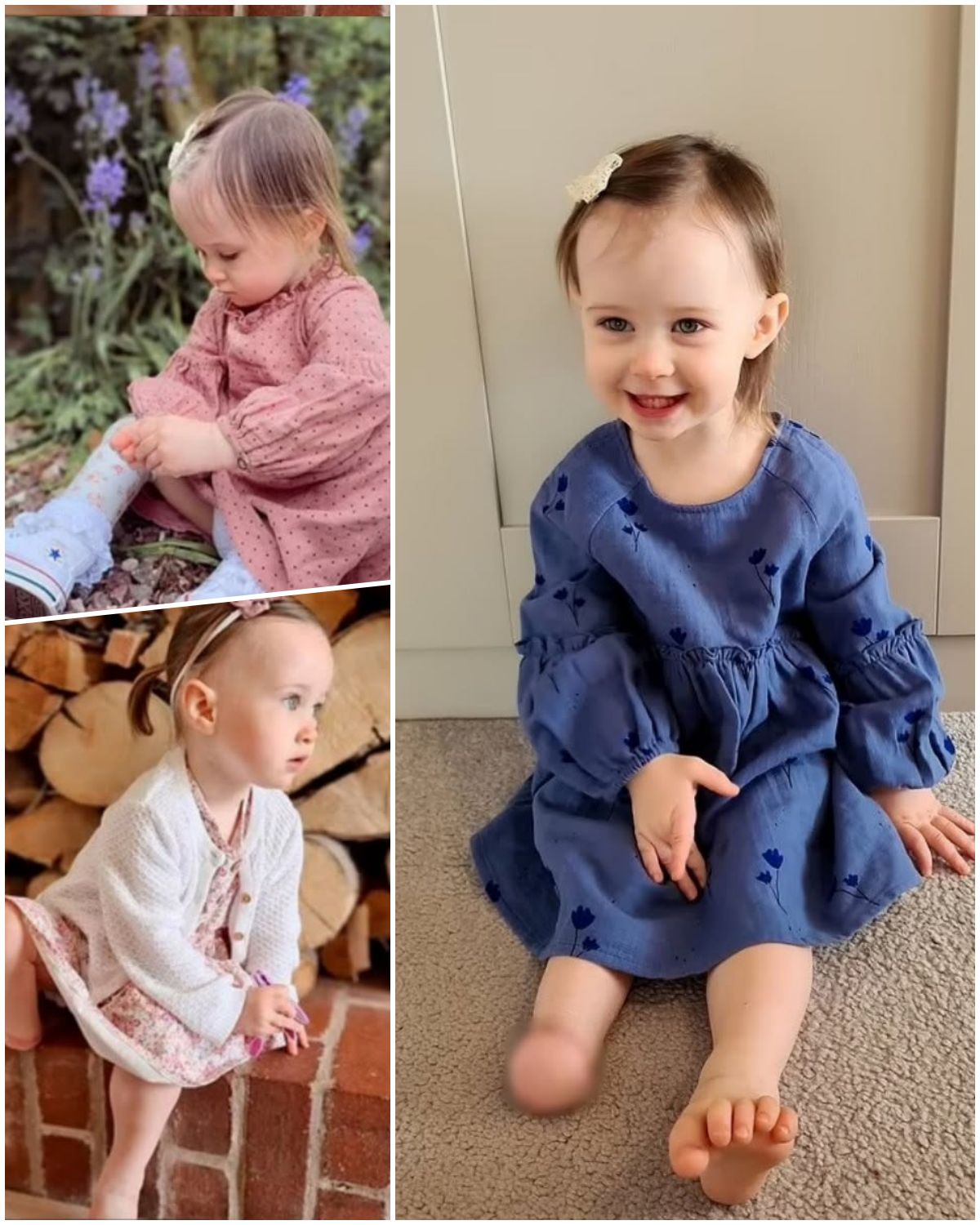
For little Willow Dodding, learning to walk was already an exciting milestone. At just under two years old, her first confident steps with a prosthetic leg became a moment her parents will never forget.
Willow was born in July 2019 at Blackpool Victoria Hospital with fibular hemimelia, a rare congenital condition in which the fibula bone in the lower leg is partially developed or completely missing. In her case, the fibula in her right leg was absent, and the tibia and femur were shorter than those in her left leg. The condition was first detected at the 20-week antenatal scan.
Her parents, Charlotte and James Dodding, were advised to wait and assess the severity after birth before deciding on treatment. Willow reached early developmental milestones, including crawling and attempting to walk, ahead of expectations. However, as she grew, the leg-length difference and foot deformity began to limit her mobility and caused instability.
After careful consideration, the family opted for a Syme amputation (removal of the front part of the foot while preserving the heel pad) when Willow was about 19 months old, performed at Royal Manchester Children’s Hospital. The goal was to create a stable residual limb that would allow better long-term prosthetic use and greater independence.
A custom prosthetic leg was made for her at Preston Specialist Mobility Rehabilitation Centre. The team incorporated fabric from one of Willow’s favourite baby tops into the design. Just four months after the surgery, in May 2021, Willow took her first steps on the new prosthetic. Her parents described her as determined and resilient, quickly adapting to the limb and showing little hesitation.
Fibular hemimelia is uncommon, occurring in roughly 1 in 40,000 births. Treatment options range from limb-lengthening and reconstruction procedures to amputation followed by prosthetic fitting, depending on the severity of the deficiency, the condition of the foot, and family preferences. In Willow’s case, the decision prioritised early mobility and a functional childhood.
Willow’s progress illustrates both the challenges of congenital limb differences and the positive outcomes that modern paediatric orthopaedics and prosthetics can achieve when timed with a child’s natural drive to move.
Sources:
- Contemporary reporting from Metro, Lancs Live, SWNS and related coverage (June 2021) detailing Willow Dodding’s diagnosis of fibular hemimelia, Syme amputation at approximately 19 months, custom prosthetic fitting, and first steps taken four months later.