THE MISSING PIECE: WHY THE MADELEINE McCANN CASE HAS NEVER BEEN SOLVED
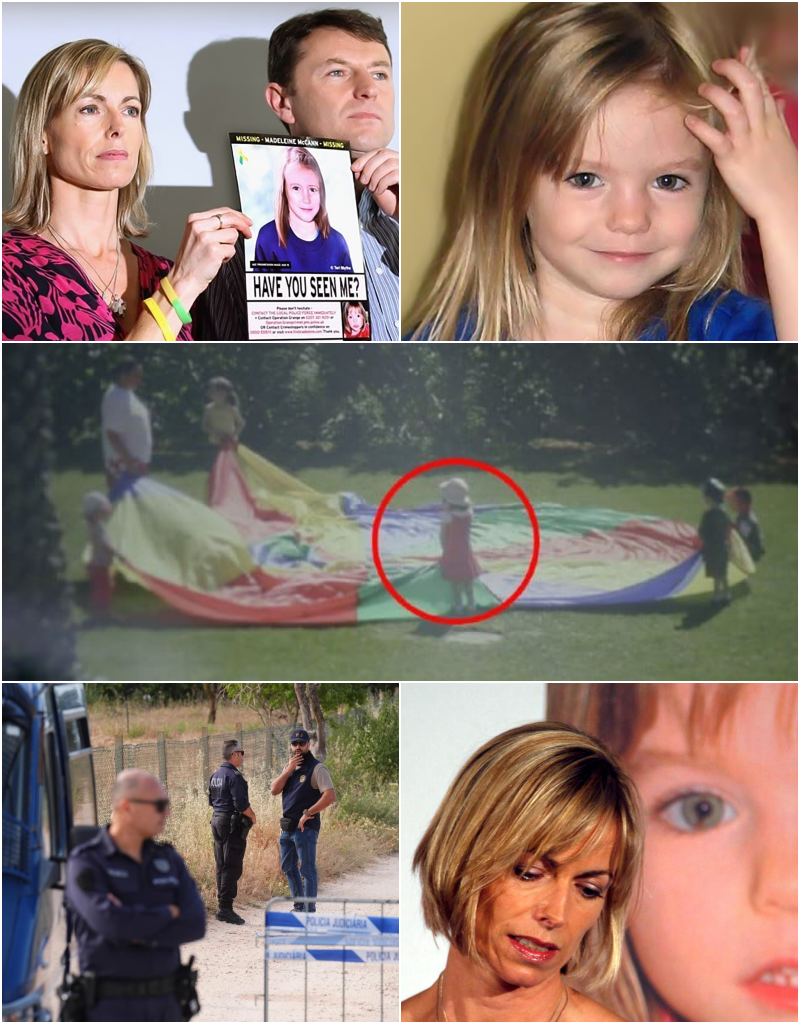
The Madeleine McCann investigation contains many pieces of information.
There are witnesses.
There are phone records.
There are reported sightings.
There are searches.
There are suspects.
There are international police teams.
And there are years of investigative work.
Yet one crucial piece remains missing:
proof of what happened to Madeleine after she disappeared.
That missing piece explains why the case remains open nearly two decades later.
The disappearance itself
Madeleine was three years old when she vanished from a holiday apartment in Praia da Luz on May 3, 2007.
Her parents were dining with friends nearby while their children slept.
When Kate McCann entered the apartment during one of the checks, she discovered that Madeleine was gone.
The family immediately raised the alarm.
The investigation began that night.
But the first hours of a missing-child investigation are critical, and the circumstances surrounding the apartment and the surrounding area have been scrutinized repeatedly over the years.

Why is the timeline so important?
Investigators need to reconstruct Madeleine’s final known movements.
Who entered the apartment?
Who was nearby?
What vehicles were present?
Who made telephone calls?
What did witnesses see?
Which people could have entered or left the area unnoticed?
These questions sound simple.
They are not.
The investigation involves events that occurred almost 20 years ago.
Human memory changes.
Witnesses forget details.
People move away.
Records disappear.
Buildings change.
Physical evidence can degrade or become difficult to interpret.
This is one reason investigators continue to examine old evidence alongside new information.

What happened to the original investigation?
Portuguese police initially led the investigation.
British investigators later became deeply involved.
In 2011, the Metropolitan Police established Operation Grange at the request of the UK Home Secretary. The Met initially conducted an investigative review before formally moving into an investigation phase in 2013.
Today, Operation Grange continues to work with Portuguese and German authorities.
That alone answers another common question:
No, the British investigation was never simply abandoned.
The Met continues to describe the case as an ongoing investigation.
Why hasn’t DNA solved everything?
DNA evidence is often portrayed in popular culture as a magic solution.
Real investigations are far more complicated.
A DNA sample is only useful if investigators can establish where it came from, when it was deposited, how it got there and whether it is genuinely connected to the crime.
A partial or contaminated sample may not answer those questions.
Recent reporting has raised the possibility of renewed DNA analysis in the Madeleine investigation. But there has been no official announcement that a new DNA discovery has conclusively established Madeleine’s fate.
That distinction is essential.
A forensic lead can be important without solving a case.

What role does the Algarve play?
The geography of Praia da Luz has been examined repeatedly.
Investigators have searched locations connected to various theories over the years.
One of the most significant recent searches occurred in Portugal in 2025, when German and Portuguese authorities examined areas linked to the Brückner investigation.
Searches like these are based on investigative hypotheses.
But a search does not mean investigators know exactly where Madeleine is.
It means authorities believe a location may contain evidence capable of answering a question.
If nothing is found, the investigation moves on.
What about the new dossier?
Reports in 2026 claimed German authorities transferred a dossier containing new information to British investigators.
This has generated speculation that investigators may be preparing a stronger case against Brückner.
But the contents of the dossier have not been fully disclosed by authorities.
That means the public cannot yet know whether it contains:
- genuinely new evidence;
- additional corroboration of existing evidence;
- witness information;
- forensic material;
- digital evidence;
- or simply another investigative lead.
Calling it a “breakthrough” before authorities confirm its significance would therefore be premature.
What is the missing piece?
Ultimately, investigators need something that connects the suspect, the victim and the crime in a legally convincing way.
That might be physical evidence.
It might be digital evidence.
It might be a witness.
It might be a confession supported by independent evidence.
Or it might be the discovery of Madeleine herself or evidence establishing what happened to her.
Until one of those pieces emerges, the case remains incomplete.
And that is why the Madeleine McCann investigation has survived for so long.
It isn’t because police have no theories.
It is because a theory is not the same as proof.
After nearly 20 years, investigators may know considerably more than the public does.
But until they can demonstrate exactly what happened, the most important piece of the puzzle remains missing.