From Online Target to Lasting Voice: The Story of Sophia Weaver
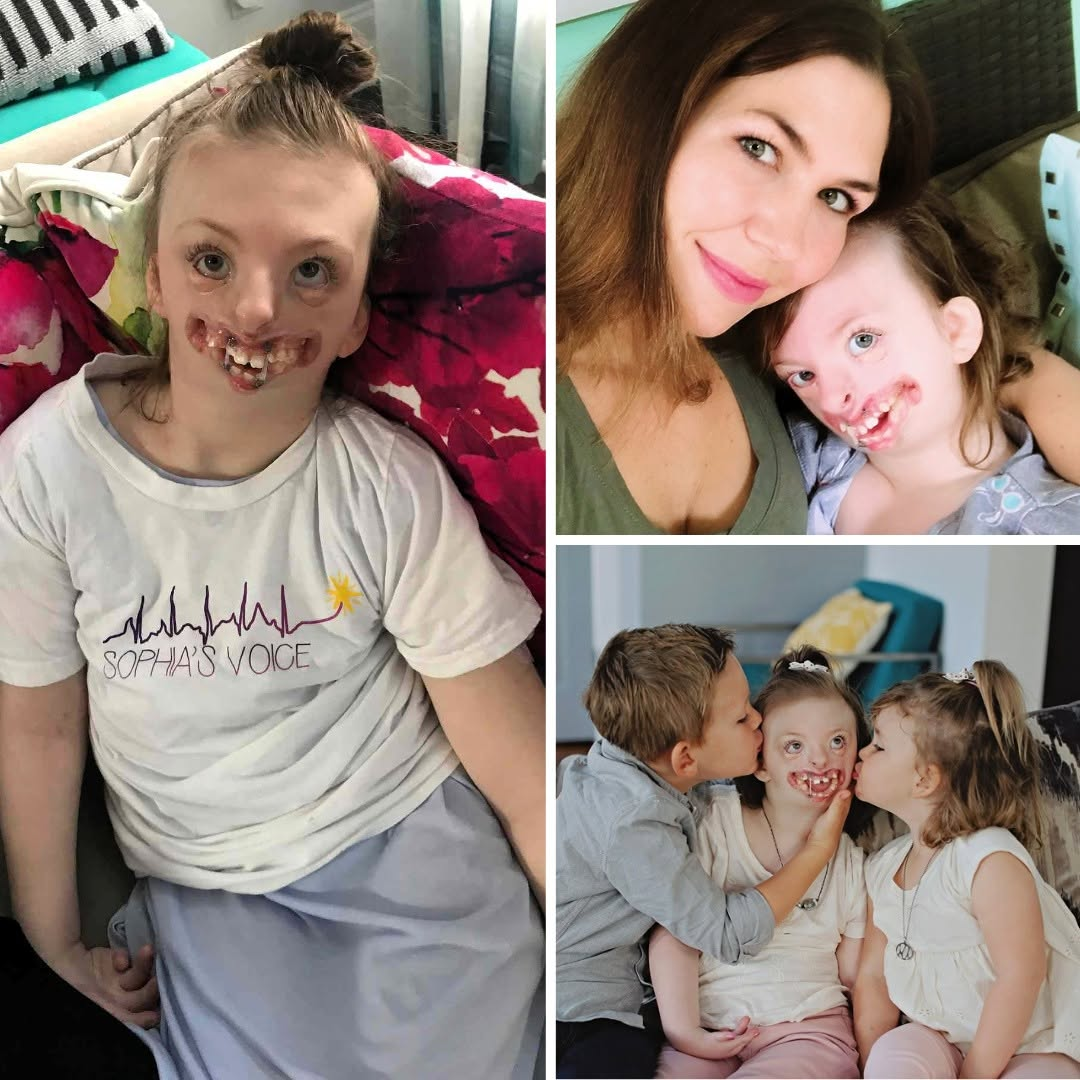
Sophia Weaver was born in North Carolina on October 20, 2008. During a late ultrasound, doctors detected significant physical differences involving her face, hands, and feet. Her parents, Natalie and Mark Weaver, were warned that she might not survive birth. Sophia survived—and went on to live a decade that left a far greater mark than anyone could have predicted.
As she grew, her medical picture proved more complex than the visible differences alone. She was diagnosed with Rett syndrome, a rare neurological disorder that caused regression and the gradual loss of previously developed abilities. According to her mother, Sophia lost the ability to speak, sit, stand, walk, eat by mouth, and fully use her hands. She also lived with type 1 diabetes, a serious immune deficiency, and other complications. Over roughly ten years she underwent approximately 30 surgeries while her family worked to balance medical needs with as much ordinary childhood as possible.
Because of her visible facial differences, Sophia faced staring, comments, and cruelty both in public and online. In 2018 a photograph of her was used without permission in a social-media post arguing about abortion and disability. Strangers who knew nothing of her life turned her image into a political prop. Natalie Weaver refused to stay silent. She publicly challenged the abuse and began using Sophia’s story to advocate for people with disabilities and facial differences. Her efforts helped push social-media platforms to improve reporting tools and policies around disability-related harassment.
Natalie’s advocacy grew into Sophia’s Voice, a nonprofit created to support people with disabilities and medically complex needs while promoting dignity, acceptance, and equal access to healthcare. Former President Barack Obama publicly responded to one of her posts, thanking her for the work she was doing for Sophia and other families.
Yet while Sophia’s story was reaching more people, her health continued to decline. After one of her later surgeries, the family recognized that her body could no longer endure major medical interventions. They made the difficult decision to transition her to hospice care—not ending care, but shifting its focus to comfort, experiences, and the time they still had together.
Natalie called the new chapter “Sweet Sophia’s Adventures.” The family began checking items off a bucket list: special outings, first experiences that her demanding medical schedule had previously made difficult, and plans for a larger road trip across the United States. They wanted more memories.
Sophia’s condition worsened before the full journey could take place. On May 23, 2019, she died at the age of 10, surrounded by her parents, brother, sister, and other relatives.
Her life lasted only a decade. In that time she underwent dozens of procedures and lived with conditions that affected nearly every part of daily life. She also became a target for people who saw only her appearance. Her family refused to let those strangers define her. They shared her photographs, spoke about who she was, and took her into the world. When further major treatment no longer served her, they chose to spend the remaining time creating experiences together.
After Sophia’s death, Natalie continued the work that had grown from her daughter’s life. Sophia’s Voice remains active, supporting families facing disability and medical needs while advocating for acceptance and inclusion.
Sophia Weaver’s story was never only about a rare condition or the number of surgeries she endured. A photograph of her was once used to divide and demean. Her life helped build something that unites—an ongoing effort to insist that every child deserves kindness, dignity, and the chance to be known as a person rather than a diagnosis or an argument.
Sources
- CNN, People, TODAY, Newsweek, and Charlotte Observer reporting (2018–2019)
- Statements and updates from Natalie Weaver / Sophia’s Voice
- Contemporary coverage of the family’s advocacy, the 2018 social-media incident, hospice transition, and Sophia’s death on May 23, 2019