AYLA’S EXTRAORDINARY JOURNEY: THE LITTLE GIRL BORN WITHOUT FOUR LIMBS WHO TOUCHED THOUSANDS OF HEARTS
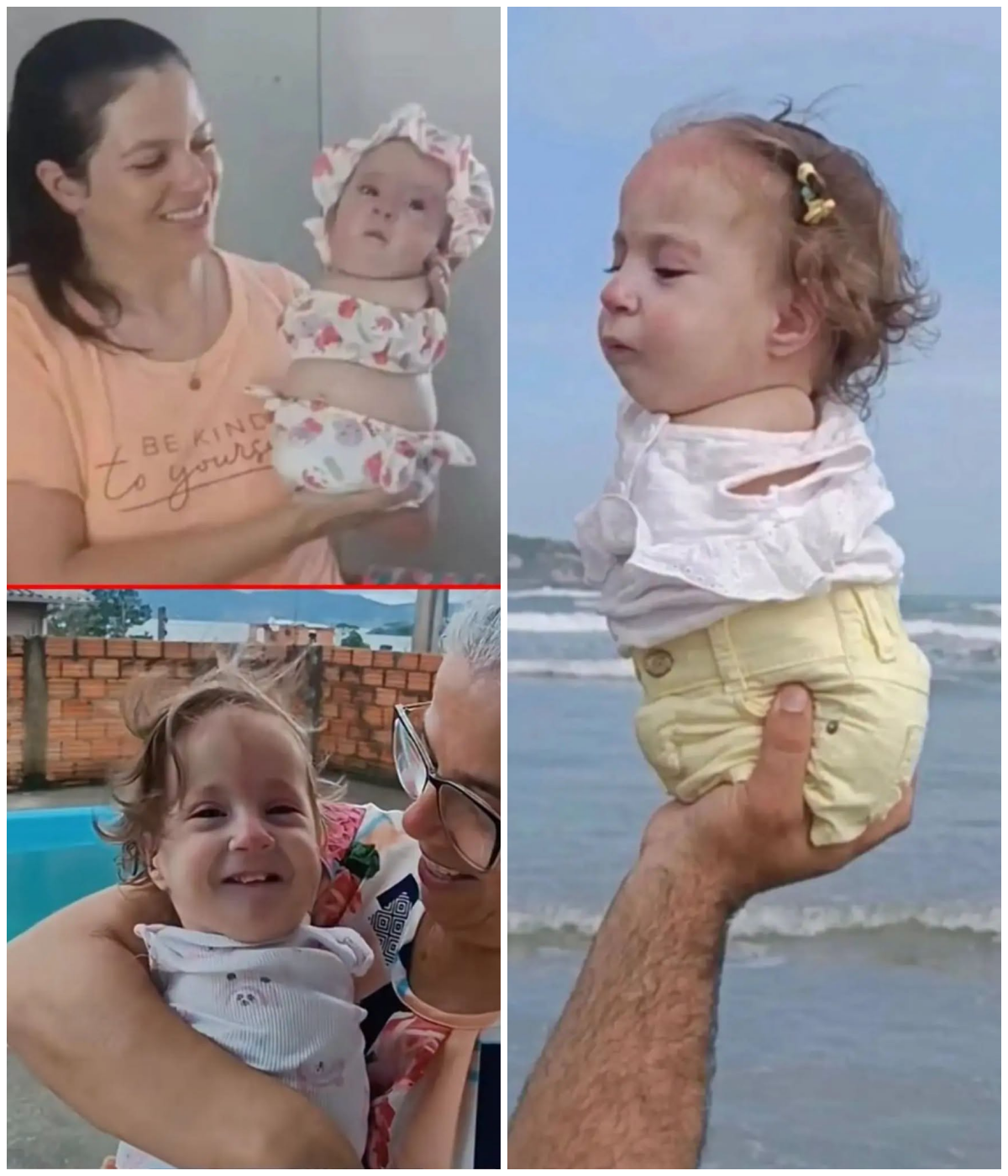
Born with two rare congenital conditions, Ayla faced extraordinary challenges from her first days of life. Her mother chose to share their journey with the world — turning their family’s story into a powerful message about disability, resilience and unconditional love.
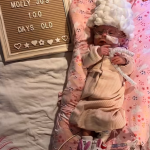
When Emanoela Pereira first learned that she was pregnant, she never imagined that her daughter’s arrival would lead her into a completely different world.
During a prenatal ultrasound at around 13 weeks of pregnancy, doctors discovered that her baby would be born with tetra-amelia syndrome, an exceptionally rare congenital disorder characterized by the absence of all four limbs.
The diagnosis was devastating and frightening for a mother who had never encountered the condition before.
But Emanoela soon began searching for information, connecting with people with disabilities and learning that her daughter’s diagnosis did not mean she would be unable to experience life, develop abilities or bring joy to the people around her.
Then Ayla was born.
And her challenges were even greater than her family had initially understood.
A FRAGILE BEGINNING
Ayla was also born with Pierre Robin sequence, a congenital condition involving an unusually small or recessed lower jaw and backward displacement of the tongue. In some babies, these anatomical differences can interfere with breathing and feeding.
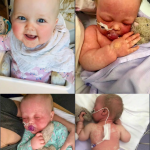
After birth, Ayla required intensive medical care.
She spent 15 days in a neonatal intensive care unit, initially because she needed oxygen and because she was underweight. According to her mother, Ayla weighed approximately 1.6 kilograms at birth and needed to gain additional weight before she could leave intensive care.
Although her lungs improved within the first few days, feeding remained another important challenge.
Her Pierre Robin sequence affected the position of her tongue and was associated with a cleft palate and retrognathia. Her family sought speech and feeding therapy, and over time Ayla began making progress.
By six months old, her mother reported that Ayla had been able to stop using a feeding tube and was beginning to eat independently.
For her family, every small milestone mattered.
A MOTHER DECIDES TO SHARE HER STORY
At first, Emanoela was reluctant to post photographs and videos of her daughter online.
She was not ashamed of Ayla. Instead, she worried about cruelty and judgment from strangers.
Eventually, she decided that sharing their daily life could serve a greater purpose.
She began documenting Ayla’s routines, therapies, development and ordinary moments through social media.
The response was enormous.
Her account attracted tens of thousands of followers, and reports in early 2024 said her TikTok account had accumulated millions of likes. Her videos also connected her with other parents raising children with rare conditions and disabilities.
For Emanoela, the internet became more than a place to share photographs.
It became a community.
Other mothers contacted her to share their own experiences, ask questions and explain that seeing Ayla’s daily life had helped them feel less alone.
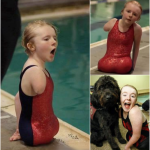
Her message was also simple: Ayla was not defined only by her diagnoses.
She was a child.
She could learn.
She could develop.
And she could experience the world in her own way.
WHAT IS TETRA-AMELIA?
Tetra-amelia syndrome is an extremely rare congenital disorder in which a baby is born without all four limbs. Medical literature describes it as a very uncommon condition, and cases can involve abnormalities affecting other organs and body systems as well.
In Ayla’s case, the condition occurred alongside Pierre Robin sequence, making her early medical journey particularly complex.
Pierre Robin sequence is generally associated with mandibular hypoplasia, glossoptosis and frequently cleft palate. Because the smaller jaw can cause the tongue to sit farther back in the airway, some newborns experience significant breathing difficulties. Feeding can also be challenging.
That is why Ayla’s first weeks required such close medical supervision.
But her story was never only about medical terminology.
It was about the little victories that came afterward.
EVERYDAY ACHIEVEMENTS BECAME MILESTONES
For most families, learning to eat independently, moving around the home or participating in therapy may seem like ordinary parts of childhood.
For Ayla, they represented hard-earned achievements.
Her mother documented those moments so that people could see the child behind the diagnosis.
She wanted people to understand that disability does not erase personality, curiosity, affection or the ability to build meaningful relationships.
Ayla’s story quickly became a source of encouragement for families facing similar circumstances.
Her mother told Brazilian media that sharing their experiences allowed her to connect with people living with the same syndrome and helped her understand that, despite her disability, her daughter could learn to do things independently — even if she had to find different ways of doing them.
A STORY THAT CONTINUED BEYOND SOCIAL MEDIA
Ayla’s online presence continued to attract attention, with her mother sharing glimpses of their family life and encouraging a more compassionate understanding of children with disabilities.
Her story also reached audiences outside Brazil, with Spanish- and Portuguese-language media reporting on the little girl whose determination and personality had captured the attention of thousands of people online.
Sadly, Ayla’s journey ultimately came to a tragic end.
In May 2025, Brazilian media reported that Ayla Medeiros da Rosa had died at just 1 year and 10 months old. Reports did not disclose the cause of death.
Her passing brought an outpouring of grief from the community that had followed her life online.
MORE THAN A MEDICAL STORY
Ayla’s life was brief, but the impact of her story reached far beyond the medical conditions she was born with.
She gave thousands of people an opportunity to see disability through the eyes of a family living it every day — not simply through diagnoses, statistics or hospital reports.
Her mother’s decision to share their journey created connections between families who might otherwise have felt isolated.
And perhaps that is the most enduring part of Ayla’s story.
She was born facing challenges that most people could never imagine.
But her family showed the world that a diagnosis is not the whole story of a child.
Behind the medical terms was a little girl who smiled, learned, received therapy, interacted with her family and celebrated each new achievement.
Ayla’s life was short, but her story reminded thousands of people that every child deserves to be seen first as a person — not as a diagnosis.
SOURCES
- UOL VivaBem, “Descobri com 13 semanas que minha filha nasceria sem braços e pernas” — interview with Ayla’s mother Emanoela Pereira about the diagnosis, NICU stay, Pierre Robin sequence, feeding progress and social-media journey.
- Journal of Child / DergiPark, “Pierre Robin Sequence; Airway Management and Feeding in Newborn” — medical background on Pierre Robin sequence, mandibular hypoplasia, glossoptosis and potential airway and feeding complications.
- Notícias ao Minuto — report on Ayla’s two rare congenital conditions, her 15-day intensive-care stay and her mother’s social-media campaign.
- El Caribe — international coverage of Ayla’s story and her growing online following.
- HN Notícias — report published in May 2025 confirming Ayla’s death at 1 year and 10 months and documenting the impact of her story on social media.