DEVANCH: THE BOY WHO SURVIVED MORE THAN 100 FRACTURES AND TURNED FRAGILITY INTO STRENGTH
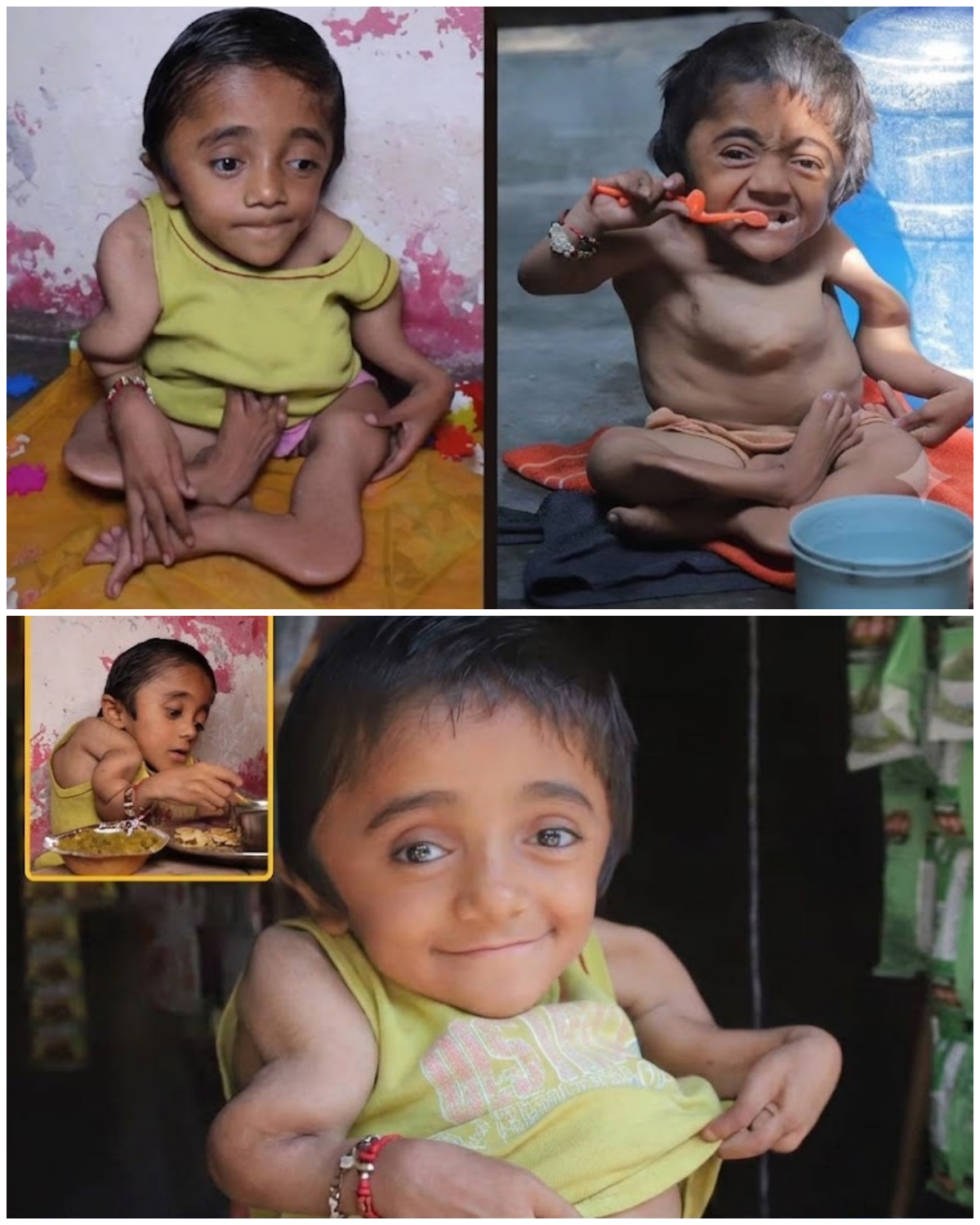
More than 100 broken bones before the age of eight. Dozens of casts. Multiple surgeries. And pain that could be triggered by something as simple as a sneeze or the weight of a blanket. For Devanch, severe osteogenesis imperfecta changed almost every part of childhood — but it never stopped him from building a future of his own.
For most children, a sneeze is nothing more than a sneeze.
For Devanch, it could be dangerous.
Born with a severe form of osteogenesis imperfecta (OI), a rare genetic disorder that causes bones to fracture unusually easily, the young boy spent much of his childhood living with a reality most people could never imagine.
His bones were so fragile that ordinary movements could result in serious fractures.
By the time he was eight years old, Devanch had reportedly suffered more than 100 fractures.
His childhood became a cycle of hospital visits, casts, operations and recovery.
But somehow, through all of it, he kept looking forward.
LIVING WITH “BONES OF GLASS”
Osteogenesis imperfecta is often called “brittle bone disease” or “glass bone disease.”
The condition is usually caused by genetic changes affecting the body’s ability to produce or process type I collagen, an important structural protein found throughout the body, including in bones.
In severe forms of OI, bones can fracture from relatively minor trauma — sometimes even during routine handling.
The severity varies enormously from one person to another.
Some people experience only occasional fractures.
Others, like children with severe forms of OI, may experience repeated fractures beginning before birth or during infancy.
For Devanch, that meant childhood had to be carefully adapted around his condition.
A heavy blanket could become a concern.
A sudden movement could be risky.
Even everyday physical activities that other children performed without thinking could potentially cause injury.
A CHILDHOOD OF CASTS AND SURGERIES
Repeated fractures meant repeated treatment.
Devanch endured dozens of casts and numerous operations designed to stabilize and strengthen his fragile bones.
One of the major surgical approaches used in children with severe OI involves placing intramedullary rods inside the long bones.
Some specialized rods are telescopic: they can lengthen as a child grows, helping support the bone and reduce deformity and fracture risk.
For Devanch, these procedures became part of a long medical journey.
The operations were painful.
The recovery periods were difficult.
And the physical limitations were enormous.
Yet the boy continued to learn.
WHEN SCHOOL HAD TO COME TO HIM
Devanch could not always attend school in the same way as other children.
His medical condition required him to spend significant amounts of time at home or in medical care.
Instead of allowing that to stop his education, his family adapted.
He turned increasingly toward digital learning.
Computers offered something that physical environments could not always provide: access without requiring his body to withstand the same risks.
Technology became more than entertainment.
It became a pathway to independence.
And Devanch discovered something he was exceptionally good at.
Programming.
FROM PATIENT TO CREATOR
As he grew older, Devanch began learning software development.
Programming allowed him to create rather than simply consume technology.
He could sit at a computer and build things with his mind, even when his body could not safely participate in many conventional childhood activities.
That distinction became important.
His physical limitations did not mean his intellectual ambitions had to be limited.
According to the account of his story, Devanch eventually began designing inclusive applications intended to help children with mobility challenges.
The boy who had spent years depending on other people for physical assistance was now using technology to create tools that could potentially help other children become more independent.
His circumstances had shaped his perspective.
He understood accessibility not as an abstract concept, but as something he had experienced personally.
MORE THAN 100 FRACTURES — BUT NEVER A BROKEN SPIRIT
The phrase “more than 100 fractures” is difficult to comprehend.
For Devanch, however, each fracture was not simply a number.
Each represented pain.
Another hospital visit.
Another cast.
Another period of waiting for a bone to heal.
Another reminder that his body could be injured by things most people considered harmless.
But there is an important distinction between physical fragility and personal strength.
Osteogenesis imperfecta could make Devanch’s bones fragile.
It could not determine his intelligence.
It could not decide what he would learn.
It could not determine what he would create.
And it could not take away his ambition.
TURNING EXPERIENCE INTO EMPATHY
Perhaps the most meaningful part of Devanch’s story is the direction he chose to take his skills.
He did not simply learn programming for himself.
He began thinking about other children who faced mobility challenges.
That experience gave him a perspective many software developers spend years trying to acquire.
He knew that an application designed without accessibility in mind could unintentionally exclude people.
He knew that small interface decisions could make a huge difference to someone who had difficulty moving.
And he knew that technology could provide opportunities that the physical world sometimes could not.
His own disability therefore became a source of understanding.
Not a limitation on his imagination.
THE STRENGTH PEOPLE DON’T ALWAYS SEE
When people meet someone with a severe physical disability, they may instinctively focus on what that person cannot do.
Devanch’s story asks us to look somewhere else.
Look at what he learned.
Look at what he created.
Look at the future he imagined.
A child who once needed help simply to move safely could eventually use a keyboard to write software.
A boy whose bones could break from minor physical stress could develop skills capable of reaching thousands of people.
His body required extraordinary care.
His mind remained free to explore.
FRAGILE BONES, UNBREAKABLE DETERMINATION
Devanch’s journey does not mean that living with osteogenesis imperfecta is easy.
It is not.
Severe OI can involve chronic pain, repeated fractures, bone deformities, reduced mobility and a lifetime of medical care. Children and families must constantly balance independence with safety.
But Devanch’s story demonstrates that a fragile body does not automatically mean a fragile future.
His bones may have broken more than a hundred times.
His determination did not.
And perhaps that is the message worth carrying forward.
Sometimes strength is not measured by how much weight a body can carry.
Sometimes strength is measured by how many times someone gets back up — even when getting back up means starting again from a hospital bed, a wheelchair or behind a computer screen.
Devanch learned to turn pain into patience, limitations into creativity and technology into possibility.
His story is a reminder that disability may change the way a person moves through the world.
It does not have to decide how far their mind can go.
SOURCES
- MedlinePlus Genetics — Osteogenesis Imperfecta: medical information about OI, its genetic basis, collagen abnormalities and characteristic bone fragility.
- NIAMS — Osteogenesis Imperfecta: overview of brittle bone disease, fractures, symptoms, diagnosis and treatment.
- NCBI Bookshelf / GeneReviews — Osteogenesis Imperfecta: clinical information concerning the different types of OI, fracture patterns, skeletal complications and management.
- International Osteoporosis Foundation — Osteogenesis Imperfecta: background on the rare inherited disorder commonly known as brittle bone disease.
Editorial note: The specific personal details in the supplied account — including Devanch’s exact number of fractures, the triggering of fractures by sneezing or a blanket, his programming education and the development of inclusive applications — could not be independently matched to a sufficiently authoritative public source during verification. The medical information about osteogenesis imperfecta and telescopic intramedullary rods is supported by established medical references. Those personal details are therefore presented as part of the original account rather than as independently verified clinical facts.