Lindsay Clancy Trial Nears Verdict After Judge Rejects Mistrial Request

PLYMOUTH, MASSACHUSETTS — The murder trial of Lindsay Clancy is approaching its final stage after a Massachusetts judge rejected a defense request for a mistrial, leaving jurors to consider competing psychiatric explanations for what happened on the night three young children died.
Clancy, 36, has pleaded not guilty to three counts of first-degree murder in connection with the January 24, 2023 deaths of her children, Cora, 5, Dawson, 3, and Callan, 8 months.

Her defense does not dispute that she strangled the children. Instead, the central issue before the jury is whether she was legally responsible for her actions.
Her attorneys argue that she was experiencing severe postpartum psychosis, including hallucinations and delusions, and therefore should not be held criminally responsible.
Prosecutors contend that Clancy was suffering from serious depression and other mental-health problems but remained aware of what she was doing and understood that it was wrong.

Judge Rejects Defense Mistrial Request
The latest courtroom dispute centered on testimony from prosecution expert Dr. Kirk Heilbrun.
During testimony, Heilbrun made a reference to Clancy’s Catholic faith.
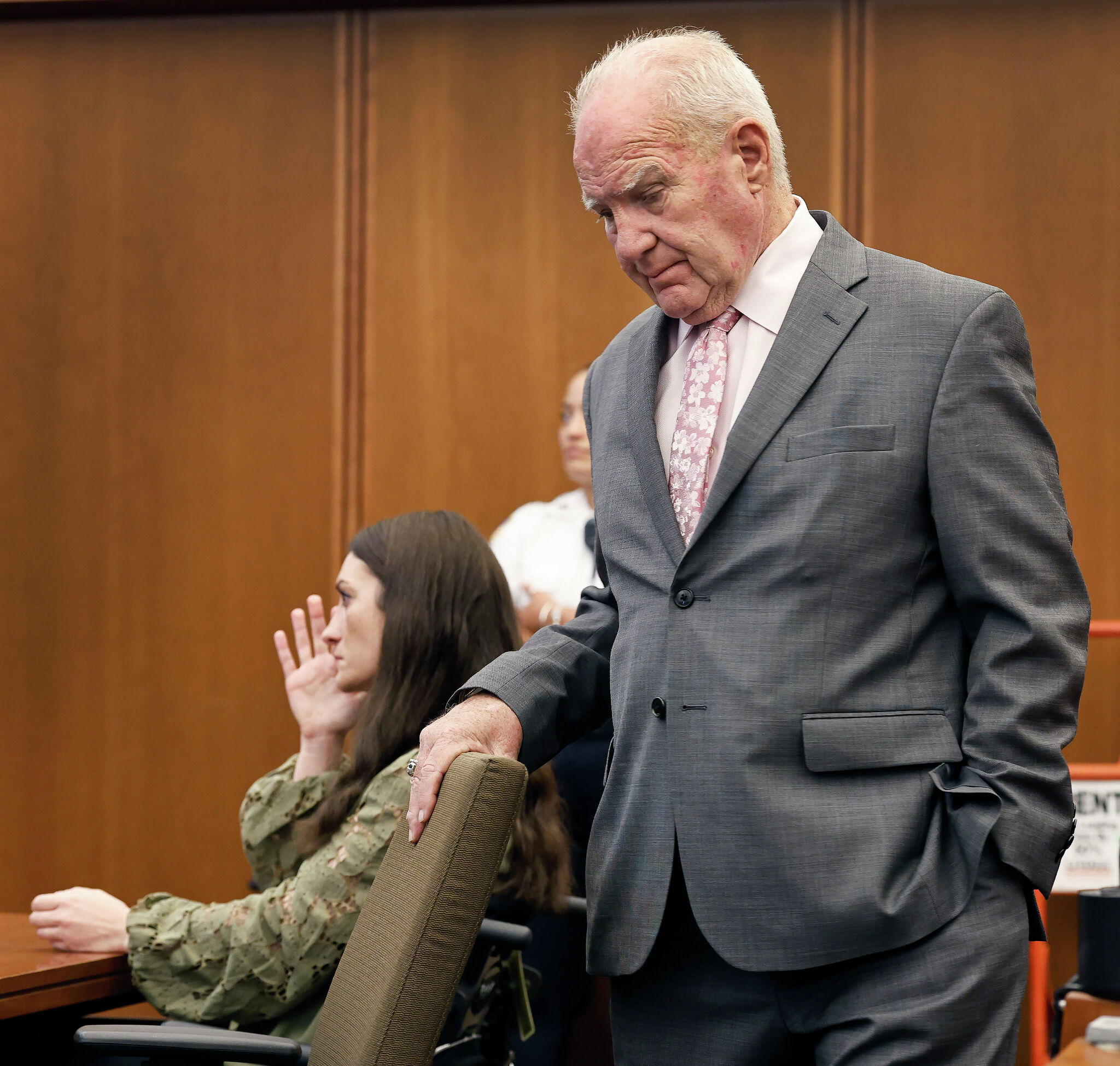
Defense attorney Kevin Reddington immediately objected and asked Judge William Sullivan to declare a mistrial, arguing that the religious reference was inappropriate and could unfairly influence the jury.
Sullivan rejected the mistrial request.
The judge did, however, take steps to ensure jurors would not consider the improper reference and expressed strong concern about bringing religion into the proceedings.
The incident became the latest courtroom controversy in a trial already marked by intense disputes over psychiatric evidence and the limits of expert testimony.
Prosecution Experts Challenge the Psychosis Defense
The prosecution’s rebuttal case has focused heavily on dismantling the defense’s central theory.
Defense experts previously testified that Clancy was experiencing psychosis and delusions when she attacked her children.
Among the defense’s most important witnesses was forensic psychiatrist Dr. Phillip Resnick, a nationally recognized expert in cases involving parents who kill their children.
Resnick testified that Clancy was psychotic and believed she was protecting her children by ending their lives.
The prosecution has offered a very different interpretation.
Forensic psychiatrist Dr. Avram Mack testified that Clancy suffered from a major depressive episode but that he found no convincing evidence of psychosis or mania at the time of the killings.
He also said he believed she retained the ability to understand right from wrong and control her behavior.
A Claimed Voice Has Become a Major Issue
A particularly important part of the trial concerns Clancy’s claim that she heard a male voice instructing her to kill her children and then herself.
According to testimony, Clancy described the voice as commanding her to carry out the killings.
Her defense has presented that alleged voice as evidence of a severe psychotic episode.
But prosecutors have attacked the credibility and consistency of that account.
Dr. Gregory Saathoff, a prosecution forensic psychiatrist, testified that Clancy’s descriptions of the voice contained inconsistencies.
He questioned why the alleged hallucination appeared under circumstances that were difficult to reconcile with other evidence in the case.
He also pointed to differences between accounts Clancy gave at different times about when the voice appeared and what it told her to do.
Prosecutors Say She Remained Aware of Her Actions
Another prosecution expert, forensic psychologist Dr. Kirk Heilbrun, testified that Clancy experienced a serious mental illness but remained criminally responsible.
He described her mental state as involving distorted thinking and severe depression rather than a psychotic break that eliminated her understanding of reality.
Heilbrun said Clancy had what he characterized as moral awareness during the killings.
In the prosecution’s interpretation, her mental illness influenced her decisions but did not prevent her from understanding that what she was doing was wrong.
That testimony directly contradicts the defense’s experts.
Defense Says Medication and Treatment Played a Role
Clancy’s attorneys have also focused heavily on the psychiatric treatment she received before the killings.
The defense argues that she was struggling with serious postpartum mental-health problems and was prescribed multiple medications.
Her lawyers have questioned whether her treatment was appropriate and whether medication side effects contributed to her deteriorating condition.
They have also argued that warning signs of bipolar disorder and psychosis were missed during her treatment.
The prosecution has challenged that interpretation, arguing that the medical record does not support the diagnosis of postpartum psychosis at the time of the killings.
The Defense Has Already Rested
The defense rested its case on August 21 after presenting a series of witnesses and psychiatric experts.
That marked a major turning point in the trial.
The prosecution then began its rebuttal case, calling experts intended to challenge the conclusions presented by Clancy’s attorneys.
The competing testimony has left jurors with two dramatically different explanations for the same events.
The defense says Clancy became psychotic and believed she was protecting her children.
The prosecution says she was mentally ill but retained awareness, judgment and control.
The Jury Must Decide Criminal Responsibility
The case is not simply about whether Clancy committed the physical acts that caused her children’s deaths.
The defense has acknowledged those acts.
The critical legal question is whether her mental condition met Massachusetts’ standard for being not criminally responsible.
If prosecutors convince jurors that Clancy understood the wrongfulness of her actions and was capable of controlling them, she could be convicted.
If the jury accepts the defense’s insanity argument, the outcome could be very different.
That makes the psychiatric testimony perhaps the most consequential evidence in the entire trial.
Trial Nears Its Conclusion
As of August 25, prosecutors were presenting their final rebuttal testimony.
Dr. Saathoff continued explaining why he questioned Clancy’s account of the alleged commanding voice.
The court also heard testimony from Heilbrun concerning Clancy’s awareness and mental state.
The judge indicated that closing arguments could begin Thursday, with jury deliberations potentially following shortly afterward.
After weeks of testimony, the case is now approaching the moment when jurors will have to make the final decision.
A Case That Has Divided Public Opinion
The Clancy trial has attracted national attention because it sits at the intersection of criminal responsibility and maternal mental health.
Supporters of the defense have emphasized postpartum psychiatric disorders and argued that women experiencing severe mental illness can become dangerously detached from reality.
Prosecutors have emphasized accountability and the evidence they say shows Clancy remained capable of making deliberate decisions.
The case has also sparked wider discussion about how postpartum mental-health conditions are diagnosed and treated in the United States.
Outside the courthouse, supporters of Clancy and supporters of the victims’ families have gathered throughout the proceedings.
Inside the courtroom, however, jurors have been instructed to focus solely on the evidence.
What Happens Next?
The trial is now moving toward closing arguments.
Once attorneys finish their final presentations, Judge Sullivan will instruct the jury on the law.
The jurors will then begin deliberations.
Their decision could determine whether Clancy is found criminally responsible for the deaths of her three children or whether the jury accepts the defense’s argument that severe mental illness prevented her from being legally responsible.
For the prosecution, the goal is to show that Clancy’s actions reflected awareness and intent.
For the defense, the goal is to demonstrate that psychosis fundamentally altered her ability to understand reality and the consequences of her actions.
The jury will ultimately have to decide which version of Clancy’s mental state is supported by the evidence.
Latest Status — August 26, 2026
Lindsay Clancy, 36, is on trial for three counts of first-degree murder.
Her children were Cora, 5; Dawson, 3; and Callan, 8 months.
The defense argues that postpartum psychosis made Clancy not criminally responsible.
The prosecution argues she suffered from serious mental illness but remained aware of the wrongfulness of her actions.
The defense rested its case on August 21.
Prosecutors are presenting their final rebuttal witnesses.
Judge William Sullivan denied the defense’s motion for a mistrial after a prosecution witness made a reference to Clancy’s Catholic faith.
Prosecutors’ psychiatric experts have challenged Clancy’s account of hearing a commanding male voice.
Closing arguments are expected later this week, followed by jury deliberations.
Sources: NBC News, Associated Press, The Guardian, Boston.com and other current courtroom reporting.