Four Missing People Found D**d on Jeju Island as Police Misconduct Investigation Deepens

Four Missing People Found Dead on Jeju Island as Police Misconduct Investigation Deepens
A disturbing series of discoveries on South Korea’s popular Jeju Island has drawn national and international attention after four people who had previously been reported missing were found dead over a period of just three days.
The discoveries have triggered growing questions about how missing-person cases were handled by local police, particularly after investigators uncovered allegations that one officer prematurely closed cases without properly confirming whether the missing individuals were safe.
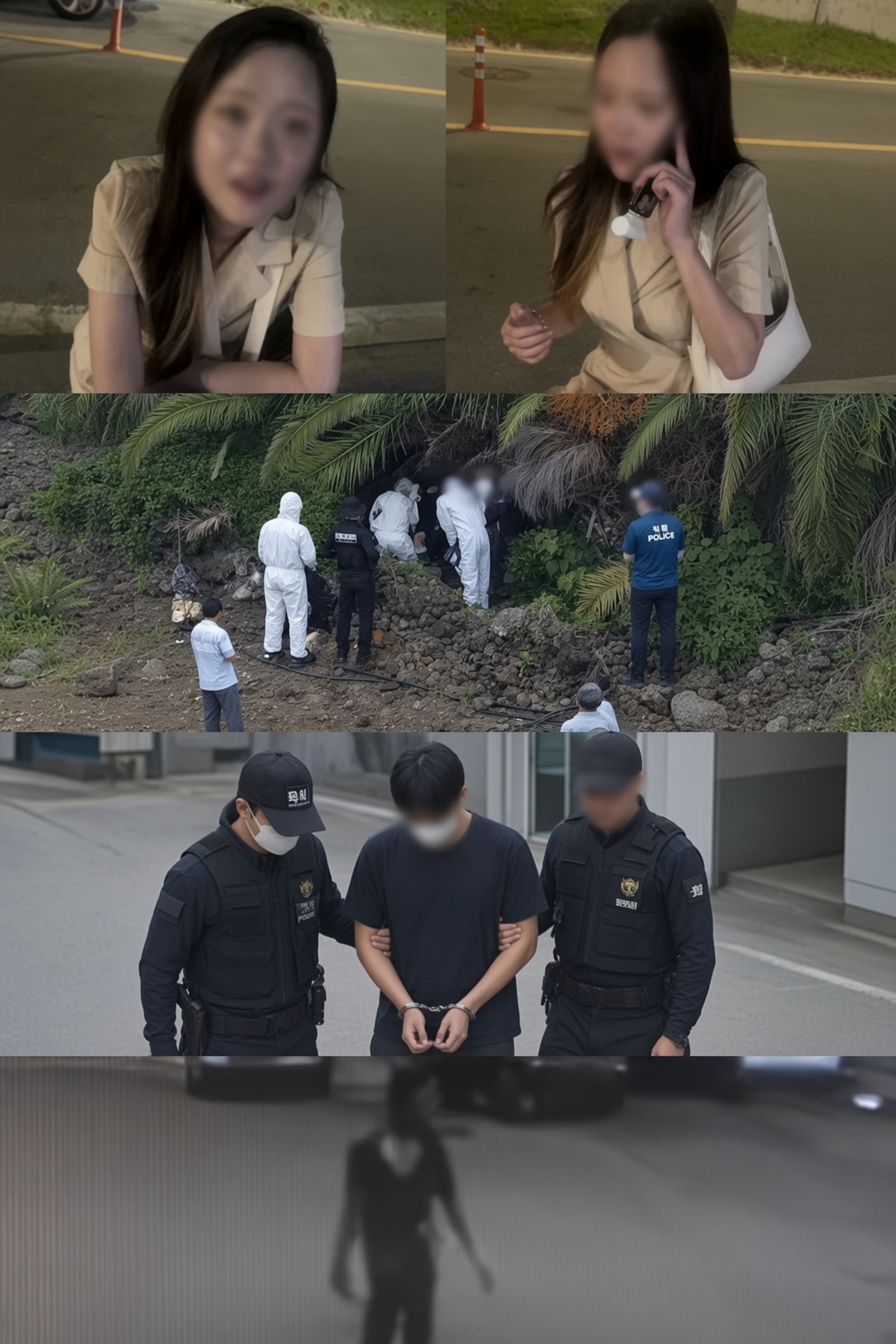
The controversy has become especially serious because one of the cases involved 37-year-old Jang Mi-ran, whose disappearance was reported in May. Her remains were eventually discovered on August 24, approximately 104 days after she went missing and only about one kilometer from the accommodation where she had been staying. (Yonhap News)
Four Discoveries in Three Days
According to Reuters, four people reported missing on Jeju were found dead over three consecutive days through August 24. Authorities say the cases were not believed to be directly connected, but two of them had allegedly been improperly closed by the same police officer. (Reuters)
The sequence of discoveries began on August 22, when the body of a missing person was found on the island. Another discovery followed on August 23, when fishermen found the body of a man in the sea. The man had reportedly been reported missing that same day.
The following day, August 24, investigators discovered two additional bodies, including that of Jang Mi-ran.
The rapid succession of discoveries intensified public concern, particularly because authorities were already conducting a large-scale search connected with Jang’s disappearance.
Yonhap reported that police had expanded the search operation across Jeju’s coastline and surrounding waters, involving police, coast guard personnel, military personnel and other agencies. Hundreds of personnel, along with helicopters, boats, drones and search dogs, were deployed during the operation. (Yna)

The Case of Jang Mi-ran
Jang Mi-ran was last seen leaving her accommodation on May 12. A missing-person report was filed several days later after her family and people close to her were unable to contact her.
According to Yonhap, the case later became the focus of intense scrutiny after police discovered that the officer responsible for the investigation had allegedly closed the case prematurely.
The officer reportedly claimed that he had contacted Jang and confirmed that she was safe. However, investigators later found no record of a telephone call between the officer and Jang. Police also discovered that information relating to her disappearance had been removed from an internal missing-person management system. (Dong-A Ilbo)
That revelation transformed the case from a long-running missing-person investigation into a major controversy involving police procedures and accountability.
Jang’s body was discovered on August 24 in a forested area near Hallim. The location was reportedly only about one kilometer from the accommodation where she had stayed.
The following day, police confirmed through dental records that the remains belonged to Jang. Because the remains were severely decomposed, investigators said it was difficult to determine whether there were signs of external trauma. A forensic examination, including analysis of her cellphone, was being conducted to establish the circumstances surrounding her disappearance and the exact cause of her death. (m-en.yna.co.kr)
Police said there were no immediate indications of foul play based on the condition of the remains, but the investigation remains ongoing.
One Officer Handled 298 Missing-Person Cases
Perhaps the most alarming development is the number of cases previously handled by the officer at the center of the investigation.
South Korean authorities confirmed that the officer had handled 298 missing-person reports during approximately one year and five months while working in the missing-persons unit.
The revelation prompted the National Police Agency to order a comprehensive review of all 298 cases.
SBS reported that authorities are examining whether any other cases may have been improperly processed or closed. (SBS)
According to Reuters, approximately 10 cases were being examined for possible improper closure. Authorities are particularly concerned because at least two cases involving people later found dead were allegedly closed without adequate confirmation of their safety. (Reuters)
The investigation therefore goes beyond a single missing-person case. Officials are now trying to determine whether the alleged misconduct was isolated or whether weaknesses in the system allowed similar problems to occur elsewhere.
Officer Faces Serious Allegations
The officer, identified in Korean reports by his surname, Boo, has faced allegations including dereliction of duty, falsifying official electronic records and obstructing official duties through deceptive means.
Reuters reported that the officer has denied the accusations and maintained that he had contacted the missing individuals. (Reuters)
Yonhap reported that the officer was placed under emergency arrest, although a court later ruled that the emergency arrest itself had not met the legal requirements and ordered his release from that particular detention. The investigation into the underlying allegations continues. (Yonhap News)
The controversy has also reached senior levels of South Korea’s government.
Four police officers connected with the handling of Jang’s case were placed on administrative leave, including senior officials at the relevant police station, while an internal investigation was launched. (Yonhap News)
South Korean President Lee Jae Myung has also called for greater police accountability, arguing that institutions with significant authority must accept an equally strong level of responsibility.
A Broader Question About Missing-Person Investigations
The Jeju controversy has raised an uncomfortable question: how many families might have been left waiting because a missing-person case was not investigated as thoroughly as it should have been?
South Korea deals with tens of thousands of adult missing-person reports every year. Reuters reported that more than 70,000 adult missing-person cases are handled annually, with most being resolved within 30 days. (Reuters)
That makes the review of the 298 cases particularly important.
Authorities have now established a dedicated task force to examine the officer’s previous cases. KBS World reported that roughly 20 detectives and investigators are involved in reviewing the records to determine whether the documentation accurately reflects what actually happened in each case. (KBS WORLD Radio)
Police are also conducting a broader review of missing-person investigations across Jeju.
Concerns Spread Beyond the Island
The developments have understandably generated concern among residents, families and people planning trips to Jeju.
Social media discussions have included calls for greater caution and criticism of the local authorities. Reuters reported that the police controversy has fueled safety concerns and criticism online. (Reuters)
However, there is currently no reliable evidence that large numbers of tourists have cancelled their Jeju vacations because of these cases.
Jeju remains one of South Korea’s most popular destinations. Reuters reported that approximately 1.2 million foreign visitors traveled to the island during the first half of 2026 alone. (Reuters)
The discoveries therefore should not automatically be interpreted as evidence that the entire island is unsafe for visitors. The confirmed issue at the center of the controversy is the alleged mishandling of missing-person investigations and the need for stronger police oversight.’
What Happens Next?
The investigation is still developing.
Authorities must now determine the precise circumstances surrounding the four cases and establish whether the alleged misconduct affected additional missing-person investigations.
For Jang Mi-ran’s family, the discovery after 104 days brings an end to a long period of uncertainty, but many questions remain unanswered about what happened after she disappeared and why the original investigation was closed so quickly.
For South Korean police, the case has become a serious test of accountability.
The review of 298 missing-person cases could reveal whether the problems were limited to a small number of cases or whether deeper procedural weaknesses existed within the system.
For the public, the central issue is simple but profound: when someone is reported missing, their family must be able to trust that every reasonable effort is being made to find them.
The events on Jeju have placed that responsibility under an intense spotlight.
As investigators continue reviewing records, examining evidence and retracing the movements of those who disappeared, authorities face growing pressure to provide clear answers — not only about what happened to the four people discovered over those three days, but also about whether earlier intervention could have changed the outcome in any of these cases.
Foreign sources checked
- Reuters – South Korea’s Lee calls for greater police accountability after Jeju missing-person cases
- Yonhap News Agency – Discovered body confirmed to be of woman missing in Jeju
- Yonhap News Agency – 4 Jeju police officers placed on administrative leave
- KBS World – Jeju Police Launch Full Review of 298 Missing Persons Cases
- SBS News – 298 Missing Person Cases Handled by the Officer