THE BOY WHO SEEMED TO AGE BEFORE HIS TIME: THE EXTRAORDINARY STORY OF BAYEZID HOSSAIN
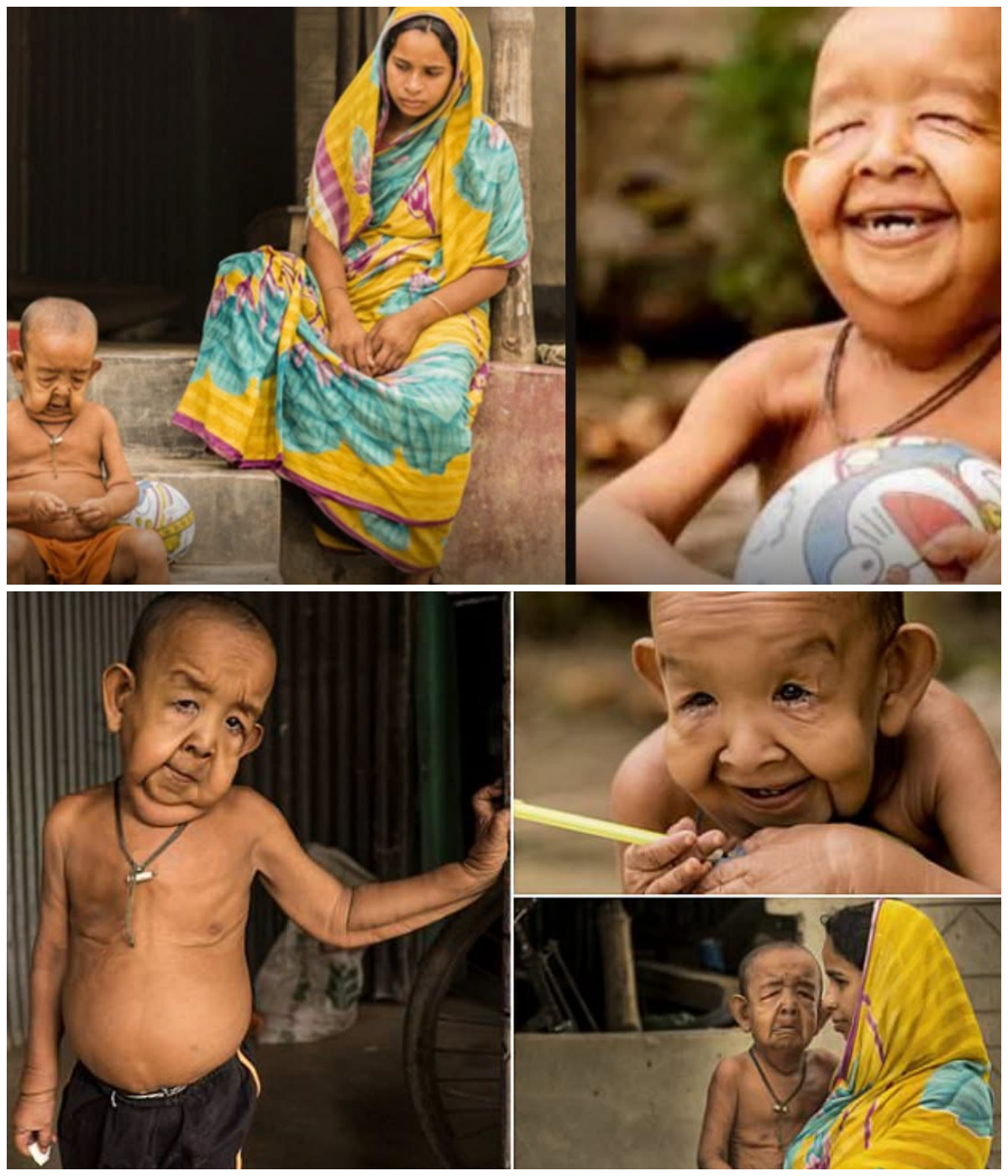
In 2016, the story of a four-year-old boy from Bangladesh attracted international attention because of his extraordinarily aged appearance.
His name was Bayezid Hossain, a child from the Magura district of southern Bangladesh. When he was four, reports described him as having deeply wrinkled, sagging skin, a swollen face, hollow-looking eyes, aching joints and weak, broken teeth. His physical appearance was so unusual that people compared him to an elderly man.
But behind his unusual appearance was a far more complicated medical mystery.
A rare condition from childhood
Bayezid was born in 2012 at a government maternity hospital in Bangladesh. According to reports at the time, doctors were unable to determine exactly what was causing his unusual appearance.
As he grew older, however, his physical symptoms became increasingly pronounced.
His parents reported that he developed a full set of teeth unusually early and later experienced joint pain, urinary difficulties and other problems normally associated with much older people. By the age of four, his skin had become loose and wrinkled, while his face appeared swollen and his eyes appeared sunken.
Local reports said that children in his community were sometimes afraid of him or avoided playing with him because of his appearance.
Yet his family described a very different side of Bayezid.
A bright mind behind an unusual appearance
Although his physical development was severely affected, reports described Bayezid as unusually intelligent and articulate for his age.
His family said that he was highly curious and had an advanced ability to communicate and reason. One contemporary report described him as having an unusually developed level of conversation and awareness despite being only four years old.
His parents also kept him away from school because of concerns about how other children might react to his appearance.
This contrast—between a body that appeared prematurely aged and a young child with an active, curious mind—became one of the most striking aspects of his story.
Doctors suspected progeria—but the case was complicated
Bayezid was initially diagnosed by a medical team at Magura Sadar Hospital with progeria, a rare genetic disorder characterized by premature aging.
He was subsequently referred to Dhaka Medical College Hospital (DMCH) for further investigation and treatment.
Contemporary reports also associated his condition with cutis laxa, a group of rare connective-tissue disorders in which the skin can become unusually loose and inelastic. Some reports described his case as involving both conditions.
However, it is important not to overstate the diagnosis. The medical reports available from 2016 describe Bayezid as believed or diagnosed with progeria, while doctors at DMCH planned extensive testing before determining what treatment might be appropriate.
A medical team began a detailed investigation
In August 2016, Bayezid was admitted to Dhaka Medical College Hospital.
An eight-member medical board, headed by Professor Abul Kalam Azad, was established to examine him. Doctors planned approximately 20 to 21 medical tests to better understand his condition before deciding on treatment.
Dr. Samanta Lal Sen, the hospital’s coordinator, emphasized that doctors could not make conclusions about treatment until the examinations had been completed.
That detail is important because many later retellings of Bayezid’s story describe a definitive medical diagnosis and successful treatment. The contemporary hospital reports available from 2016 do not establish such an outcome.
Living with an uncertain future
At the time, doctors were concerned about the long-term consequences of a condition involving premature aging.
Progeria is associated with accelerated biological aging and, in its classic form, can lead to serious cardiovascular complications. However, Bayezid’s exact medical condition and long-term prognosis were not established simply from his appearance.
What was clear was that he faced substantial physical difficulties at an exceptionally young age.
His family had already spent money visiting different doctors in search of answers, while their limited financial resources made specialist treatment difficult to obtain. A benefactor eventually helped the family travel to Dhaka so that Bayezid could undergo further evaluation.
A child, not a medical curiosity
Bayezid’s story became widely circulated because his appearance was so unusual. But behind the dramatic photographs was a four-year-old child dealing with physical pain, social isolation and an uncertain medical future.
The most responsible way to tell his story is therefore not to portray him as someone who literally “rewrote the laws of aging,” nor to claim that doctors had successfully stopped or reversed his condition.
Instead, his case illustrates the challenges faced by children with extremely rare disorders—especially when doctors are still trying to determine the precise diagnosis and the most appropriate treatment.
In 2016, Bayezid’s doctors were still investigating his condition.
What they knew was that his body was showing striking signs of premature aging, while his family continued to describe him as an intelligent, curious and remarkably aware child.
His story was not about a child becoming old. It was about a young boy whose body presented medicine with a mystery—and a family determined to find answers.
Sources
- The Daily Star (Bangladesh) — “Boy with ageing condition admitted to DMCH,” August 6, 2016.
- The Daily Star (Bangladesh) — “Doctors begin examining baby with ageing condition,” August 7, 2016.
- The Asian Age (Bangladesh) — “Four-year-old boy looks like old man,” July 31, 2016.
- Getty Images / Anadolu Agency — Contemporary photographic documentation of Bayezid at Dhaka Medical College Hospital, August 2016.
- Infobae — Retrospective report on Bayezid Hossain, December 2024.