A Life Measured in Care: Adalgisa and Graziely
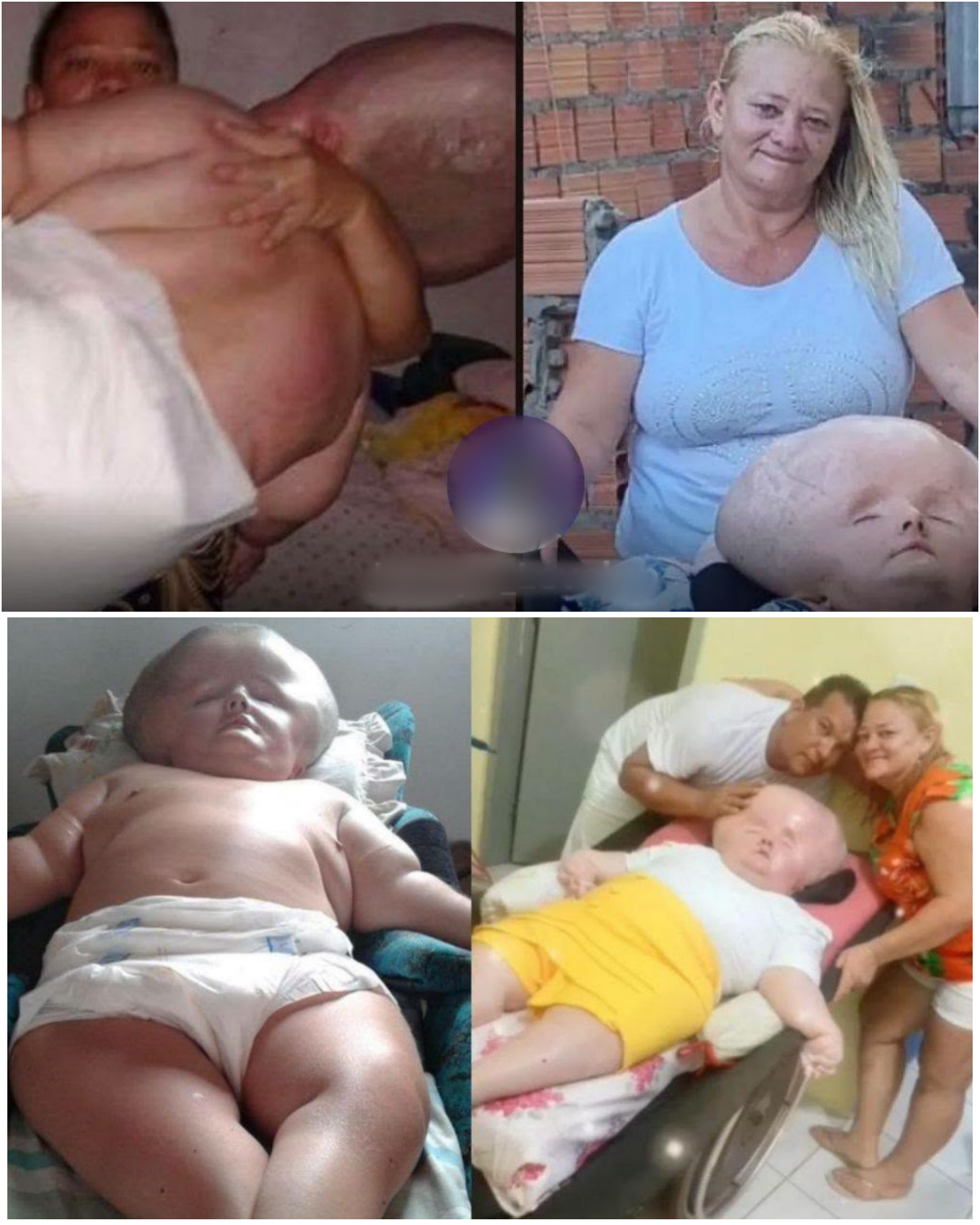
When Adalgisa Soares Alves was eight months pregnant, pain sent her for an ultrasound. Doctors found severe congenital hydrocephalus—an abnormal buildup of cerebrospinal fluid that enlarges the head and can damage the brain. After Graziely Alves Régis was born in 1993 in Maranhão, Brazil, the prognosis was blunt: perhaps three months.
A shunt to drain the fluid was tried when Graziely was days old. Her body rejected it. The condition, sometimes described as giant hydrocephalus and linked in family accounts to rubella during pregnancy, has no cure. Over the years her head continued to grow. She does not walk, speak, or see. She remains in bed, uses diapers, and is fed soft food by bottle. She needs help with every basic task.
Adalgisa left paid work and became a full-time caregiver. The biological father left the household years later. The family lives in São José de Ribamar on a modest government disability benefit and occasional donations. Diapers, medicine, hygiene products, and a house that can hold a large bed and allow bathing are constant costs. Adalgisa has said she was afraid, in the beginning, that others would harm a child who looked so different; she has rarely left Graziely’s side since.
Doctors and some online commenters have described Graziely in language that reduces her to a body that cannot meet usual markers of independence. Adalgisa’s reply has been consistent. She says her daughter smiles when hugged, reacts when people are near, and takes food without a feeding tube. “She is not a vegetable. She is my daughter,” she has told Brazilian outlets. “I will love her until the last day of her life.”
Hydrocephalus occurs when fluid cannot circulate or drain as it should. In infants the skull can expand; pressure still harms development. Many children with milder forms are treated with shunts and live fuller lives. Extreme, untreated or unshuntable cases that reach adulthood are uncommon. Survival into the thirties, in this form, is unusual and depends on continuous nursing care.
The photographs that circulate online—infant, child, and adult with the same enlarged head, mother seated beside her—invite strangers to argue about “quality of life.” That argument is easy at a distance. What the record actually shows is a mother who feeds, bathes, turns, and watches a daughter who outlived a three-month sentence by three decades, and who insists that presence, reaction, and love still count as a life.
Sources
Brazilian reporting on Graziely Alves Régis and Adalgisa Soares Alves (Itatiaia, O Globo, Metrópoles, Jornal Pequeno, O Imparcial)
Interviews given by Adalgisa Soares Alves to national and international outlets
Clinical descriptions of congenital hydrocephalus and reported outcomes in severe untreated cases