The Nurse on the Other Side of the Bed: Sarah and Teddy
For nearly twenty years Sarah Sloman worked as a paediatric nurse. She had given families news she hoped never to hear about her own child. In July 2025 she stood in a hospital cubicle in Wales and heard it anyway.
Teddy, then two and later three, had stopped eating and drinking. His parents thought teething or a heatwave. He slept through the day and began to vomit. GPs and a first hospital visit pointed to constipation. During a tummy massage Sarah felt a mass. Scans showed high-risk neuroblastoma: a large abdominal tumour pressing on organs, already in the bone marrow. Neuroblastoma is a cancer of developing nerve tissue. High-risk disease in a toddler is uncommon and aggressive.
What followed was a year of the protocol she knew from the other side of the notes: intensive chemotherapy, major surgery, stem-cell harvest and high-dose chemotherapy, proton-beam radiotherapy in London, transfusions, bone-marrow tests. He picked up norovirus, a liver complication called VOD, a serious lung infection. Immunotherapy caused a reaction so severe that staff said they had rarely seen it; the infusion fell across his third birthday and had to stop.
Sarah has called her training both a blessing and a curse. She understands the numbers and the complications. She also cannot turn that knowledge off when the patient is her son. Her husband Kramer and their younger boy Joey—born premature not long before Teddy fell ill—have lived around hospital corridors and relatives’ spare rooms.
High-risk neuroblastoma is treated in stages because the disease so often returns. After first-line therapy, some children are offered maintenance or antibody treatment to lower the chance of relapse. In 2026 the family said a key option available to them on the NHS was withdrawn when the manufacturer pulled it from the UK. Their next hope, they said, lay in the United States or Italy, at a cost they set a public target of £250,000 to meet.
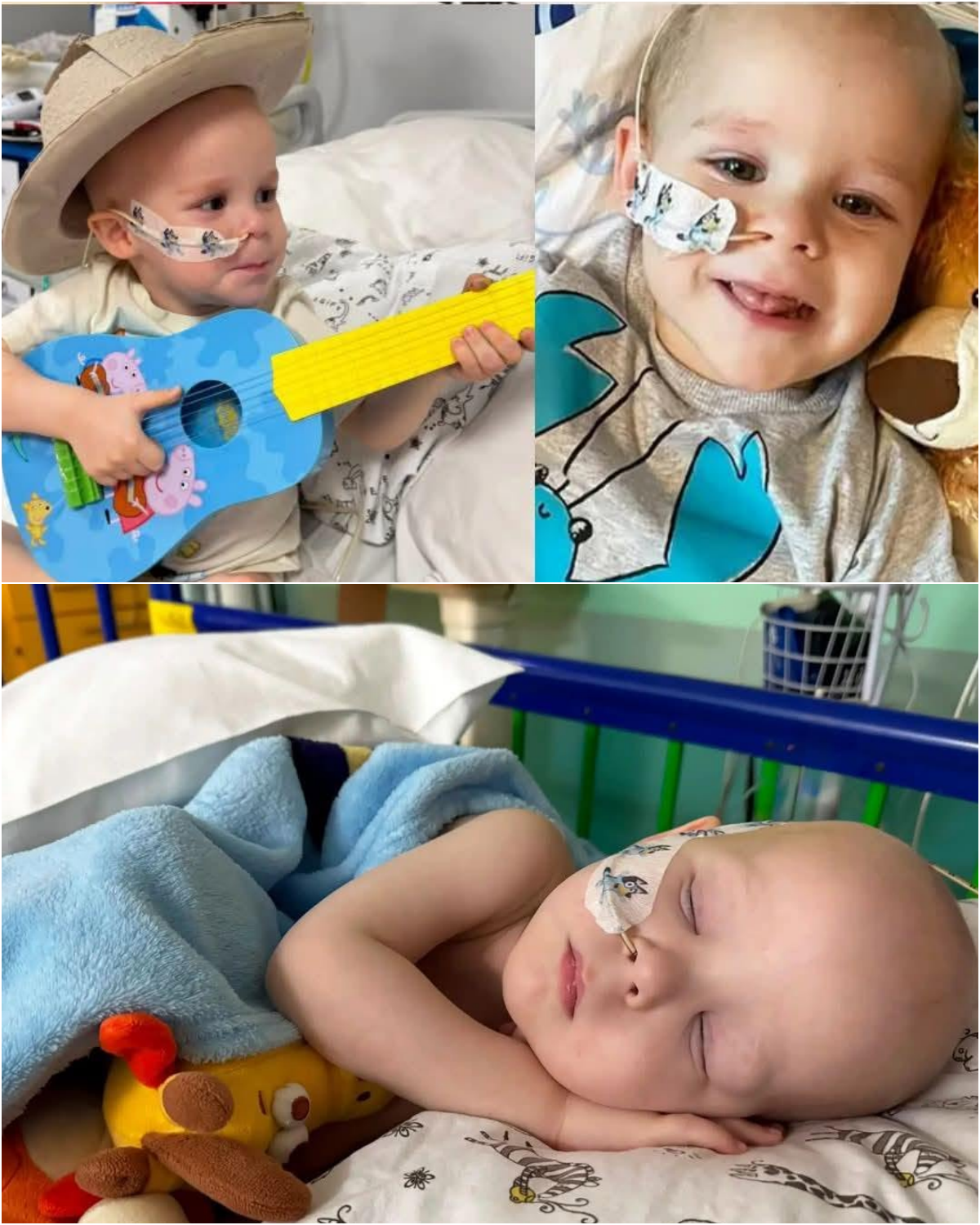
The photographs that travel with the appeal show a bald toddler asleep among toys, a feeding tube taped to his cheek, a cowboy hat and a plastic guitar, a grin beside a stuffed lion. They are the same images every children’s cancer ward produces. What is specific here is the inversion: a nurse who spent two decades supporting other parents is now the parent asking strangers to buy time.
Neuroblastoma accounts for a small share of childhood cancers and a larger share of childhood cancer deaths. Survival for high-risk disease has improved with multimodal therapy but remains far from certain. Relapse prevention is why families chase treatments that health systems do not always fund. Sarah’s appeal is not a claim that love replaces medicine. It is a claim that, when a protocol stops at the border, a family will still try to cross it.
Sources
BBC Wales and other UK reporting on Sarah and Teddy Sloman
Family account on the Together For Teddy fundraiser
Clinical descriptions of high-risk neuroblastoma and standard multimodal treatment in young children