Pakistani Teen Lived More Than a Decade With Her Neck Bent Nearly 90 Degrees. A Free Surgery in Delhi Changed That.
Pakistani Teen Lived More Than a Decade With Her Neck Bent Nearly 90 Degrees. A Free Surgery in Delhi Changed That.
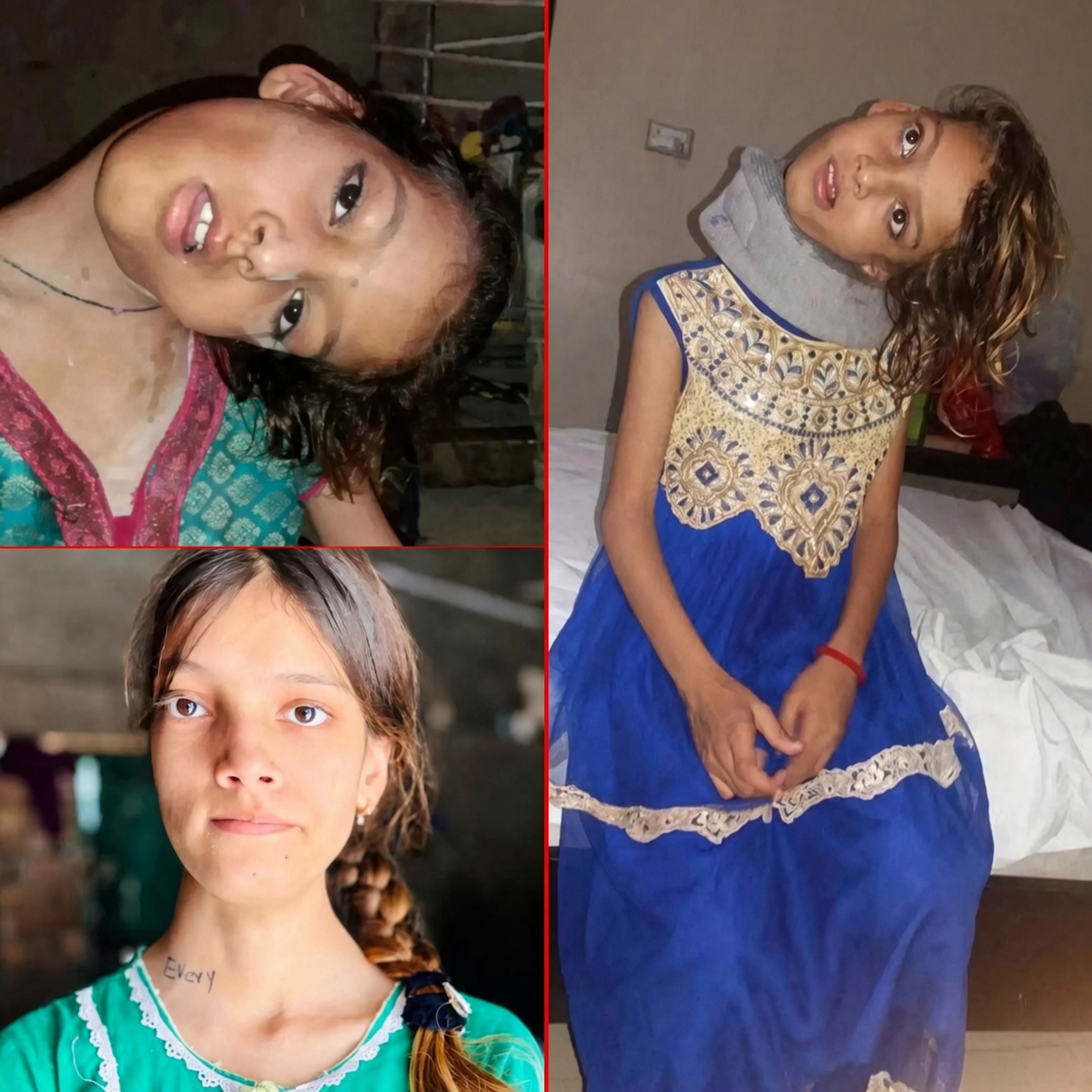
For most of her life, Afsheen Gul’s head sat at an extreme angle. A complex injury at the junction of her skull and cervical spine had gone without a proper diagnosis for years. The result was a neck locked at roughly 90 degrees — a deformity so severe that walking, speaking, eating, and even looking at the world in a normal way became daily struggles.
Afsheen grew up in Mithi, in Pakistan’s Sindh province, the youngest of seven siblings. Relatives say the problem began after she fell from her sister’s arms when she was about 10 months old. Local treatment — medicines and a supportive collar — did not stop the condition from worsening. She also has cerebral palsy, which compounded the mechanical problem at the cranio-cervical junction. Over time she developed what doctors later described as dropped-head deformity, spinal-cord compression, and increasing difficulty with speech, hearing, and short walks.
Specialized surgery was, for her family, almost unimaginable. Resources were limited. Her father, a laborer, died in 2020. Hospitals in Pakistan had offered little hope; some put her chance of surviving an operation at about 50 percent.
The turning point came when her brother, Mohammad Yaqoob Kumbar, connected with Dr. Rajagopalan Krishnan, a senior spine surgeon at Indraprastha Apollo Hospitals in New Delhi. Krishnan offered to treat her at no charge. The family traveled to India in late 2021.
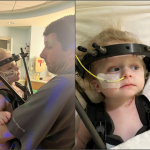
Treatment was staged. First came halo-gravity traction: a ring fixed to the skull with pins and gradual weights, intended to reduce the angle of the deformity and relieve pressure on the spinal cord. The angle improved but did not fully correct, in part because the bones had adapted as she grew. The team then performed cranio-cervical surgery — a high-risk operation lasting about six hours. Surgeons realigned the head over the body, decompressed the spinal cord, and stabilized the correction with instrumentation and bony fusion, attaching the skull to the cervical spine with rods and screws.
Krishnan later described the case as exceptionally rare, possibly unique in its combination of neglected rotatory dislocation, adaptive bony change, and cerebral palsy. The operation carried real danger: Afsheen had only one functioning vertebral artery supplying the back of the brain and spinal cord.
The surgery succeeded. After recovery and further procedures, Afsheen could hold her head in a natural position. Speech improved. Mobility returned to a degree she had not known in more than ten years. Follow-up continued remotely after she went home. Her brother has called the surgeon “an angel.” Krishnan has said the goal was not perfection but a safer, more functional life — looking forward instead of sideways, and no longer at immediate risk from cord compression.
Afsheen’s story is medical, but it is also a story of what becomes possible when a family that had run out of options meets a team willing to take a case others would not.
Sources
- BBC News, “Afsheen Gul: How a kind Indian doctor saved a Pakistani teen’s life” (July 2022)
- Apollo Hospitals, “13 Year Old Girl From Pakistan With Neck Bent At 90 Degrees…” (hospital release)
- Awaz – The Voice, “Pak teen with impossibly bent neck gets kiss of life in Delhi” (March 2022)
- The Quint, “Thanks to Delhi Doctor, Girl With a 90° Bent Neck Treated Successfully for Free” (July 2022)