Born With Brain Tissue in His Nose, Ollie Trezise Underwent Skull Surgery to Breathe and Close the Defect
Born With Brain Tissue in His Nose, Ollie Trezise Underwent Skull Surgery to Breathe and Close the Defect
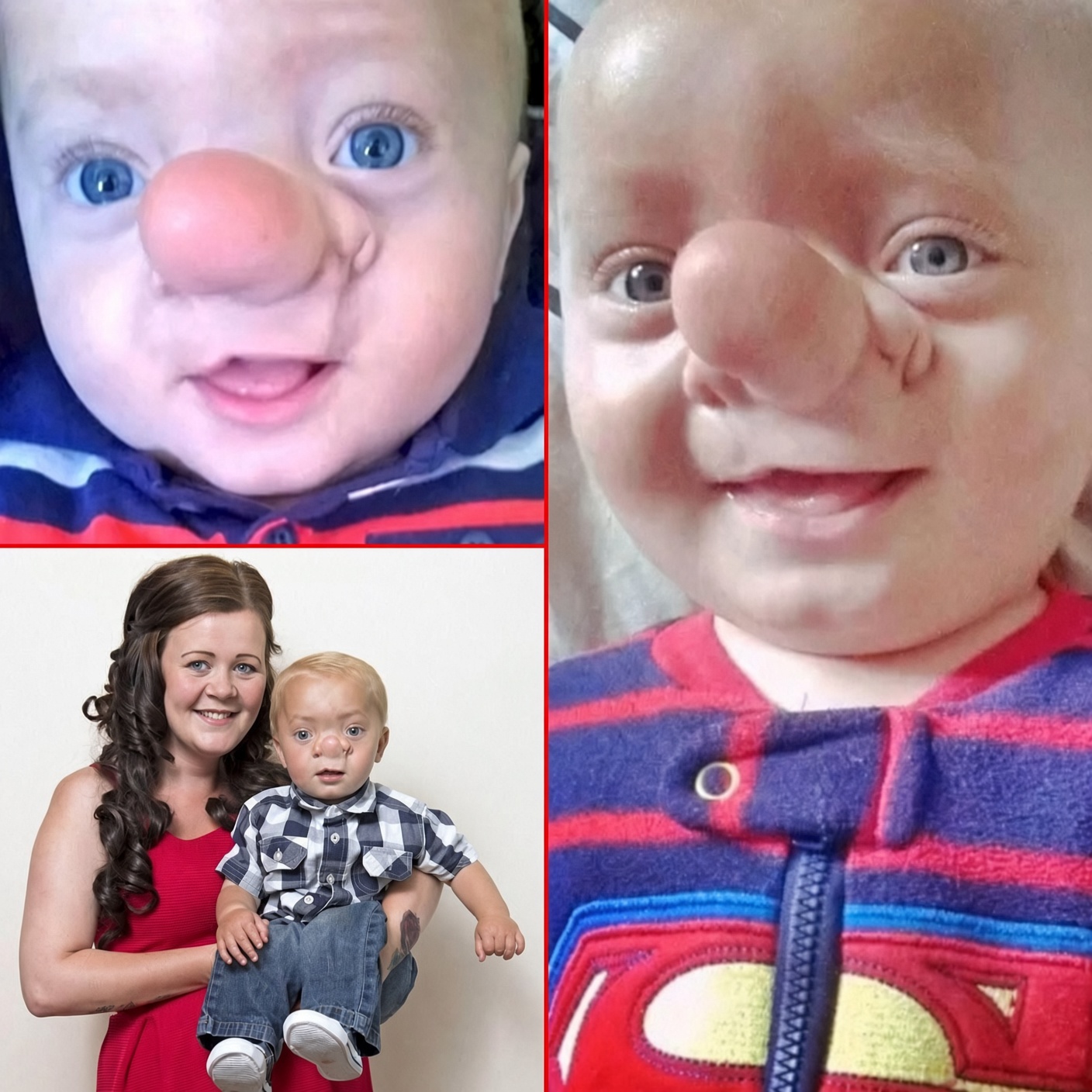
Ollie Trezise was born in February 2014 at the University Hospital of Wales in Cardiff with an encephalocele: part of the brain and its covering membranes had pushed through an opening in the skull. In his case the sac sat on the nose — a golf-ball-sized lump that grew as he grew. Newspapers called him a real-life Pinocchio. His mother, Amy Poole of Maesteg, Wales, first heard that something was wrong at the 20-week scan.
An encephalocele is a neural-tube defect. Untreated, it can obstruct breathing and leave a path for infection, including meningitis, if the sac is knocked. Treatment in the United Kingdom is limited to a few specialist centres. In November 2014, at Birmingham Children’s Hospital, surgeons opened the skull, removed the excess sac of brain and fluid, closed the gap and rebuilt the nose. The operation lasted about two hours. Ollie was left with a zigzag scar across the scalp. Further procedures improved his airway. Later plans included reconstructive and dental work to reposition teeth.
After surgery he could breathe more easily and play with his sister. His mother said she would not have changed him even when the mass was there; what she wanted was for strangers to stop staring and for school, when it came, not to be defined by the scar. Specialists judged the reconstruction a success in the terms that matter for a toddler: safer breathing, a closed skull, and a face that no longer carried an unprotected sac of brain.
Encephalocele is uncommon. Ollie’s story is the medical sequence — scan, diagnosis, high-risk repair — and a child who, once the sac was gone, was simply a boy with a scar.
Sources
BBC News, “Maesteg toddler suffers ‘awful bullying’ over rare condition” (December 2015)
Daily Mail, “The real life Pinocchio…” (December 2015)
Metro, coverage of Amy Poole and the Birmingham Children’s Hospital operation
Express / contemporaneous UK reports on the November 2014 two-hour procedure