After the Crossing: Syrian Children, Jordanian Clinics, and Faces That War Did Not Finish
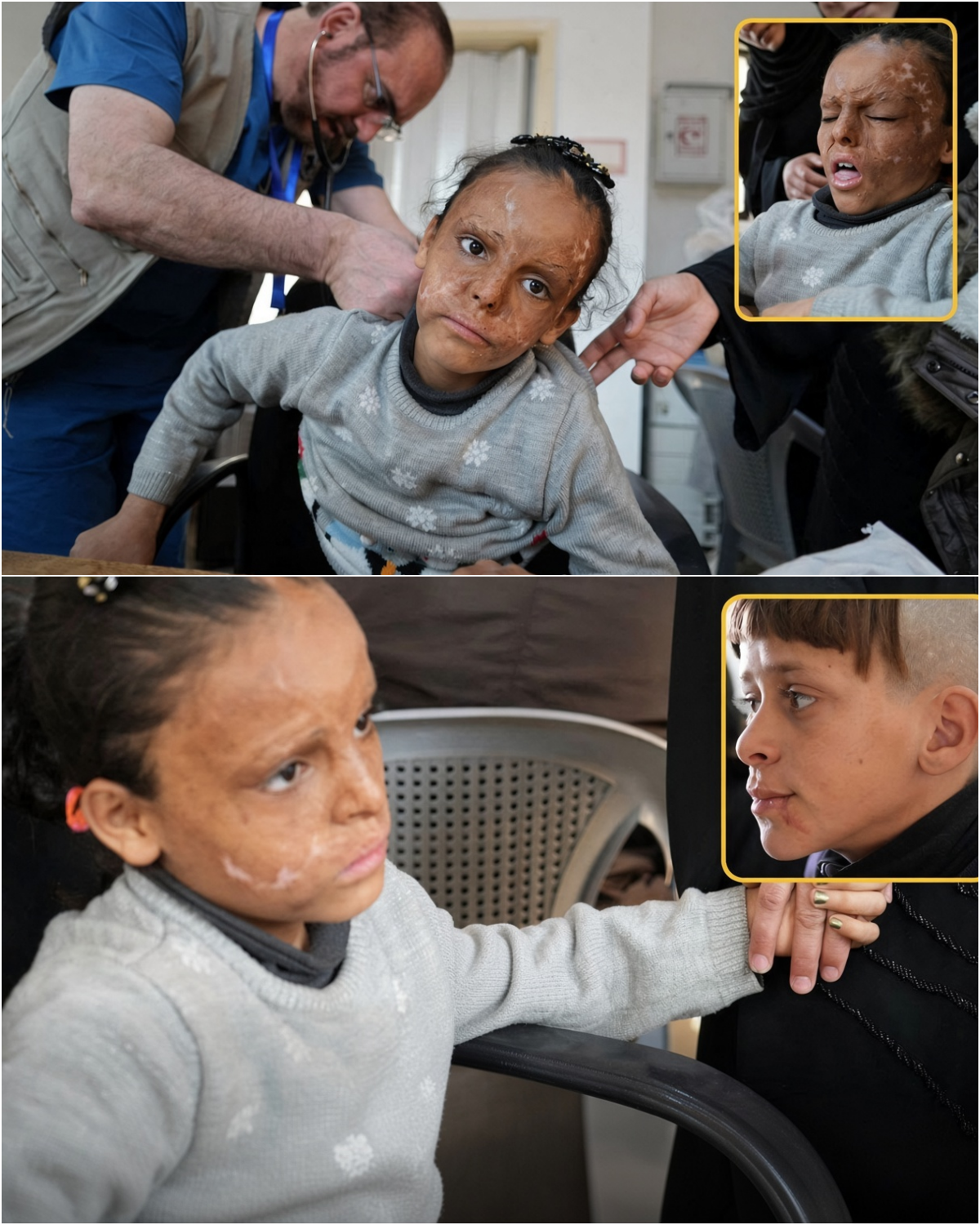
They left Syria because staying meant fire, rubble or conscription. In Jordan they live in tents, prefab rooms and crowded flats in cities that have hosted refugees for more than a decade. UNHCR counts hundreds of thousands of Syrians still registered in the country; most are outside the big camps of Zaatari and Azraq, which makes a regular doctor even harder to find. Volunteer missions fill the gap the way they always have in this crisis: a week of clinics, a donated operating list, a plastic surgeon who flies in, a dentist, a psychiatrist, a box of antibiotics. The Spanish caption on the collage is not wrong about the inventory. It is incomplete about the injuries. Many of the children who sit under those fluorescent lights do not have a congenital syndrome. They have blast burns, contractures, an eyelid that will not close, a jaw rebuilt after shrapnel, or a face mapped with pale scar because a kettle tipped in a tent or a street exploded beside a garden in Damascus.
Organisations have names even when the children in a viral frame do not. The Syrian American Medical Society has run short missions that treat thousands in a few days, refugees and poor Jordanians together. Médecins Sans Frontières still runs a reconstructive hospital in Amman that began with Iraq and grew to take Syria, Yemen and, later, other wars: bone, burn, maxillofacial work, physiotherapy and a counsellor for the child who has started to think of himself as a monster. Operation Smile Jordan repairs clefts and also operates on paediatric burns. A girl who cannot blink sleeps with her eyes open. A boy whose cheek is a mask of graft learns that the next visit is not a promise of a new country, only of another release. Primary care is less photogenic and more constant: seizures without medicine, rotten teeth, anaemia, the depression that follows a face the other children point at.
Compassion in this setting is logistics. It is a badge on a volunteer vest, a stethoscope on a scarred neck, a queue that started before dawn. Dignity is a smaller claim: that a child who fled one country will not be left to heal by rumour in another. The world has not, in fact, forgotten every family. It has, however, grown used to them. A mission that lasts six days cannot undo a decade. It can close an eyelid, straighten a contracture, hand over a month of pills and leave. The tents remain. The children grow. The scars change shape as the bone beneath them grows too.
Sources: Syrian American Medical Society / Milwaukee Independent mission reporting; MSF reconstructive surgery programme in Amman; Operation Smile Jordan burn and cleft work; UNHCR context on Syrian refugees in Jordan.