Behind the “Batman Mask”: Luna Fenner’s Seven-Year Journey From Rare Birthmark to Reconstruction
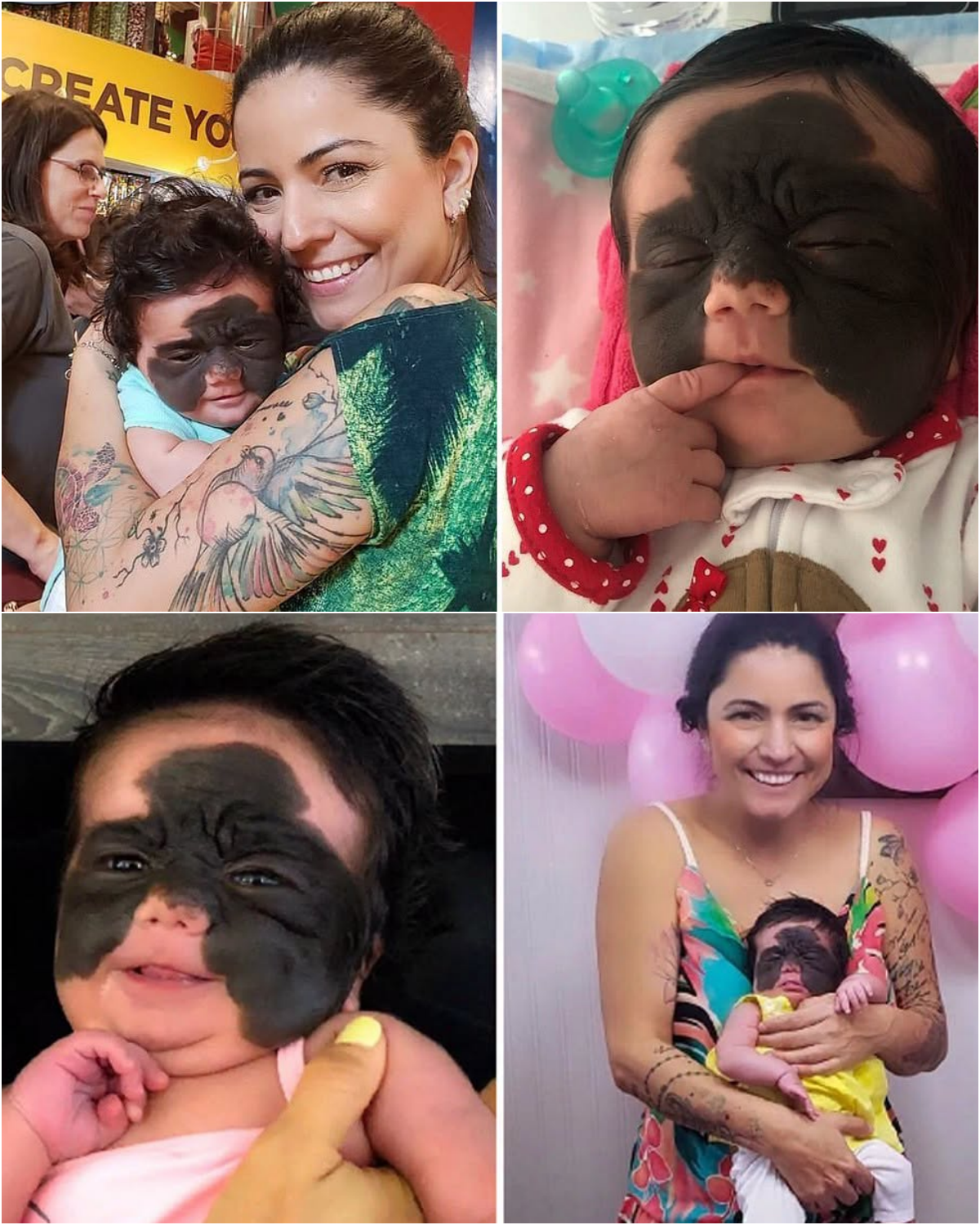
When Luna Fenner was born in Florida on March 7, 2019, her parents expected a healthy baby. What they saw instead was a dense, dark mark stretching across her forehead, nose and around her eyes. Doctors diagnosed a giant congenital melanocytic nevus — a rare overgrowth of pigment-producing cells that begins before birth and occurs in roughly one in 20,000 newborns.
The shape of the mark quickly earned her a nickname in the press: the “Batman girl.” For her mother, Carolina (Carol) Fenner, the label was never the point. Large congenital nevi must be watched because they carry a higher lifetime risk of melanoma. Strangers pointed. Some asked whether the mark was contagious. An elderly woman in a church once called the infant a “monster.” Carol feared what those reactions would become once Luna was old enough to understand them.
American doctors outlined a long, invasive surgical path. In 2019, when Luna was still a baby, mother and daughter flew more than 6,000 miles to Krasnodar, Russia, after oncologist-surgeon Pavel Popov offered photodynamic therapy that was not then available in the same form in the United States. An anonymous Russian donor covered about $60,000 of the early costs. By October 2021, after six procedures, Popov said the pigmented lesion itself had been largely eliminated. “Luna has already started speaking and she says herself: ‘My black spot has gone. I am a princess,’” he told reporters.
Removing the nevus was only the first chapter. Scarring and the natural growth of a child’s face left Luna needing reconstruction. Eyelids that could not fully close became a functional problem as well as a cosmetic one. In 2024 the family turned to St. Petersburg, where plastic surgeon Olga Filippova and colleagues at a private clinic began a staged program using tissue expanders — balloons placed under healthy skin and gradually filled so that extra skin could later cover scarred areas. By 2025 doctors estimated they had already replaced about 80 percent of the affected surface with smoother skin on the forehead, cheeks, nose and one eyelid.
The final major operation of that stage took place on July 22, 2026. Surgeons removed remaining nevus tissue and scars, restored the hairline and improved eyelid position. In early August the family prepared to fly home. Filippova cautioned that swelling and fresh scars would take a year or two to settle, and that small corrections — including possible eyebrow hair grafts around age nine — may still be needed as Luna grows. Lifelong monitoring by a dermatologist-oncologist remains essential.
Carol has documented the journey in public, including the painful days, the bandages and the ordinary childhood in between. People first noticed Luna because of the mark on her face. Her mother has spent seven years insisting there was always a little girl behind it.
How different would childhood be for children with visible differences if curiosity were always accompanied by kindness?
Sources
- The Mirror, “Girl, 2, with ‘batman’ birth mark says ‘I’m a princess’ as it’s finally removed” (Dec. 2021)
- Fox News / ABC News / Daily Mail reporting on the 2019 diagnosis and travel to Krasnodar
- Komsomolskaya Pravda (St. Petersburg), coverage of Luna’s 7th birthday and reconstructive progress (March 2026)
- Argumenty i Fakty St. Petersburg, “Treatment of the little American in St. Petersburg completed” (July 22, 2026)
- Izvestia; RIA Novosti; Petersburg Diary; BezFormata / TASS summaries of the 2024–2026 expander surgeries and July 22, 2026 operation
- G1 / Fantástico (Brazil), interviews with Carol Fenner on stigma and the six Krasnodar procedures
- MedlinePlus Genetics and Orphanet overviews of giant congenital melanocytic nevus