If Christian Brückner Is Ever Charged, What Would It Mean for the Madeleine McCann Case?
For almost 20 years, the name Christian Brückner has remained at the center of one of Europe’s most closely watched missing-person investigations. German prosecutors believe he was responsible for Madeleine McCann’s disappearance and presumed death. British investigators continue to examine the case. Yet there has been no charge against Brückner in connection with Madeleine, and no court has established what happened to the three-year-old girl.
That could change only if investigators cross the most difficult line in the entire case: proving enough to prosecute.
The latest developments have intensified attention on that possibility.
In July 2026, reports emerged that German authorities had transferred a dossier to Scotland Yard containing material connected with Brückner and the Madeleine investigation. The Portugal News reported that the dossier included photographs and accounts and was considered significant. But the actual contents have not been publicly disclosed, and the Metropolitan Police has not announced that the case has been solved.
That means the central question remains unanswered: what exactly is in the file?
The answer could determine whether the latest development becomes a genuine breakthrough or simply another investigative lead.
British investigators have been working on the case for years through Operation Grange. The Met says the operation began in 2011 and became an ongoing investigation in 2013. Officers continue to work with Portuguese and German authorities, and the Home Office continues to fund the investigation.
The continued international cooperation is important because Madeleine’s disappearance crosses several legal jurisdictions.
She vanished in Portugal. Brückner is German. British investigators are working through the Metropolitan Police. Evidence may exist across different countries, and any future prosecution could involve complicated questions about where a trial should take place.
Reports in May 2026 suggested Scotland Yard was exploring whether Brückner could eventually be brought to Britain to face a trial if sufficient evidence were established.
But “if” is the crucial word.
Before an extradition process becomes realistic, prosecutors need a case capable of surviving legal scrutiny. They cannot simply rely on Brückner’s history, his presence in Portugal, or suspicion generated by the circumstances surrounding Madeleine’s disappearance.

Every piece of evidence must answer a specific question.
Was he in the relevant location?
Can his movements be established?
Is there reliable evidence connecting him to Madeleine?
Can witnesses or records corroborate the timeline?
And, most importantly, can the evidence establish his criminal responsibility beyond reasonable doubt?
Those questions are why the new dossier could be so important.
If it contains previously unknown information capable of connecting Brückner directly to Madeleine, it could dramatically change the investigation. If it does not, detectives may remain unable to move from suspicion to prosecution.
There is another major development on the horizon.
On January 11, 2027, Germany’s Federal Court of Justice is scheduled to hear an appeal concerning Brückner’s acquittal on unrelated sexual offences. The original case ended in an acquittal in 2024, and prosecutors challenged that result.
Although that hearing is not a Madeleine trial, it could affect Brückner’s legal situation.
However, it is essential not to exaggerate what the hearing means. A successful prosecution in the unrelated case would not automatically prove that Brückner was responsible for Madeleine’s disappearance. A separate case would still require its own evidence.
This distinction is particularly important because the public has followed the Madeleine investigation through headlines for years. Terms such as “bombshell,” “game changer” and “final clue” can create the impression that a case has already been solved when investigators have made no such declaration.
The reality is much more cautious.
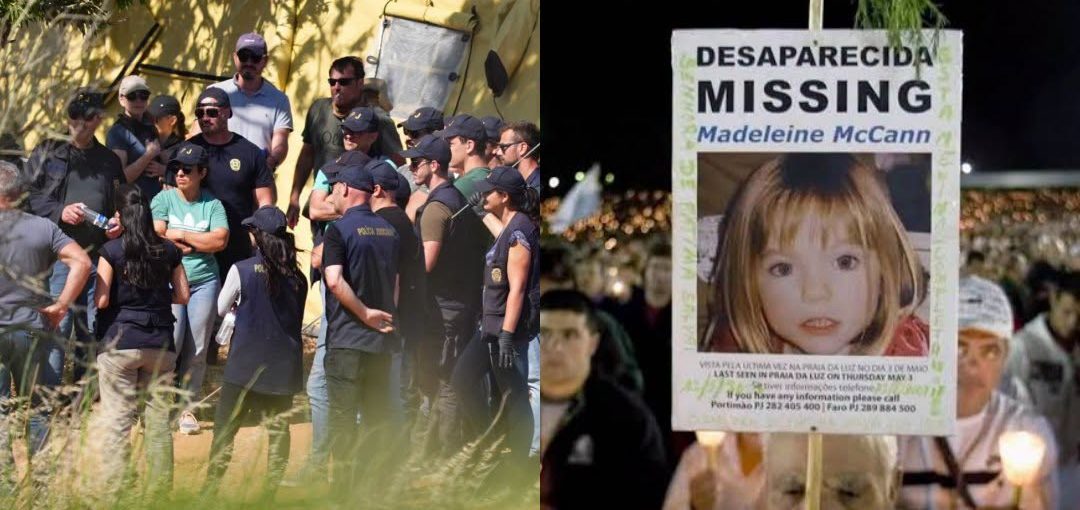
Brückner remains a suspect. Madeleine remains missing. Operation Grange remains active.
And no criminal court has yet determined who was responsible for her disappearance.
If a charge eventually comes, the consequences would be enormous.
It would transform the investigation from a long-running search for answers into a formal criminal case. Evidence would be tested publicly. Defense lawyers would challenge the prosecution’s theory. Witnesses could be called. Investigators could be questioned about how evidence was obtained and preserved.
For Madeleine’s family, such a development could bring hope—but also a new and painful phase.
A trial would force details of the disappearance back into public view. Every piece of evidence could be scrutinized. Every disputed fact could become part of a courtroom battle.
And even a prosecution would not guarantee a conviction.
The final result would depend on the evidence presented and the legal standard applied by the court.
That is why the coming months could be so important.
The new dossier has placed fresh material in the hands of British investigators. The German appeal has created another major legal milestone. Brückner remains under scrutiny.
But the ultimate destination of the case is still unknown.
It could lead to a charge.
It could lead to another search.
It could lead to further international legal negotiations.
Or, if investigators cannot establish a prosecutable case, it could remain unresolved despite years of effort.
For now, the evidence remains largely behind closed doors.
And that means the biggest question of all is still waiting for an answer:
Will the next major development finally explain what happened to Madeleine McCann—or will the mystery survive yet another year?