An 800-Gram Shadow on a Newborn’s Face: How Braian Survived a Tumor Almost a Third of His Birth Weight
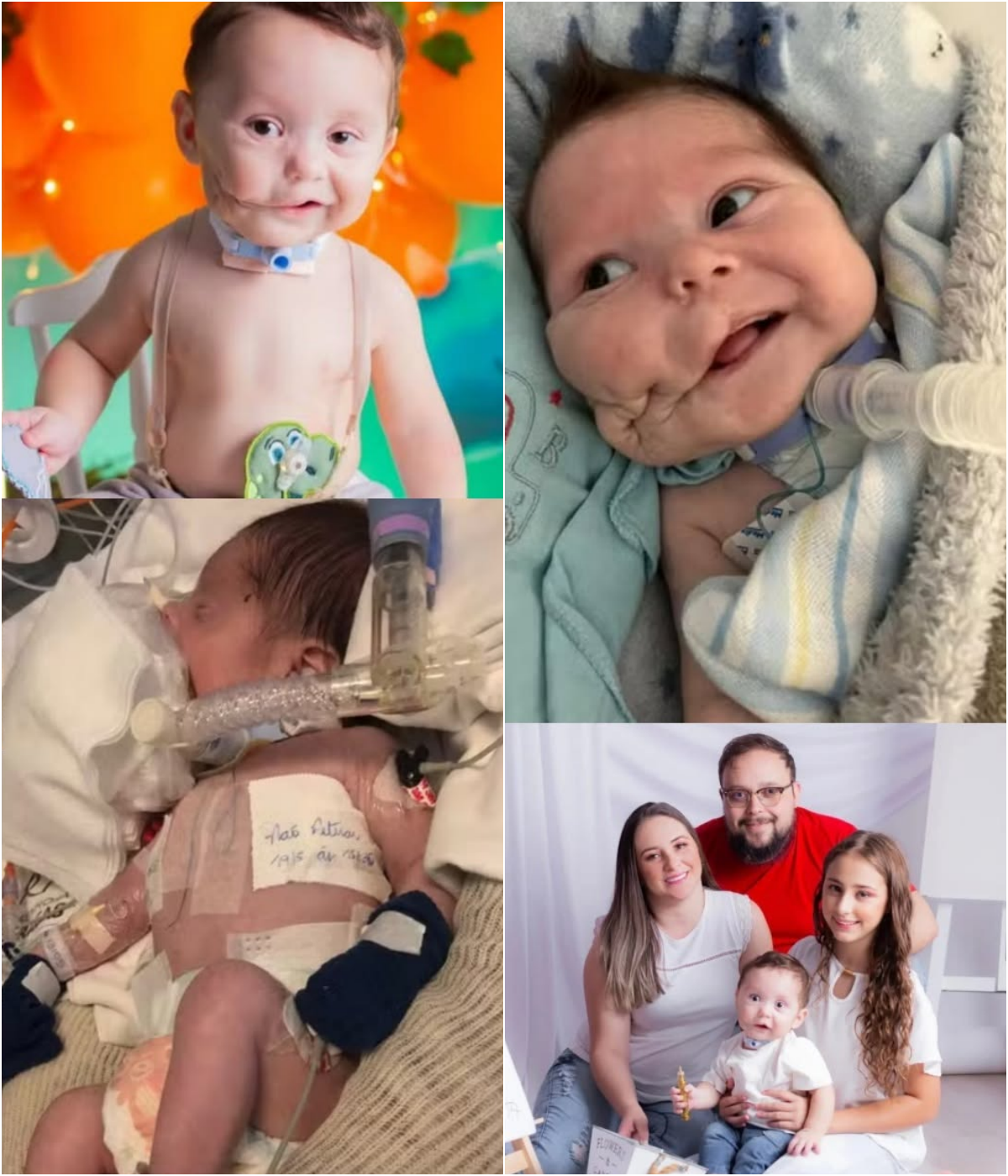
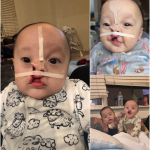
Braian Demjenski Pereira was born in Curitiba, Brazil, carrying a mass that should not have been there. The growth was an epignathus — a rare orofacial teratoma that forms in the mouth or palate during pregnancy and can push outward across the face. It weighed about 795 to 800 grams. Braian himself weighed 2.88 kilograms. The tumor accounted for more than a quarter of his birth weight. Epignathus occurs in roughly one in a million live births. His mother, Marciliana Demjenski de Oliveira, later said doctors told the family it was only the second such facial case recorded in Brazil.
The first warning came at 18 weeks of pregnancy, when one cheek looked larger than the other on ultrasound. A morphological scan confirmed the diagnosis. Marciliana and her husband, Valmir Pereira de Almeida Júnior, had been trying for a second child for two years. Joy and fear arrived together. As the pregnancy advanced, the mass covered the mouth. At 35 weeks, a large team at Hospital Nossa Senhora das Graças prepared a planned cesarean. As soon as Braian was delivered, surgeons opened an airway with a tracheostomy. Without it he could not breathe. Marciliana hemorrhaged during the birth and did not see her son for 12 hours.
Two weeks later the tumor was removed. Pathology described an immature grade 3 teratoma — aggressive in cellular appearance, though still a congenital mass rather than a typical childhood cancer. Braian spent about three months in hospital, with a feeding tube as well as the tracheostomy. Doctors said he had no neurological injury they could explain. “Our miracle baby,” Marciliana called him. He has an older sister, Beatryz.
By his first birthday, on May 10, 2024, he was crawling, smiling and meeting many ordinary milestones while still living with airway and feeding support. Oncology follow-up continued in case any tissue returned. Daily life meant pulmonary physiotherapy, speech therapy and constant care. Marciliana left her commercial job to look after him full time.
Removing the mass was not the end of the work on his face. In 2025, as he approached age two, the family said reconstruction would require repeated trips to Santa Catarina. An attempt to remove the tracheostomy had injured the trachea and lungs. They launched a fundraising campaign for travel, lodging and the staged operations health coverage would not fully absorb.
Braian’s first days were a fight no newborn should have to win. He won it with a hospital team of dozens, parents who refused to treat the diagnosis as a sentence, and a body that kept growing after the shadow on his face was cut away. The smile in later photographs is not a footnote to the medical file. It is the point of the file.
Even the smallest fighters can outlast the largest obstacles — if someone keeps the airway open long enough for them to try.
Sources
- Revista Crescer / Globo, “‘Segundo caso no Brasil’, diz mãe de bebê que nasceu com tumor raro de 795g na face” (April 2024)
- Metrópoles, “Bebê que não conseguia respirar devido a tumor faz 1 ano” (May 2024)
- Banda B (Curitiba), first-birthday feature and parental interviews (May 10, 2024)
- aRede / TNOnline, reports on reconstruction plans and fundraising (April 2025)
- ISUOG patient information on facial teratoma / epignathus