From an Ear-to-Ear Scar to a Garden in Overalls: What These Photographs Show About Infant Skull Surgery
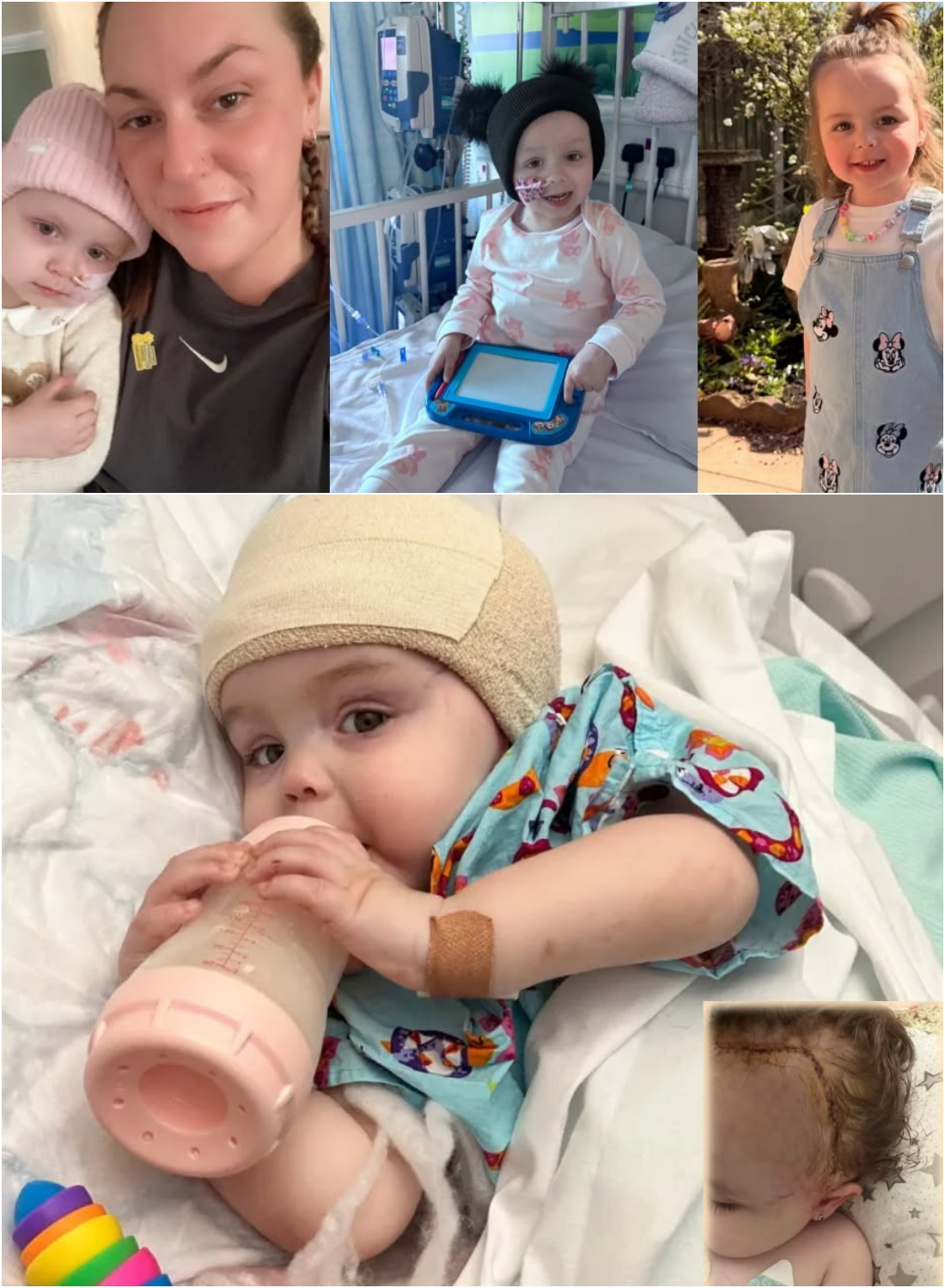
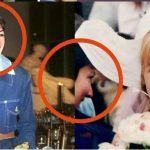
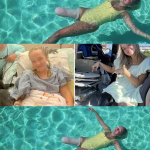
The pictures tell a story before any caption does. A baby in a hospital cot, head wrapped in a beige bandage, still finding the bottle. A close-up of a fresh line of staples running across the scalp like a zipper. The same child later, taped for a feeding tube, hat pulled over thinning hair, tablet in her lap beside monitors. Then a girl in Minnie Mouse dungarees standing in a garden, smiling as if the operating theatre were a country she has already left.
That sequence is familiar to families who have sat through cranial surgery in the first years of life. In the United Kingdom the most common reason a baby receives an incision from ear to ear is craniosynostosis: one or more of the skull’s soft seams fuses too early, so the head cannot expand with the growing brain. The skull then grows in the wrong directions. Left untreated, the result can be raised pressure inside the head, eye problems, developmental delay — or simply a shape that will not correct itself.
Surgery is usually offered in a specialist craniofacial centre. Surgeons lift the scalp, remove and reshape bone, and fix the pieces so the brain has room. The cut is often zigzagged so that, once hair returns, the scar hides under a parting. A bulky head bandage is normal for the first days. Bottle-feeding in that bandage, as in the top photograph, is not a small detail. It is the first proof that the infant is still a baby, not only a patient.
Not every child with a scar like this has isolated craniosynostosis. The same incision is used for other operations that open the skull: to relieve pressure, remove a tumour, treat hydrocephalus, or stop seizures that will not yield to medicine. The middle photographs — nasogastric tape, a long hospital stay, a parent in a matching hat — belong to that longer ward life, when eating, breathing or seizures keep a family from going home as quickly as the wound itself would allow.
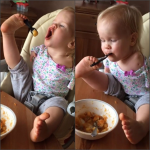
What the last frame insists on is the point families usually want strangers to see. Hair grows. The Alice-band scar sinks into a parting. The child who could not sit up after theatre is the child who poses in the garden. NHS guidance is blunt and, for many parents, sufficient: many children have no lasting health problem from craniosynostosis; they may keep a scar across the top of the head, hidden by hair.
The photographs do not ask viewers to decide whether the surgery was “worth it.” They record that it happened, that it was large enough to split a scalp, and that childhood continued on the other side of the staples. Curiosity about a child’s head is common. Kindness — looking at the smile in the dungarees instead of only at the scar in the inset — is the part that is still optional.
Sources
- NHS, “Craniosynostosis” (symptoms, surgery, long-term outlook)
- Birmingham Women’s and Children’s NHS Foundation Trust, craniofacial service overview
- Sheffield Children’s NHS Foundation Trust, parent information on craniotomy
- Birmingham Women’s and Children’s, “Looking after your child following craniofacial surgery”
- BMJ education article on recognising isolated craniosynostosis