Nicolás of Medellín and the Weight of Proteus Syndrome
Proteus syndrome is not a childhood nickname. It is a mosaic mutation in the gene AKT1: some cells in the body carry a switch that never turns growth off. Bones, skin, fat and vessels enlarge on one side and not the other. Infants often look typical at birth. Between six and eighteen months a foot, a hand, a half of the skull or a length of spine begins to outpace the rest. Shoes stop matching. Walking becomes a negotiation with a limb that keeps changing shape. Deep-vein clots and pulmonary emboli are a leading cause of death, even in children. Strict diagnostic criteria have confirmed fewer than about a hundred living patients worldwide. Joseph Merrick, the Victorian “Elephant Man,” is now widely thought to have had this condition, not neurofibromatosis. The comparison is historical, not a courtesy title.
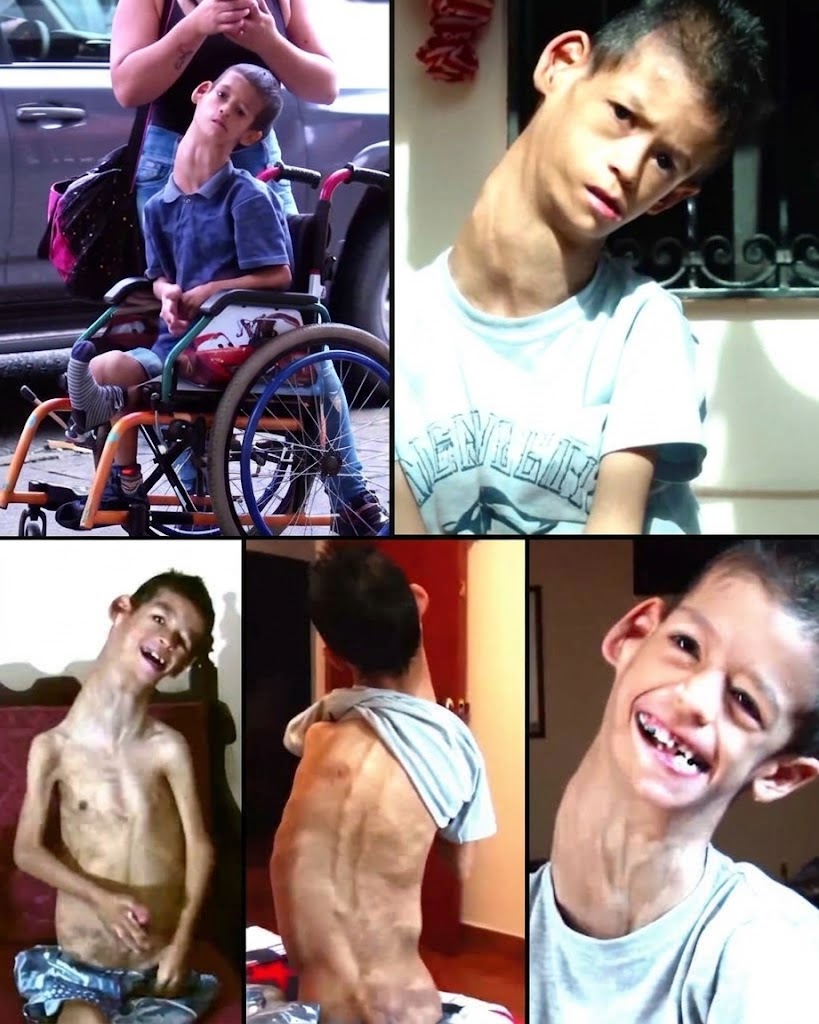
In Medellín, Colombian television met a boy named Nicolás, then about six, given that diagnosis. The 2019 Testigo Directo report described overgrowth that limited his gait and made ordinary clothes and shoes useless. His family and local clinicians were trying to assemble the only care that exists: orthopedics to shorten or fuse bone, plastic surgery for skin and soft tissue, anticoagulation against clots, and the slow hunt for a trial drug such as an AKT inhibitor. There is no cure. The same segment closed by saying goodbye to him. Public follow-up in national media after that farewell is thin. What can be said without inventing an ending is that Proteus is progressive, that pulmonary embolism kills a substantial share of patients before adulthood, and that a six-year-old in Medellín was already living inside that statistic.
The Spanish appeal asks for empathy and for reconstructive operations that would let a child play. Those operations can reduce bulk and protect a joint. They cannot reset AKT1. The honest version of solidarity is not a promise of a light childhood. It is a city that funds shoes that fit this month, a haematologist who treats every swollen calf as an emergency, and a family that already knows the next growth spurt will not ask permission.
Sources: NORD and Orphanet clinical summaries of Proteus syndrome (AKT1 mosaic mutation; thrombosis risk); Testigo Directo (RCN) report “Nicolás: el niño elefante…” (Medellín, 2019); GeneReviews / NIH natural history of Proteus syndrome. Joseph Merrick is cited only as the historical comparison used in popular accounts, not as a confirmed identical genotype.