A Million-Dollar Reward and Seven Months Without Answers: Is Someone Still Holding the Key to Nancy Guthrie’s Disappearance?
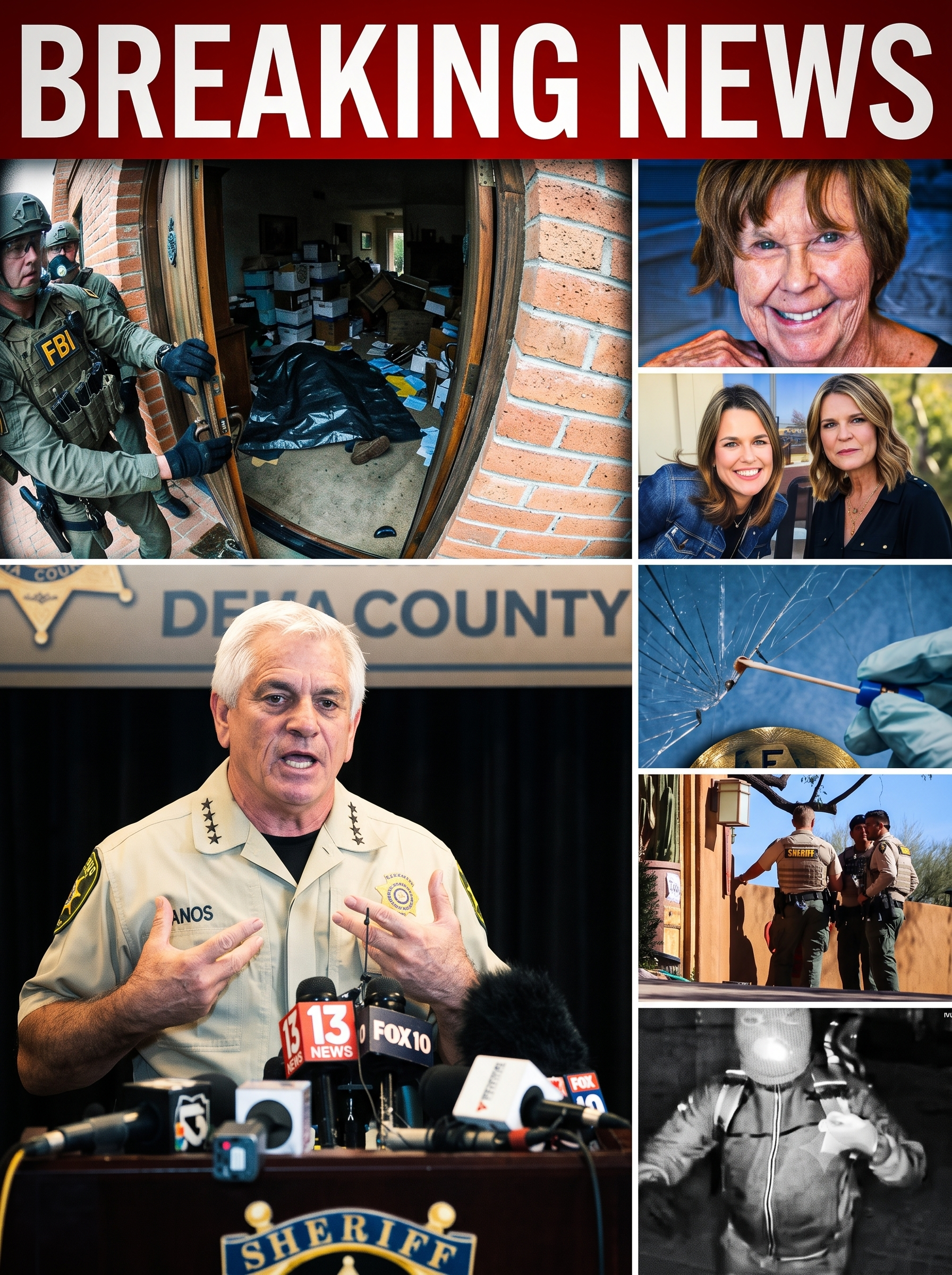
More than seven months have passed since Nancy Guthrie disappeared, yet the case remains suspended between hope and fear.
The 84-year-old mother of “Today” show host Savannah Guthrie vanished from her Arizona home under circumstances investigators believe point to an abduction. Since then, the FBI and Pima County Sheriff’s Department have searched, analyzed evidence, reviewed surveillance footage and followed tips.
Still, Nancy has not been found.
No suspect has been publicly named.
And authorities have not confirmed that she is dead.
For a family desperate for answers, those three facts have created an unbearable waiting game.
The Guthrie family has offered a $1 million reward for information leading to Nancy’s recovery. The FBI has separately offered up to $100,000. Together, the rewards represent roughly $1.2 million in potential incentives for someone who knows what happened to come forward.
But so far, no public breakthrough has followed.
That leads to an uncomfortable question.
Is someone out there still holding the key to this case?
The answer could be yes.
A witness might know more than investigators realize.
Someone might have seen a vehicle.
Someone might recognize the masked person captured on camera.
Someone might have received a strange message.
Someone might have heard a conversation that seemed insignificant at the time but now looks different.
Or someone could know directly what happened to Nancy and simply be afraid to speak.
Investigators have repeatedly emphasized that even small pieces of information can matter.
The reason is simple.

Major criminal cases are often solved not by one dramatic discovery, but by multiple pieces of evidence that eventually connect.
A video identifies a vehicle.
A vehicle leads to a person.
A person’s phone records establish a location.
DNA places that person somewhere.
A financial transaction reveals a motive.
A witness fills in the missing timeline.
Suddenly, evidence that seemed unrelated becomes a chain.
The Nancy Guthrie investigation may be waiting for exactly that kind of connection.
One of the most important public clues remains the surveillance footage of a masked individual near Nancy’s home. The footage has been repeatedly examined and circulated, but authorities have not publicly announced an identification that has led to an arrest.
That does not necessarily mean the footage has failed.
It could mean investigators have not yet obtained enough corroborating evidence.
And that is where forensic evidence becomes important.
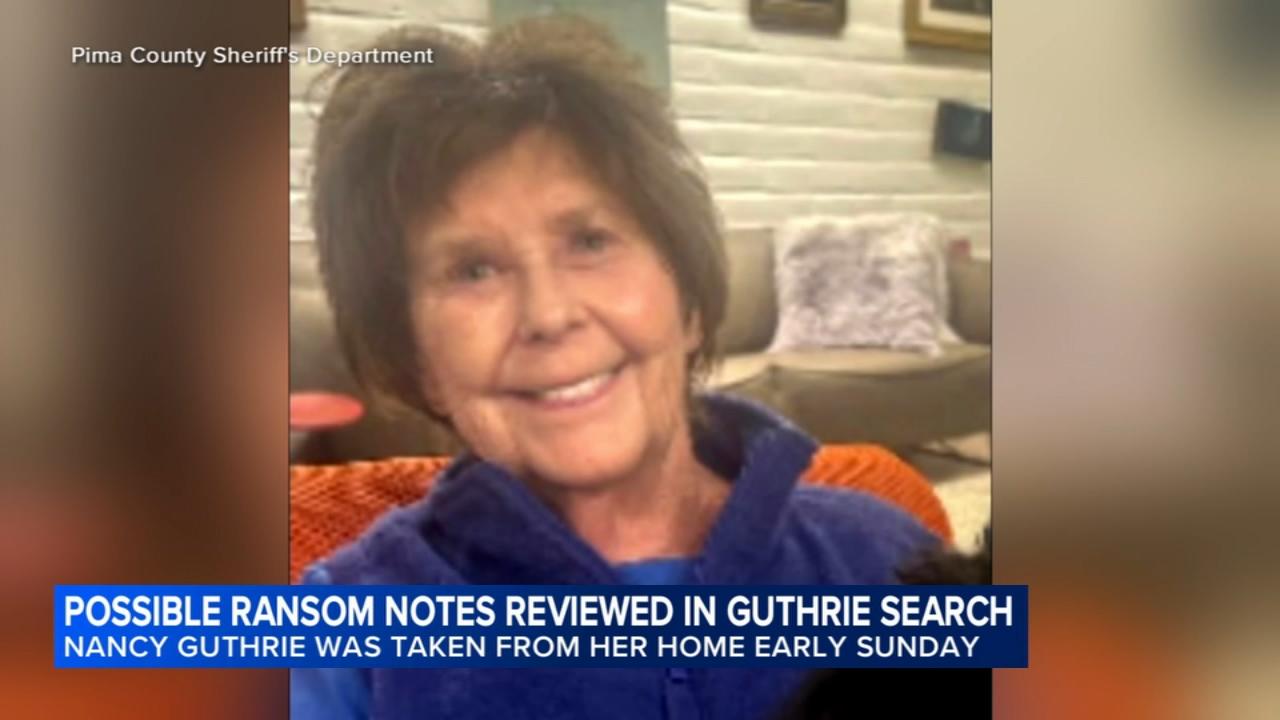
Authorities have been analyzing DNA connected to Nancy’s home, with testing involving laboratories beyond Arizona. A hair sample found at the home reportedly did not identify a suspect, but broader DNA and video analysis remains ongoing.
The fact that testing continues suggests investigators have not simply abandoned the forensic trail.
But DNA is not magic.
Even a usable sample does not automatically tell investigators when or why it was deposited.
A person could have legitimate contact with a residence.
A mixed sample can be difficult to interpret.
A profile may not appear in a database.
And a laboratory result may require additional investigation before it becomes evidence that can support an arrest.
That may be one reason the case has remained quiet.
Another major complication has been the ransom communications.
The public has heard about multiple messages connected to Nancy’s disappearance, including demands for cryptocurrency and disturbing claims about her fate.
But the FBI has made clear that some communications were determined to be illegitimate. Other ransom-related communications remained under investigation. Despite that confusion, the federal agency continued to classify the investigation as a kidnapping-for-ransom case.
This creates an unusual contradiction.

The investigation is being treated as a kidnapping-for-ransom case.
Yet some of the supposed ransom communications were fake.
That means investigators must determine not only who may have abducted Nancy, but also who may be trying to manipulate the investigation.
The case of Derrick Callella illustrates the problem.
Callella, 42, admitted contacting members of Nancy’s family with fake ransom-related messages. He pleaded guilty to federal harassment charges and was sentenced on August 31 to 10 years of probation.
His actions created a separate criminal case, but they did not solve the original disappearance.
In fact, his case highlights how much noise investigators may have had to separate from genuine evidence.
The public has also been confronted with rumors surrounding human remains discovered in the Tucson area. Such discoveries naturally generated speculation because of Nancy’s disappearance, but authorities said there was no indication the remains were connected to her case.
Again, no closure.
For Savannah Guthrie and the rest of Nancy’s family, that uncertainty may be the hardest part.
A confirmed death would bring devastating grief, but it would also establish reality.
A safe recovery would bring relief.
Instead, the family has neither.
Nancy’s fate remains unknown.
Savannah has continued speaking publicly and appealing for information. The family’s willingness to maintain a million-dollar reward demonstrates that they have not abandoned the hope that someone can provide the information needed to locate Nancy.
Meanwhile, investigators are keeping their public statements limited.
That silence has fueled speculation that authorities may be closer to an answer than they are admitting.
But there is another possibility.
They may simply be protecting an investigation that still lacks the evidence necessary for an arrest.
Retired FBI agent Scott Augenbaum recently stressed that these are two very different possibilities. He said an investigation can remain tightly guarded even when authorities have no definitive suspect, while in other cases investigators may already have a strong theory but need to build enough evidence before making an arrest.
The public cannot know which situation applies here.
That is why claims that “police know who did it” should be treated as speculation unless authorities confirm them.
Still, the possibility is enough to raise a haunting question.
Could the person responsible already be known to investigators?
If so, what are they waiting for?
A DNA match?
A digital record?
A witness?
A mistake?
A confession?
Or perhaps something else entirely?
Alternatively, perhaps the investigation remains exactly where it appears to be: without a definitive suspect and without a reliable explanation for what happened after Nancy disappeared.
The next breakthrough could therefore come from almost anywhere.
It could come from forensic testing.
It could come from surveillance technology.
It could come from an anonymous tip.
It could come from someone close to the events finally deciding to speak.
The reward remains available because investigators still need that information.
Seven months is a long time.
But it is not necessarily the end.
For now, the case remains active.
The FBI remains involved.
The sheriff’s department continues working with federal partners.
DNA and video analysis continues.
Tips continue to arrive.
And Nancy Guthrie remains missing.
The most important question is no longer simply whether investigators will solve the case.
It is whether the person—or people—who hold the missing piece of the puzzle will eventually decide to reveal it.
Because if someone knows what happened to Nancy, that person may be the one capable of changing everything.