What Happened Before the Shots? New Details Emerge in the Pennsylvania Police Shooting.h1
Pennsylvania — September 2026
The fatal shooting of 22-year-old college student Glenwood “Bubba” Pysher IV has drawn widespread attention in Pennsylvania after a late-night encounter with police ended with Pysher’s death and criminal charges against an officer.
Upper Pottsgrove Police Corporal Sean Farrell, 58, has been charged with voluntary manslaughter in connection with the shooting. Farrell has not been convicted, and the case remains pending in court.
The circumstances surrounding the incident have raised questions about police training, the use of deadly force and how officers make decisions during rapidly developing encounters.
A Late-Night Call
The incident occurred shortly after midnight on August 23, 2026, in Upper Pottsgrove Township, Pennsylvania.
According to investigators, residents contacted 911 after reporting that a man was behind their home and appeared to be attempting to enter the property.
The call prompted a police response.
Farrell was among the officers who responded to the scene. Investigators say he approached the property with his department-issued firearm drawn and used the light attached to his weapon to illuminate the area.
He eventually encountered Pysher near the rear of the residence.
Investigators later determined that Pysher was apparently at the wrong house. According to authorities, he had mistakenly believed he was approaching the home of friends.
What happened in the following moments would become the focus of a criminal investigation.
The Encounter Captured on Body Camera
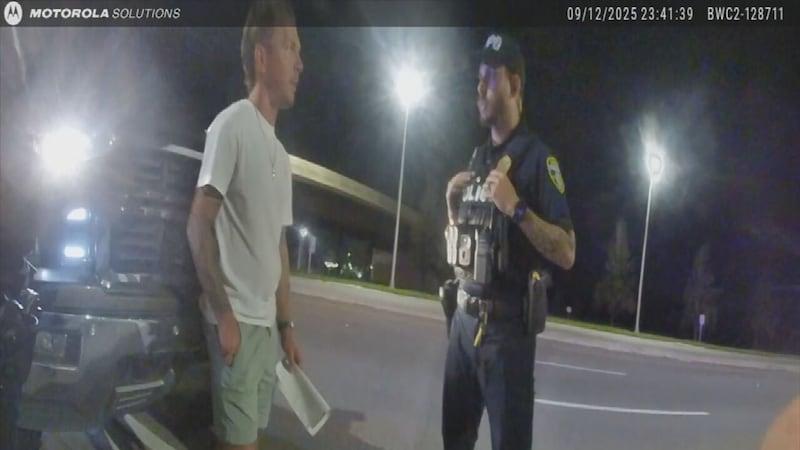
A key piece of evidence in the case is the body-worn camera footage recorded during the encounter.
According to investigators, Farrell identified himself as a police officer and ordered Pysher to show his hands.
The officer then gave additional commands, including instructions for Pysher to raise his hands and get on the ground.
Investigators say Pysher raised his hands and moved in Farrell’s direction.
Farrell continued issuing commands before firing two shots.
Pysher was struck in the chest and later died.
Investigators placed the distance between the two men at approximately 17 to 20 feet at the time of the shooting.
Investigators Say Pysher Was Unarmed
One of the central issues in the case is whether Pysher posed an immediate threat when Farrell fired his weapon.
Authorities say Pysher was not carrying a firearm.
Investigators also reported that he had his hands raised during the encounter.
Those details have become particularly significant as prosecutors examine whether the use of deadly force was legally justified.
Authorities have also said that Farrell had access to less-lethal options, including a Taser, although that option was not used before the firearm was discharged.
The significance of those alternatives will ultimately be considered within the broader circumstances of the encounter and the applicable legal standards.
A Question of Split-Second Decision-Making
Police officers responding to a possible home intrusion may face situations they believe could pose an immediate danger.
At the same time, the use of deadly force is subject to legal standards, and investigators must determine whether an officer’s actions were justified under the circumstances known to the officer at the time.
That distinction is particularly important in this case.
The question is not simply whether the shooting was tragic. Prosecutors and the defense will have to address whether Farrell reasonably believed deadly force was necessary when he fired the shots.
The body-camera footage is expected to play an important role in that examination.
Criminal Charge Does Not Mean Conviction
Farrell has been charged with voluntary manslaughter, but a criminal charge is an allegation, not a finding of guilt.
The case must proceed through the legal system, where prosecutors will present their evidence and the defense will have an opportunity to respond.
Farrell turned himself in following the charge and was released on $75,000 bail. His preliminary hearing was scheduled for September 10, 2026.
Additional evidence, testimony and legal arguments may provide further information about exactly what happened during the encounter.
A Family Left With Questions
For Pysher’s family, the incident represents the sudden loss of a young man whose night reportedly began with a simple mistake.
The circumstances have also made the case particularly difficult for the community to understand.
A call involving a suspected trespasser ultimately resulted in a fatal police encounter. Investigators are now examining every available piece of evidence to determine how that encounter unfolded and whether the officer’s actions complied with the law.
Why Body-Camera Footage Matters
The case also illustrates the growing importance of body-worn cameras in police investigations.
Video evidence can provide investigators with information about what an officer saw, heard and said during an encounter. It can also help establish the sequence of events and allow investigators to compare the footage with witness accounts and other evidence.
However, video does not necessarily answer every legal question.
Determining whether deadly force was justified requires consideration of the circumstances and the applicable law, not simply a review of individual moments captured on camera.
What Happens Next?
The criminal proceedings will determine how the case moves forward.
The September 10 preliminary hearing is an important procedural step, but it will not by itself determine whether Farrell is ultimately guilty or innocent.
As the case develops, additional testimony, evidence and court filings may shed more light on the moments leading up to the shooting.
For now, the death of Glenwood “Bubba” Pysher IV remains at the center of a difficult discussion about police response, mistaken identity, body-camera evidence and the limits of deadly force.
The case serves as a reminder that a situation can change dramatically in only a few seconds—and that determining responsibility afterward can take months or even years.
Farrell remains presumed innocent unless and until proven guilty in court. The allegations described in this article should not be interpreted as a final determination of criminal responsibility.