HE POSTED BAIL BEFORE LUNCH. BY EVENING HE WAS DRIVING A TEN-TON WAR RELIC DOWN I-95.
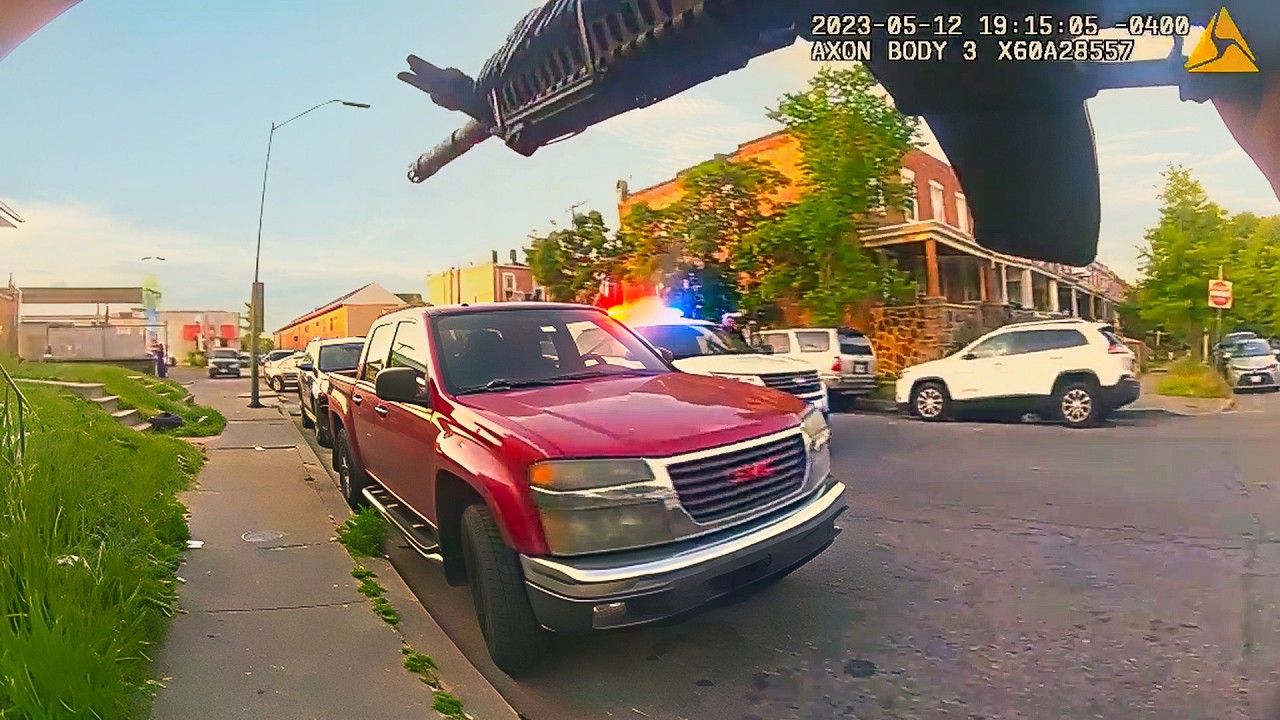
Michael D. Stevens II was 38 when Harford County let him walk out of detention on May 26, 2023. The charge that had put him inside was theft. The bail was posted. The day should have been ordinary. It was not.
Down the road from the facility, a privately owned 1986 military five-ton truck sat in a driveway. These trucks were never meant to look like passenger vehicles. They were built to haul troops and cargo across broken ground. Owners who keep them as surplus machines often leave them as the Army built them: switch-start, no ordinary key, doors that do not lock like a civilian truck. Stevens got in and fired it up.
The homeowner’s account, later reflected in the bodycam narrative, is blunt. He thought someone might simply be looking at the truck. Then he heard it running. He asked his family if the owner of the household was in the vehicle. He was not. Stevens was. The homeowner ran, reached the end of the drive as traffic blocked a clean escape, and climbed onto the running board. He demanded the stranger get out. The truck lurched, swerved, and came at him. He let go.

From that moment the incident stopped being a driveway theft and became a multi-agency problem. Deputies asked motorists if they had seen a big green Army truck. One caller confirmed the type: a five-ton. Another update suggested the truck might already have struck something in Bel Air. Units began talking about Interstate 95, stop sticks, and the need to keep the vehicle from hitting anyone else.
The physics of the chase favored the truck. A “five-ton” military cargo vehicle can weigh more than ten tons empty. Spike strips that flatten passenger-car tires are less decisive against dual wheels and a chassis designed to limp home from a battlefield. Officers called for sticks on 95 south just past 152 and for units to remain on 152. They talked about slowing traffic so a deployment would not create a worse wreck. They warned of debris coming out of the back.
Radio excerpts released with the bodycam footage show the frustration. The truck used the shoulder. It may have hit spikes; a left front or inner right tire looked compromised. It still rolled. Officers told one another not to stand in the open. He was coming over in the lanes. Jump if he comes at you.
As the convoy of patrol cars and the green giant moved past White Marsh toward the 695 interchange, another report changed tactics. A rifle, deputies said, was hanging out the window. Ground units backed off. Air support stayed on the truck. The suspect left the highway for neighborhood streets. When he slowed to turn, the distance collapsed again.
The arrest was short and loud. Officers boxed the truck, shouted for him to stop and drop whatever he was reaching for, and took him when he fled on foot. The foot flight ended at an alley mouth. Later, on camera, officers compared notes. Was there a rifle in the truck. No rifle. One deputy described the suspect reaching under a shirt in a way that looked like a concealed object. That motion, not a recovered firearm, is what the footage leaves on the record.
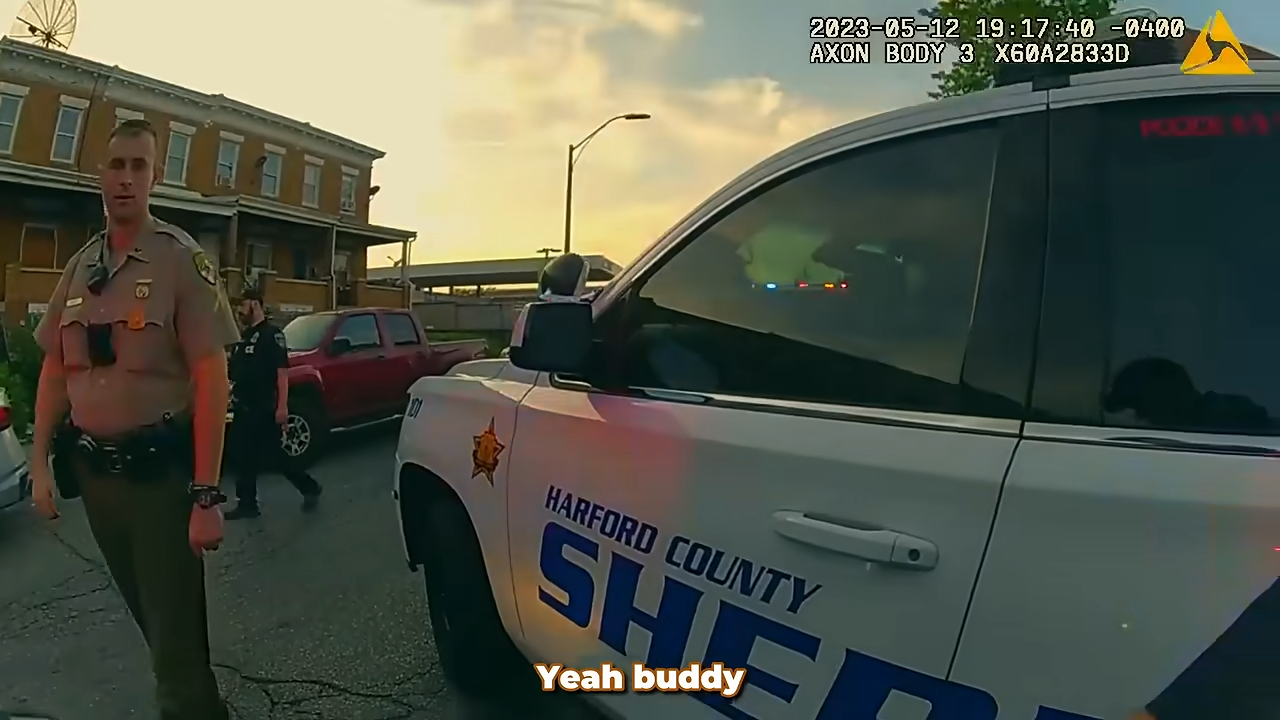
Prosecutors charged first-degree assault, felony theft, and fleeing. The truck went home. Nobody in the public was listed as injured. An on-screen update that accompanied later circulation of the video stated court records showed a ten-year prison sentence. The story that remains is simple and strange: a man left jail, stole a machine that does not need keys, and forced an entire stretch of Maryland highway to treat a surplus Army truck like a moving fortress.