163 CHILDREN WERE FOUND — BUT THE MOST DISTURBING QUESTIONS ARE ONLY BEGINNING
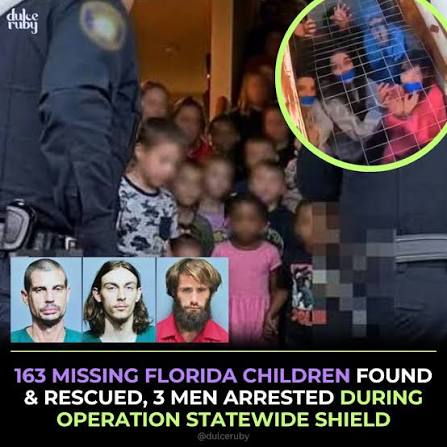
Florida’s massive child-recovery operation brought 163 missing children back into the system. But weeks later, investigators are still facing a far more difficult question: what happened to these children before they were found?
The headline was shocking.
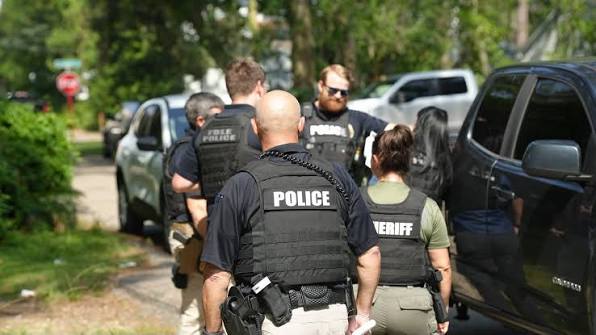
Over the course of a five-day operation in August, Florida authorities located and recovered 163 children between the ages of 2 months and 17 years.
Operation Statewide Shield was described by Florida officials as the state’s first statewide child-recovery initiative and the largest operation of its kind in Florida history. The effort was conducted from August 17 through August 21 and involved the Florida Department of Law Enforcement, the Florida Attorney General’s Office and numerous state and local law-enforcement partners.
The scale alone was extraordinary.
Authorities reported 46 recoveries in the Tampa Bay region, 41 in Miami, 32 in Jacksonville, 21 in Orlando, 12 in Fort Myers, eight in Pensacola and three in the Tallahassee area.
But the operation did not stop at Florida’s borders.
Officials said children were also located across six other states, one U.S. territory and 12 countries. That international reach immediately raised questions about how vulnerable children had moved between jurisdictions and what circumstances had placed them in danger.
And authorities have emphasized something that is often lost in sensational social-media posts: the 163 children do not represent one single kidnapping case.
Their circumstances were different.
According to officials, some were runaways. Others had reportedly experienced abandonment, neglect, abuse or exploitation. Some cases involved exposure to criminal activity, including human trafficking.
That distinction is critical.
Almost immediately after the operation was announced, social media users began circulating claims suggesting that three men arrested during the investigation were responsible for kidnapping all 163 children.
That claim is false.
The publicly reported arrests involved individual cases, not a single conspiracy responsible for every child recovered.
Michael Prescott was arrested in Jacksonville and faced several charges, including allegations involving a minor, battery and aggravated assault. Robert Ferral Allison was arrested in Lee County and faced a charge involving alleged sexual battery of a victim aged 12 to 16. Jayden Allen Harwood was arrested in a separate case involving interference with child custody and resisting an officer without violence.
Those cases are serious.
But they cannot be presented as proof that the three men were responsible for 163 disappearances.
That misinformation matters because it can distract from the real investigation.
The real question is not whether one dramatic criminal organization has been exposed.
It is how 163 separate cases developed to the point where children were reported missing or endangered — and whether the systems designed to protect them failed along the way.
For the children who were recovered, authorities established designated recovery hubs where they could receive medical care, social services, child-welfare assistance and support from victim advocates.
Some children were reunited with family members.
Others were placed into foster care or remained under protective supervision, according to reporting on the operation.
That means the operation did not simply end when officers located a child.
In many cases, recovery was only the beginning.
A child who has experienced neglect may need long-term counseling.
A child who has been exploited may need specialized trauma care.
A teenager who repeatedly ran away may require a completely different intervention from an infant removed from an unsafe environment.
And investigators still have to determine what happened before each recovery.
That is where the number 163 becomes much more complicated.
It is not simply a statistic.
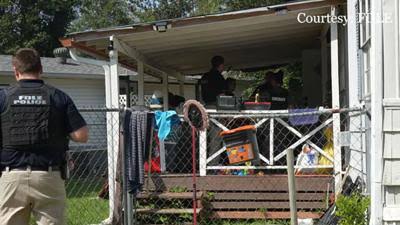
It represents 163 individual investigations, 163 histories and potentially hundreds of unanswered questions.
Florida officials initially said three felony cases had been generated through the operation and were being handled by the Office of Statewide Prosecution and the Miami-Dade State Attorney’s Office. Officials also said many additional investigations had been started and that further arrests could follow.
But as of September 14, there has been no official announcement confirming that the 163 figure has increased.
That does not mean the investigations have ended.
It means authorities have not publicly announced another statewide recovery total.
Then came another international twist.
After the operation became public, families in Brazil wondered whether missing Brazilian children could be among those recovered in the United States.
One case involved José Arthur Sousa Barros, a young boy missing from Pará. His family reportedly asked Brazilian authorities to investigate whether he might be among the children recovered in the United States.
The question generated hope.
But that hope has now been sharply narrowed.
Brazil’s Federal Police later stated that, according to information received from U.S. authorities, no Brazilian child was among the 163 children located in Operation Statewide Shield.
That clarification also affected another Brazilian case involving siblings Ágatha Isabelly and Allan Michael, who disappeared in Maranhão.
The Federal Police said the siblings were not among the recovered children and requested international cooperation through Interpol to continue the search.
So one potential mystery has been answered.
But many others remain.
The operation also exposed another disturbing problem: misinformation.
As the story went viral, unrelated videos were circulated online as supposed footage of children being rescued during Statewide Shield. Some of those videos actually came from completely different incidents.
That created a strange contradiction.
The real operation was already extraordinary enough, yet false images were being used to make it appear even more sensational.
The danger is obvious.
When real cases involving missing children become mixed with fabricated videos and unsupported accusations, the public can lose sight of the victims themselves.
The 163 children do not need a viral conspiracy theory.
They need protection.
They need accurate identification.
They need medical and psychological support.
Their families need answers.
And when crimes occurred, investigators need enough evidence to establish who was responsible and hold those people accountable in court.
That process can take far longer than five days.
Operation Statewide Shield may have ended on August 21.
But the investigations created by it are still unfolding.
The most important number may no longer be 163.
It may be the number of children who receive lasting protection, the number of families who finally get answers, and the number of offenders prosecutors can actually prove responsible in court.
Because finding a missing child is the first victory.
Making sure that child never disappears into danger again is the much harder one.