The Boy Who Saw Upside Down: Mahendra Ahirwar
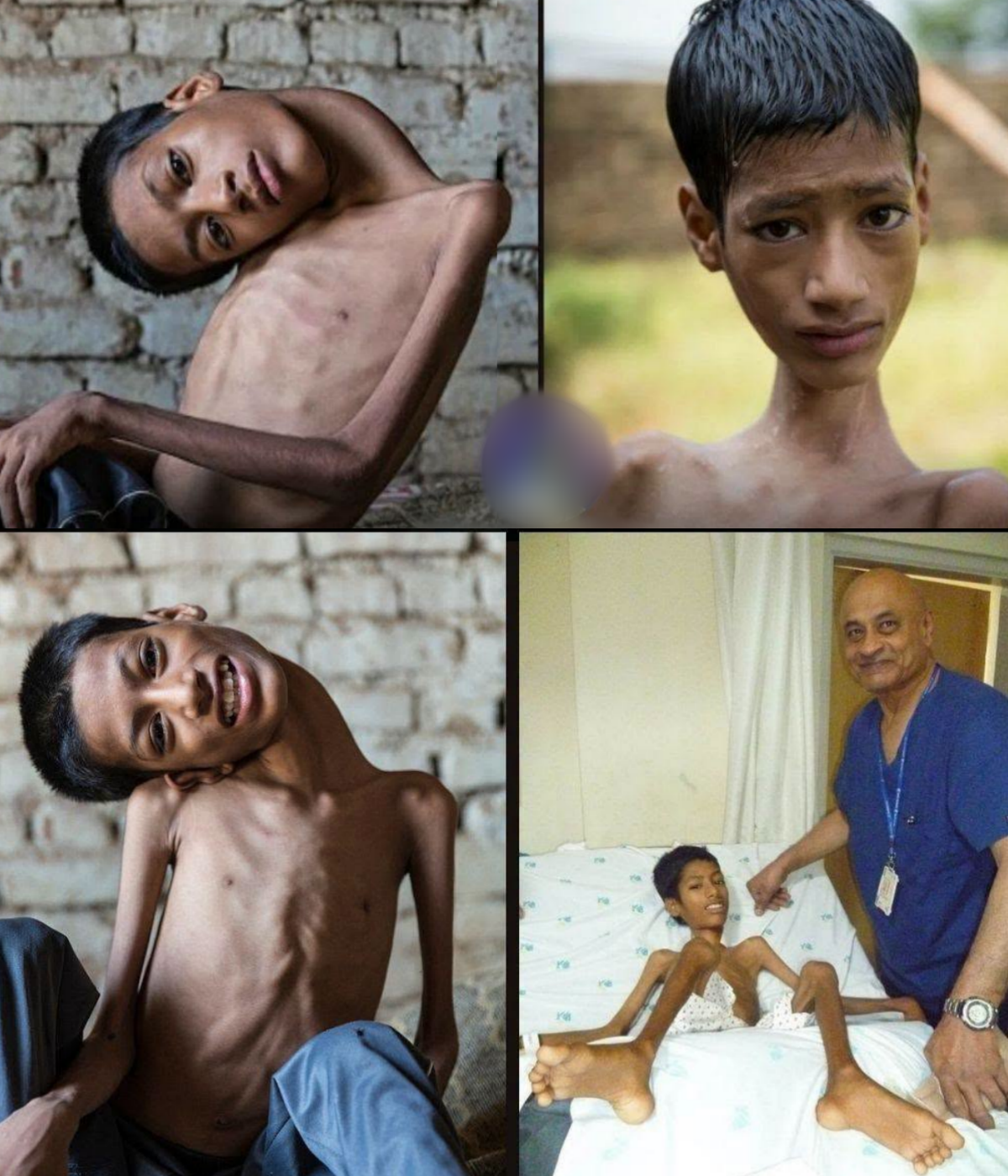
Mahendra Ahirwar grew up in a village in Madhya Pradesh, India, with congenital myopathy so severe that the muscles of his neck could not hold his head. It hung at nearly 180 degrees. The world looked inverted. He could not walk to school. Relatives carried him. After years of unpaid clinic visits, his parents, Mukesh and Sumitra, stopped looking.
Julie Jones, a careers coordinator in Liverpool, read the photographs in 2015 and opened a crowdfunder. About £12,000 came in. Dr Rajagopalan Krishnan, a spinal surgeon at Apollo Hospital in Delhi who had worked in the NHS, operated without a fee in March 2016. The case was filmed for Channel 5’s The Boy Who Sees Upside Down.
The operation lasted about ten hours. Approaching from the left, he exposed the cervical spine, removed discs and endplates at multiple levels, packed pelvic bone graft, and locked the neck with a plate. Anaesthesia in a child with such wasted muscle was itself a risk. After two weeks Mahendra went home with a straight neck and an electric wheelchair from an anonymous donor. He said he wanted school and books.
Congenital myopathies are genetic disorders of the muscle fibre, not a curve that a brace can undo. Fusion can hold a head upright; it cannot restore power the genes never gave. In November 2016 British papers reported that Mahendra had died, months after the operation that looked, on camera, like a complete success. The Spanish caption ends at the smile. The record does not.
Crowdfunding moved a boy from a dirt floor to an operating table 4,000 miles from the woman who posted the link. That part is true. So is the limit of what plates can do when the disease is in every fibre of the neck.
Sources
- The Mirror / Liverpool Echo, 2015–2016: Julie Jones crowdfunder, Apollo Hospital surgery
- Dr Rajagopalan Krishnan statements on multilevel cervical fusion and bone graft
- Channel 5 Extraordinary People: The Boy Who Sees Upside Down
- The Mirror, 7 November 2016: death reported months after surgery