PART 2 — THE SECRET BURIED BENEATH COPPER JACK
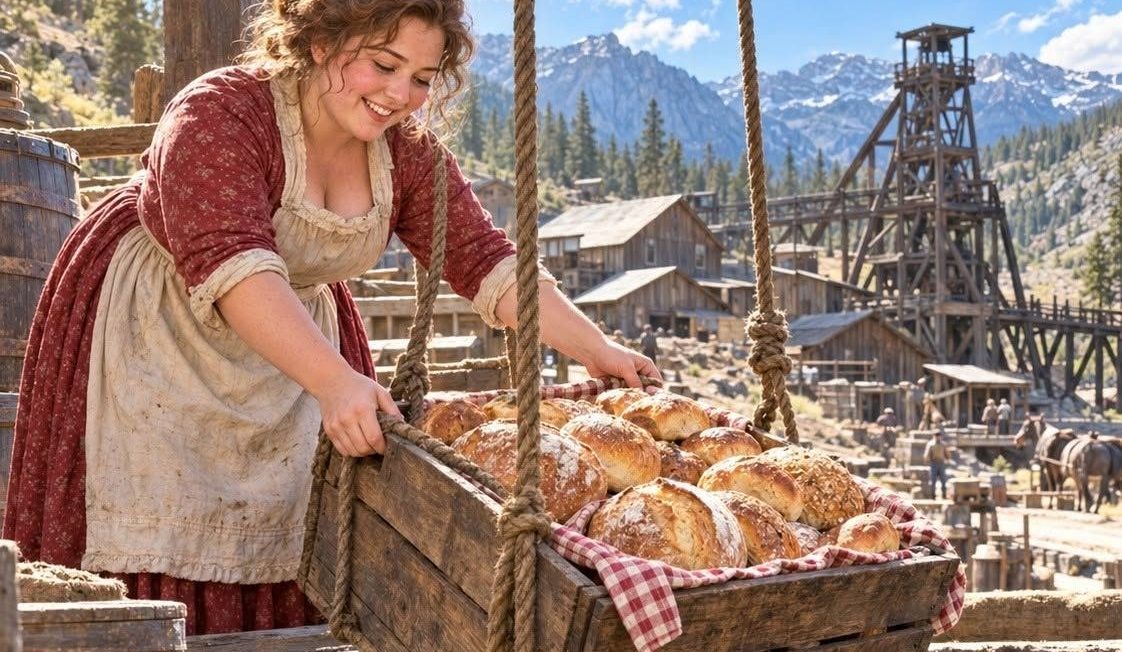
The miner who came out of Black Mesa Mine wasn’t asking for water.
He wasn’t asking for his wife.
He wasn’t even asking whether the other twenty-seven men had survived.
He grabbed the rescue foreman’s coat with both trembling hands and whispered five words.
“Bellamy knew it would happen.”
I was standing close enough to hear him.
The foreman went pale.
Wesley Cade stopped beside me.
And for the first time since I had arrived in Copper Jack, I saw something more frightening than a mine collapse.
I saw powerful men become afraid of the truth.
The miner’s name was Thomas Vail.
He was forty-six, with a beard full of gray dust and a broken wrist hanging against his chest.
Two rescuers tried to carry him toward the medical tent.
Thomas fought them.
“Don’t let him near the records!”
“Who?” the foreman demanded.
“Bellamy!”
The name traveled through the crowd like a spark through dry grass.
Rufus Bellamy stood near the mine office, wearing the same expensive brown vest he had worn when he humiliated me.
For one terrible second, our eyes met.
Then he turned and walked away.
Not quickly.
Not running.
Just walking like a man who believed nobody in Copper Jack had the courage to stop him.
I watched him disappear down the street.
Something in my stomach tightened.
Because suddenly, I remembered the flour sacks.
And the strange way Rufus had looked when I handed him five dollars.
By sunset, all twenty-eight miners had been brought out alive.
Some were badly injured.
Others could barely stand.
But every single one had survived.
The rescue foreman credited the digging crews.
The town credited the doctors.
And the miners credited the food Percy and I had lowered through the ventilation pipe.
I didn’t care who received the credit.
I was too tired to stand.
For seventy hours, I had worked with flour in my hair, burns on my wrists, and almost no sleep.
When I finally returned to the Lantern Kitchen, I found Percy sitting beside the stove.
He had three empty flour sacks spread across the table.
“Ma’am,” he said quietly.
“Percy, if this is about supper, I swear I’ll throw a biscuit at you.”
He didn’t smile.
Instead, he pointed to the canvas.
“Did you notice these?”
I looked down.
The sacks were filthy, torn, and stiff from dried mud.
But along the bottom seam of one sack, Percy had discovered something unusual.
A second line of stitching.
Not the rough machine stitching used to close ordinary flour bags.
This was careful handwork.
Tiny, even stitches made with dark blue thread.
“Someone opened this sack and sewed it shut again,” Percy said.
I rubbed my thumb over the seam.
“Maybe the mill repaired it.”
“Maybe.”
But Percy didn’t sound convinced.
He picked up a small knife.
“I found something else.”
He carefully sliced through the blue thread.
Then he reached between the two layers of canvas.
And pulled out a folded piece of oilcloth.
My heart began to pound.
Inside the oilcloth was a narrow strip of paper.
The writing had faded, but three words remained perfectly readable.
BLACK MESA ACCOUNTS.
Beneath them were numbers.
Dates.
And a name.
R. BELLAMY.
For a long moment, neither of us spoke.
Then Percy whispered something that made my skin go cold.
“Why would a mercantile owner hide mining records inside flour sacks?”
I didn’t know.
But I intended to find out.
The next morning, Wesley Cade arrived before sunrise.
He found me sitting at the kitchen table with the paper spread beside a cup of cold coffee.
I showed it to him.
His expression changed immediately.
“Where did you get this?”
“Inside one of Bellamy’s flour sacks.”
Wesley read the numbers again.
Then he pulled out a chair.
“There’s something you ought to know about Rufus Bellamy.”
I waited.
“His mercantile isn’t his real business.”
“What is?”
Wesley lowered his voice.
“Debt.”
He explained that nearly every miner in Copper Jack owed Bellamy money.
The men bought boots, blankets, medicine, and groceries on credit.
Their wages were supposed to cover those debts.
But the balances never seemed to shrink.
A miner could work six days a week for ten years and still owe more than when he started.
“That’s robbery,” I said.
Wesley shook his head.
“It’s worse.”
He tapped the paper.
“Bellamy owns a piece of the company that handles the mine payroll.”
I looked at the figures.
“Then he’s collecting money from both ends.”
“Exactly.”
The room seemed to grow smaller.
I thought of Thomas Vail.
Of the cave-in.
Of twenty-eight men buried beneath a mountain.
“How does that connect to the collapse?”
Wesley stared at me.
“Three months ago, the miners complained about the supports in the lower east tunnel.”
“What happened?”
“The company said repairs were too expensive.”
“And Bellamy?”
“He approved the budget.”
I looked back at the paper.
A date appeared beside one of the entries.
September 14.
Two weeks before the collapse.
Beside it were the words:
EAST SUPPORTS — PAYMENT RELEASED.
Below that was another line.
TIMBER DELIVERY — COMPLETED.
Wesley went completely still.
“Those supports were never delivered.”
The words hung between us.
Outside, the town was waking.
Wagons rattled over the dirt road.
A rooster crowed behind the boardinghouse.
Somewhere, a child laughed.
And I realized that ordinary life was continuing around a secret that might have buried twenty-eight men forever.
“How much money?” I asked.
Wesley studied the figures.
“Almost eighteen hundred dollars.”
In Copper Jack, eighteen hundred dollars could buy a house.
It could feed families for months.
And it could purchase enough timber to reinforce a dangerous mine tunnel.
Instead, somebody had taken the money.
That afternoon, Thomas Vail came to the Lantern Kitchen.
His wrist was wrapped in splints.
His face looked ten years older than it had before the collapse.
He refused food until I locked the door.
Then he sat down and began to speak.
“Six weeks before the cave-in, I saw a wagon leave the mine yard after midnight.”
“Carrying what?”
“Timber.”
Wesley leaned forward.
“Where was it going?”
Thomas swallowed.
“Bellamy’s new warehouse.”
My hands tightened around my apron.
“Why would he take mine supports?”
Thomas stared at the floor.
“Because the mine had already paid for them.”
He explained that the timber had been purchased with company funds.
But Bellamy arranged for the delivery to be redirected.
Then he charged the mine for another shipment that never arrived.
The paperwork showed completed repairs.
The tunnel remained dangerous.
When the miners complained, management produced receipts proving the work had been done.
And anyone who argued was threatened with dismissal.
“Did you tell the sheriff?” I asked.
Thomas laughed bitterly.
“Bellamy helped pay for the sheriff’s election.”
I felt a slow anger rising inside me.
Not the hot anger I had felt when Rufus mocked my body.
This was colder.
Steadier.
The kind of anger that made a person stop being afraid.
“Then we need someone outside Copper Jack.”
Wesley nodded.
“The territorial mining inspector.”
Thomas shook his head.
“Bellamy will know before the letter leaves town.”
“Then we won’t send a letter,” I said.
Both men looked at me.
I stood.
“We’ll take the evidence ourselves.”
That evening, I made a decision that frightened Percy more than the mine collapse had.
I closed the Lantern Kitchen early.
I packed the papers inside a biscuit tin.
And I told Wesley I would accompany him to Silverton, where a government inspector was expected to arrive the following week.
But we never made it to the wagon.
At half past nine, somebody knocked on the kitchen door.
Three slow knocks.
Then two quick ones.
Percy opened it.
A little girl stood outside.
She couldn’t have been older than twelve.
Her hair was tied with a faded green ribbon.
She held a folded envelope against her chest.
“Are you the lady who feeds the miners?”
“Yes, sweetheart.”
She pushed the envelope into my hand.
“My father said you need this.”
“Who is your father?”
Her lower lip trembled.
“Mr. Bellamy’s bookkeeper.”
Before I could ask another question, she ran into the darkness.
I opened the envelope.
Inside was a page torn from an accounting ledger.
There were columns of numbers.
Signatures.
And one line circled in red pencil.
FLOUR SHIPMENT — PRIVATE TRANSFER.
Beside it was an amount.
$4,800.
I stared at the figure.
Four thousand eight hundred dollars.
For three sacks of ruined flour?
That made no sense.
Then Wesley leaned over my shoulder.
“Look at the destination.”
Beneath the payment was a name I had never seen before.
MERCER & VALE ASSAY COMPANY.
Percy frowned.
“That’s the old silver office.”
I looked up.
“The one beside my kitchen?”
He nodded.
And then I remembered something.
The abandoned shed I rented had once been part of the assay company’s property.
The same property where silver and gold were weighed, tested, and recorded.
Wesley took the ledger page from my hands.
“That money wasn’t payment for flour.”
“What was it?”
He looked toward the dark window.
“I think somebody was using the flour shipment to move something they didn’t want recorded.”
My mouth went dry.
Because suddenly, I remembered how unusually heavy those sacks had been.
The flour inside had been dry.
But the bottoms had felt like stone.
I had assumed it was moisture.
Clumped flour.
Nothing more.
Then Percy spoke.
Very softly.
“Ma’am?”
I turned.
He was staring at the old stove.
“Remember the last sack?”
“What about it?”
“The one we never completely emptied.”
I stopped breathing.
Percy pointed toward the woodpile.
“I used the bad flour to fill cracks around the stove base. But I kept the bottom of that sack because the canvas was thick enough to patch the roof.”
He walked to the corner.
Lifted three pieces of firewood.
And pulled out a square of dirty canvas.
Something hard was still sewn into the bottom.
Not flour.
Not paper.
Something rectangular.
Something heavy.
Wesley took out his knife.
He cut the seam.
And a small metal box fell onto the table.
It was blackened with age.
Its corners were reinforced with brass.
Across the lid were four stamped letters.
M. & V.
Percy whispered, “Open it.”
I reached for the latch.
But before my fingers touched it, a gunshot cracked outside.
The kitchen window shattered.
Wesley threw me to the floor.
Percy screamed.
And from the darkness beyond the broken glass, a man’s voice called out:
“PUT THE BOX ON THE TABLE, WOMAN!”
I recognized that voice.
I had heard it laughing beside a pickle barrel.
I had heard it mock my body.
I had heard it tell me I would never earn an honest living.
Rufus Bellamy had come for his secret.
And this time, he wasn’t laughing.
PART 3 — THE NIGHT THEY TRIED TO BURN THE LANTERN KITCHEN 👉Click here