PART 2 — THE WOMAN WHO OWNED EVERYTHING
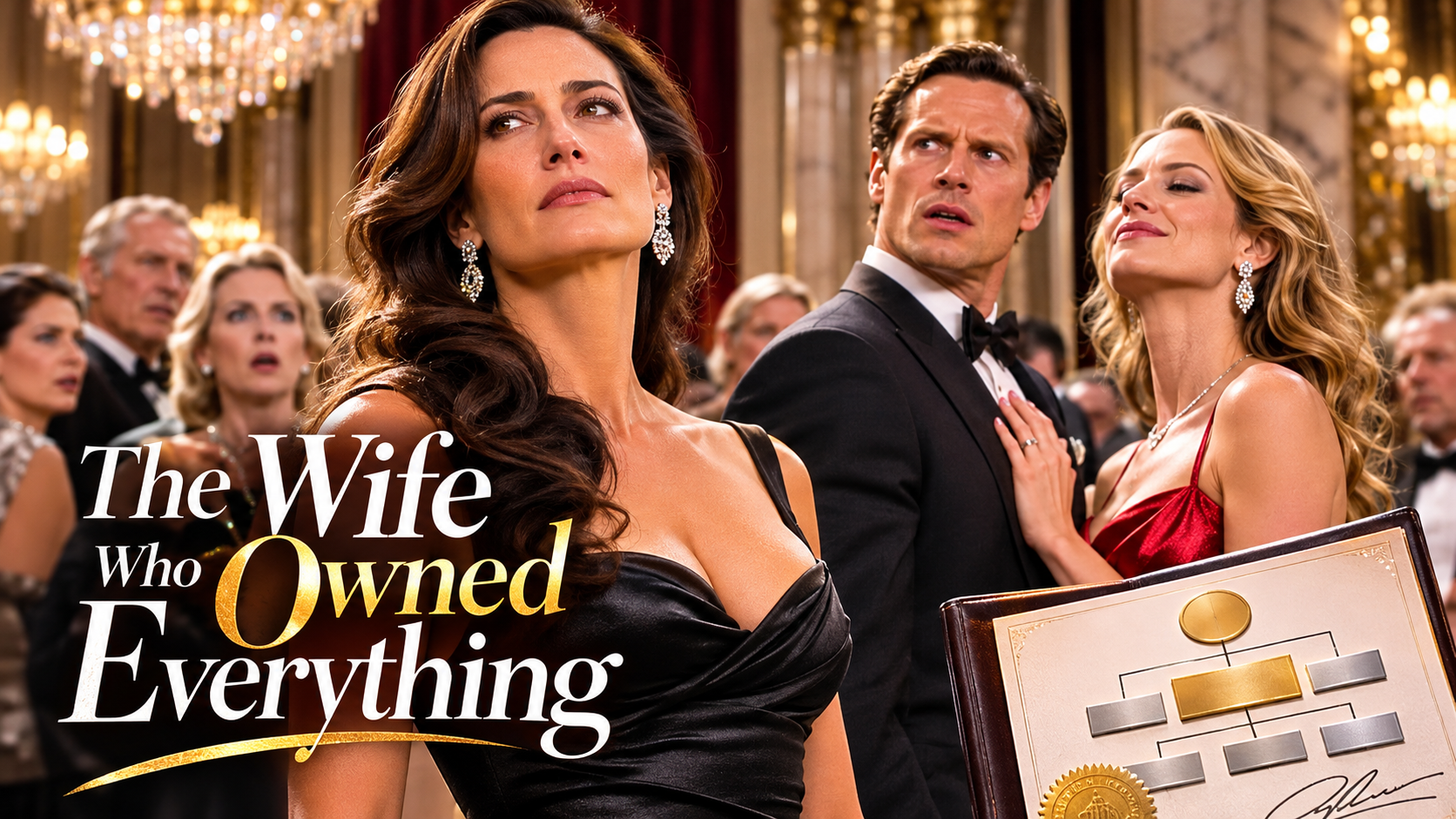
The moment the ownership chart appeared behind me, Marcus stopped smiling.
Sixty-eight percent.
That was the number glowing in gold at the center of the screen.
And beneath it was a name he had spent ten years pretending didn’t matter.
Evelyn Whitaker.
Three hundred guests stared at the screen.
Marcus reached for the microphone.
“Evelyn, this is neither the time nor the place.”
I stepped aside before his fingers could touch it.
“You’re right, Marcus. A corporate anniversary should be about facts, not personal relationships. So let’s discuss the facts.”
I pressed the remote.
A second slide appeared.
WHITAKER CAPITAL — AUTHORIZED VOTING CONTROL.
My family’s holding company occupied the largest section.
Marcus’s personal equity was considerably smaller.
A murmur spread across the ballroom.
At the investors’ table, an elderly gentleman slowly removed his glasses.
“Marcus,” he called, “you told us you were the majority shareholder.”
Marcus’s expression tightened.
“I said I founded the company.”
“With whose money?” another investor asked.
Margaret moved closer to him.
“Don’t let her humiliate you,” she whispered.
Unfortunately for Margaret, her microphone was still switched on.
The entire ballroom heard her.
I looked at her.
“Humiliation is what you arranged for me tonight. This is simply disclosure.”
Several guests began recording.
Marcus stepped forward.
“My wife is emotionally unstable. She’s been under enormous pressure since our son’s hospitalization.”
That was when my attorney, Daniel Price, rose from the front row.
“Mr. Whitaker, I strongly advise you not to make further representations about Mrs. Whitaker’s medical or psychological condition.”
Marcus went pale.
Daniel approached the stage carrying a leather folder.
He introduced himself as counsel to the controlling shareholder.
Then he explained that the company’s governing documents required specific approvals before Marcus could issue new equity, change voting rights, or enter certain financing arrangements.
Those approvals had not been granted.
An investor near the stage stood.
“Then what exactly did we sign last week?”
The question landed like a gunshot.
Marcus stared at him.
“What did you sign?” I asked.
The investor opened his briefcase.
“A preliminary commitment. Marcus told us our investment would give us a controlling interest after restructuring.”
I turned toward Daniel.
He nodded.
The financing documents had been circulated.
But Marcus had not shown us the version investors had actually received.
“Those documents will need independent review,” Daniel announced. “No one should assume the proposed transaction has been authorized.”
Marcus suddenly grabbed my wrist.
“Stop this. Now.”
I looked down at his hand.
“Let go.”
He tightened his grip.
Then a security officer stepped forward.
“Sir.”
Marcus released me.
And that was when Margaret did something unexpected.
She began laughing.
Not nervously.
Not quietly.
She laughed as though the entire evening had been arranged for her entertainment.
“You really think sixty-eight percent makes you untouchable?” she asked.
I studied her face.
“What are you talking about?”
Margaret reached into her handbag and removed a folded document.
“Marcus didn’t tell you everything about your family trust.”
Daniel’s expression changed.
“Where did you get that?”
Margaret smiled.
“From someone who knows exactly who Evelyn Whitaker really is.”
Then she unfolded the document.
Across the top were three words.
CONFIDENTIAL FAMILY SETTLEMENT.
And beneath them was a date.
The day my grandmother died.
For the first time that evening, I felt genuinely afraid.
Because the signature at the bottom wasn’t Marcus’s.
It was my mother’s.
My mother had been dead for eleven years.
And according to the document Margaret was holding, she had signed it six months after her funeral.