Part 2: The Woman Who Owned His Empire

“What?” Clare whispered.
Thomas Aldridge paused on the other end of the phone.
“He built a door that only you could open.”
Clare stared at the documents scattered across her kitchen table.
Outside, Manhattan was still awake. Somewhere below her apartment, a delivery truck rattled over a pothole. A siren passed in the distance.
But inside the small room, everything had become strangely quiet.
“What kind of door?”
“A legal one,” Thomas answered. “And if you decide to walk through it, Grant Holloway will discover that the company he believes he owns has never been entirely his.”
Clare looked again at the trust agreement.
Whitmore Legacy Holdings.
She had never heard the name.
Thomas explained that her father had spent eleven years acquiring minority positions in companies connected to Grant’s business empire.
Not directly.
Never under his own name.
He used independent investment vehicles, institutional partnerships, and a carefully constructed family trust.
Some of those investments had been made before Clare married Grant.
Others had been acquired quietly after Richard Whitmore began questioning the way Grant handled borrowed capital.
“Your father wasn’t trying to destroy your husband,” Thomas said.
“Then what was he doing?”
“Protecting you from the possibility that one day your husband might try to destroy you.”
Clare swallowed.
For seven years, she had believed her father’s distance from Grant was a matter of personality.
Richard had never openly criticized her marriage.
He simply watched.
At Christmas dinners, he asked Grant unusually specific questions about business.
See more Stories :
At family gatherings, he listened more than he spoke.
And during the final months of his life, he insisted on meeting Clare alone.
She remembered one conversation especially.
They had been sitting in his garden.
Richard had asked whether Grant ever allowed her to review the company’s financial statements without supervision.
She had laughed.
“Dad, we’re married. We trust each other.”
Her father had smiled sadly.
“Trust is wonderful, sweetheart. But it should never require blindness.”
Now she understood.
Thomas continued.
“Your father left you beneficial ownership of Whitmore Legacy Holdings. The trust has been administered independently since his death.”
“How much is it worth?”
Thomas hesitated.
“Based on the most recent audited valuation, approximately four billion dollars.”
Clare stopped moving.
Four billion.
The number seemed disconnected from reality.
Her checking account contained less than twenty thousand dollars.
She was living in an apartment with peeling paint.
And somewhere beyond her understanding, she apparently controlled a fortune larger than Grant’s publicly reported net worth.
“That can’t be right.”
“It is.”
“Then why didn’t anyone tell me?”
“Because the trust agreement required the information to remain confidential until certain conditions were satisfied.”
“What conditions?”
“The dissolution of your marriage, or your written request for disclosure after reaching forty years of age.”
Clare looked toward the window.
Her fortieth birthday was still months away.
“The divorce triggered it.”
“Yes.”
“And Grant doesn’t know?”
“He knows your father created trusts. He doesn’t know their beneficiaries, assets, or voting arrangements.”
Thomas paused.
“There’s something else.”
Clare closed her eyes.
Of course there was.
“Whitmore Legacy Holdings has a substantial position in the institutional credit facility supporting Holloway Ridge Partners.”
Clare frowned.
“Meaning?”
“Meaning your father’s holding company is part of the lending group that financed Grant’s most aggressive expansion.”
She looked at the divorce agreement lying beside the briefcase.
Grant had told her she was leaving with nothing.
But the truth was more complicated.
She had signed away her marital claims against certain assets.
She had not signed away an inheritance held separately in trust.
And Grant had no idea that the woman he had humiliated was now the beneficiary of an institution his company depended upon.
“What happens if I demand repayment?” she asked.
“You cannot simply demand repayment without cause. The loan agreements have terms, protections, and independent decision-makers.”
“Then what can I do?”
“You can investigate whether Grant complied with those agreements.”
Clare sat back.
See more Stories :
That sounded less like revenge.
And more like responsibility.
Thomas lowered his voice.
“There’s an independent audit scheduled in eleven days. Your father left evidence suggesting that Grant may have misrepresented certain transactions.”
“Evidence of what?”
“We don’t know the full extent yet.”
“Then why are you telling me?”
“Because the audit team has received a warning.”
Clare’s stomach tightened.
“What warning?”
“That someone intends to destroy the original transaction records before the auditors arrive.”
At 8:06 the following morning, Grant Holloway received an invitation.
It was printed on thick cream paper and delivered by a uniformed courier.
The Whitmore Legacy Foundation requested his presence at its annual international investment gala.
The event would take place in nine days at the prestigious Bellamy Grand.
Grant frowned.
He had attended the gala before.
Richard Whitmore had once been one of its most influential supporters.
But after Richard’s death, the foundation had become unusually private.
Grant handed the invitation to Sandra Bell.
“Find out who’s hosting.”
Sandra examined the embossed seal.
“The invitation doesn’t say.”
“Then call them.”
Twenty minutes later, she returned.
“The foundation’s office says the chairperson will be announced at the event.”
Grant laughed.
“Ridiculous.”
“They also said several major lenders will be attending.”
His smile disappeared.
“Which lenders?”
Sandra named three.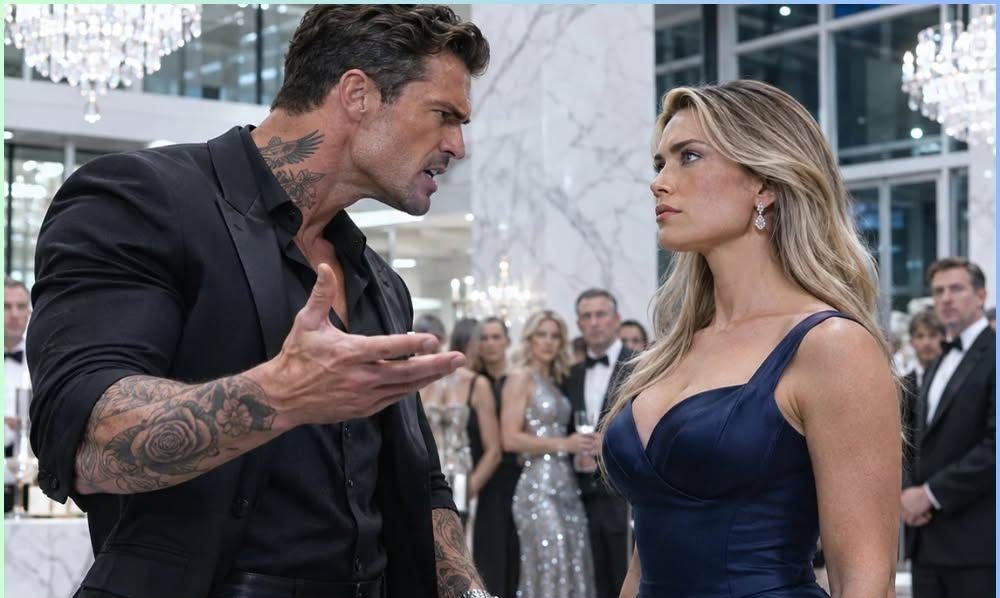
Grant knew every one of them.
They were institutions involved in his company’s debt arrangements.
He reached for the invitation again.
“Confirm my attendance.”
That afternoon, Clare met Thomas Aldridge in a private office overlooking Central Park.
He introduced her to a forensic accountant named Evelyn Shaw.
Evelyn was fifty-eight, sharply dressed, and possessed the unsettling habit of looking directly at people while remaining completely silent.
She placed a folder on the table.
“Before we begin, Ms. Whitmore, I need to ask you something.”
“Go ahead.”
“Did your husband ever ask you to sign documents you weren’t allowed to read?”
Clare thought about the question.
Then she remembered.
Three years earlier, shortly after her father’s funeral, Grant had brought home a stack of papers.
He said they were routine authorizations connected to a restructuring.
She had been grieving.
Exhausted.
Barely functioning.
Grant had kissed her forehead and told her he would take care of everything.
She had signed.
“Yes,” Clare whispered.
See more Stories :
Evelyn exchanged a glance with Thomas.
“What is it?”
Evelyn opened the folder.
Inside was a photocopy of a financial authorization.
At the bottom was Clare’s signature.
But the document was dated six months after the day she remembered signing the papers.
Clare leaned forward.
“That’s impossible.”
“Why?”
“Because I was in Switzerland that week. My father had arranged a medical consultation before he died. I stayed afterward to settle some family matters.”
Evelyn nodded.
“We have your travel records.”
Clare stared at the signature.
It looked perfect.
Every curve.
Every letter.
Even the unusual way she crossed the final stroke of her surname.
“Someone copied it.”
“That is one possibility,” Evelyn said.
“Who?”
“We need more evidence before drawing conclusions.”
Then Evelyn slid another page across the table.
It contained a transfer authorization involving thirty-eight million dollars.
The receiving account belonged to a company Clare had never heard of.
Blackthorn Advisory Group.
Clare read the name twice.
“Who owns this?”
Evelyn’s expression changed.
“We’re still tracing the ownership.”
That evening, Grant received a call from his chief financial officer.
“There’s a problem.”
Grant stood beside his office window.
“What kind?”
“Someone requested the original Blackthorn files.”
His grip tightened around the phone.
“Who?”
“A forensic accounting firm acting for a trust administrator.”
Grant said nothing.
“Grant?”
“Don’t release anything.”
“We may be legally required to preserve and produce them.”
“Then call legal.”https://youtu.be/eanoL-ARXNk?si=2R2ZRaNIWBWAkQ-t
The CFO hesitated.
“There’s another issue.”
“What now?”
“The request references an authorization signed by Clare.”
Grant turned away from the window.
For the first time since the divorce, genuine fear crossed his face.
“Who authorized that investigation?”
“We don’t know.”
Grant ended the call.
He immediately dialed a number he had not used in nearly four years.
A woman answered.
“You promised me this was finished,” he said.
Silence.
Then she replied.
“I told you not to use her signature.”
Grant closed his eyes.
“Can you fix it?”
“No.”
“Why not?”
“Because someone already has the original.”
Grant felt the room tilt.
“Who?”
The woman took a slow breath.
“Clare Holloway.”
And before Grant could respond, the call disconnected.
See more Stories :