PART 5: THE REAL VICTORY
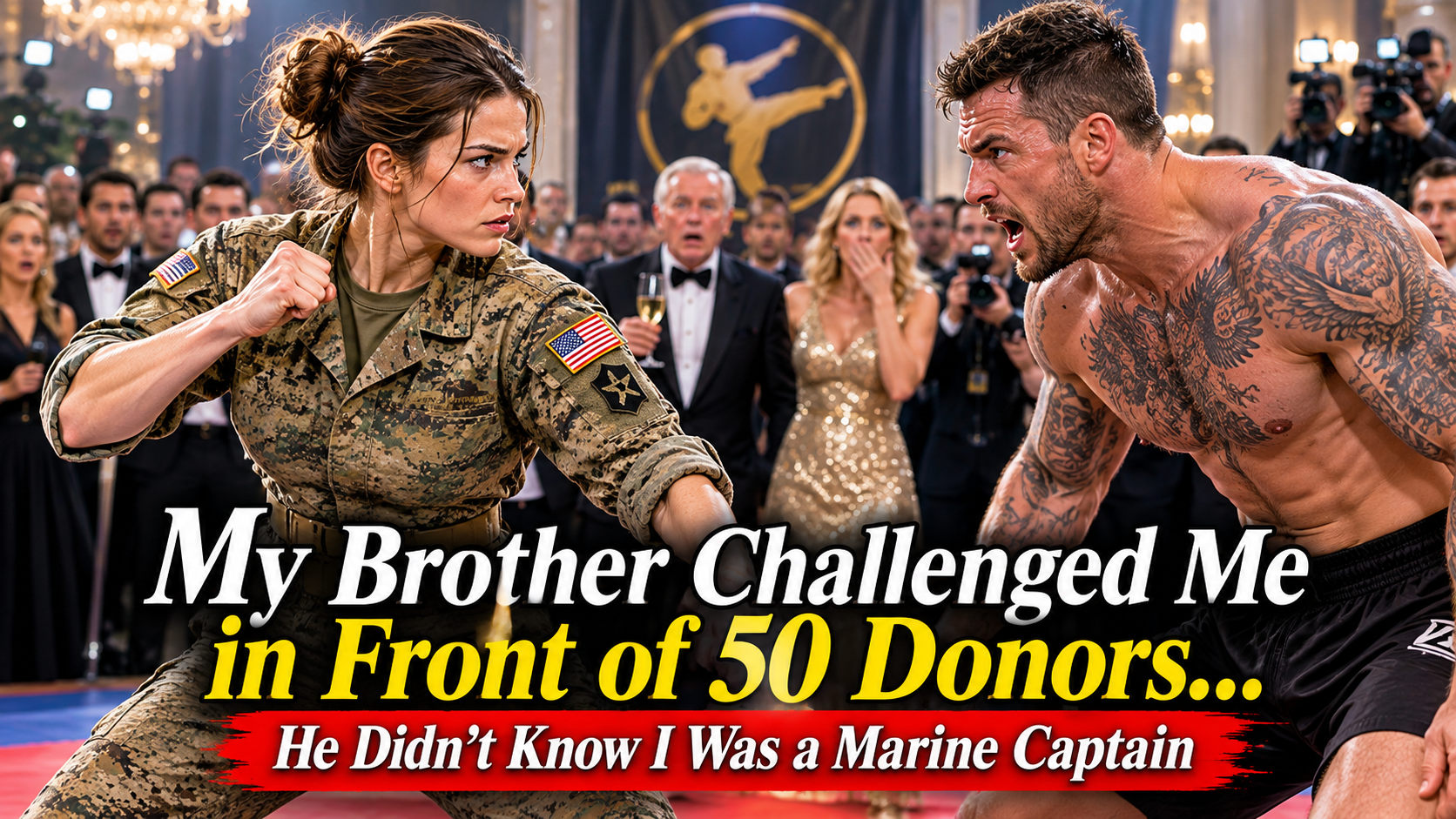
Brad approached slowly.
There was no theatrical bouncing, no exaggerated shouting, and no confident smile for the cameras.
He raised his hands.
I did the same.
For the first time in our lives, we stood opposite each other without our parents deciding who was better.
Brad threw a cautious punch.
I blocked it.
He tried another.
I stepped aside.
Then, unexpectedly, he stopped.
“Claire?”
I lowered my guard slightly.
“What?”
“Did Grandfather really believe I could never do what you do?”
I stared at him.
“No.”
His eyes filled with confusion.
“He believed you could do something different. He never said you were incapable.”
Brad looked down.
I continued.
“He wanted you to build something that made you proud. Not something that made strangers jealous.”
See more Stories :
For a moment, neither of us moved.
Then Brad rushed forward.
His attack was clumsy, driven more by frustration than technique. I redirected his arm, controlled his balance, and brought him onto the mat.
This time, I didn’t hold him down.
I stepped back and offered him my hand.
He stared at it.
The timer sounded.
Three minutes.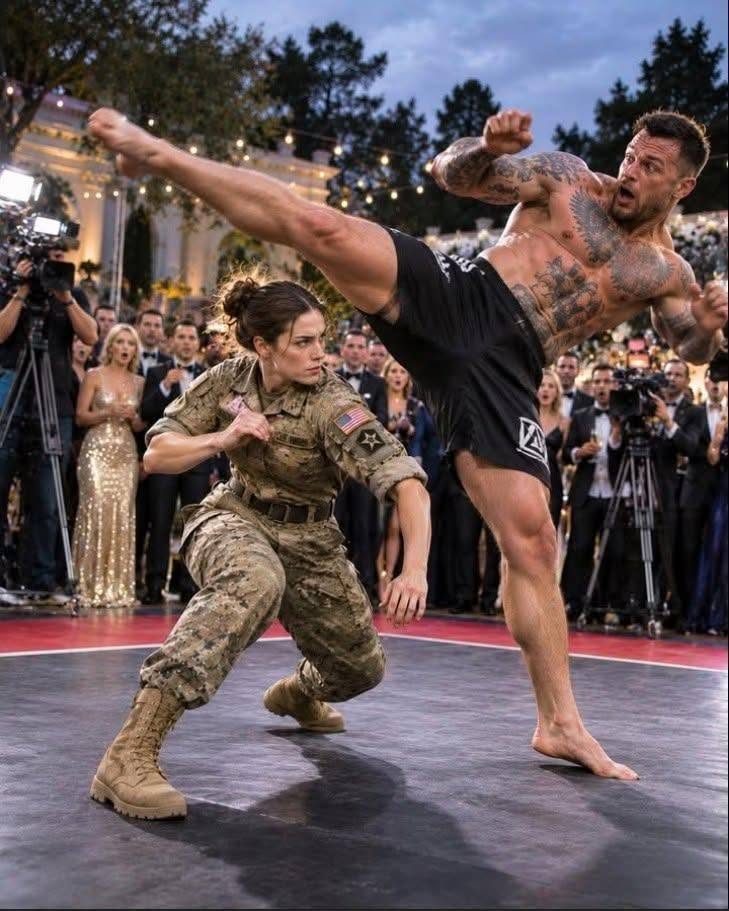
I had survived the challenge.
But nobody cheered immediately.
The room was too busy processing what had happened.
Then Colonel Reed began applauding.
Eleanor followed.
Soon, the entire audience was standing.
My mother covered her mouth.
My father remained seated, looking at the floor.
Brad accepted my hand and stood.
“I lost,” he whispered.
I shook my head.
“You lost a fight. That’s not the same thing as losing your life.”
He looked at me for a long moment.
Then he did something that shocked everyone.
He turned toward the audience, took the microphone, and admitted that the property had never legally belonged to him.
He acknowledged the financial problems at his academy and withdrew the claims he had made about controlling the land.
He also agreed to cooperate with the trust’s independent legal review.
It wasn’t a magical solution.
There would be financial consequences, legal paperwork, and difficult conversations ahead.
But for the first time, Brad had stopped pretending.
Three months later, the old property looked completely different.
The abandoned warehouse had been renovated into a bright training center with a medical room, outdoor fitness equipment, a small library, and separate spaces for martial arts and physical rehabilitation.
Eleanor’s foundation funded the first phase.
Colonel Reed helped recruit retired service members and qualified instructors.
I became the program director.
And Brad?
He was offered a position as the head of the martial arts department, under the condition that the program remained accessible to children regardless of their family’s income.
He initially refused.
He said he didn’t deserve it.
I told him that forgiveness wasn’t a reward for good behavior. It was an opportunity to do better.
Eventually, he accepted.
My parents attended the opening ceremony.
Mom hugged me longer than she ever had before.
Dad stood beside the entrance, looking at the children practicing on the new mats.
“I suppose I never understood what you were trying to build,” he admitted.
I looked at him.
“Neither did I, for a long time.”
Then Brad approached carrying an old photograph.
It was the same picture Colonel Reed had shown us at the gala.
Grandfather stood in front of the original training center, surrounded by children.
But there was something I hadn’t noticed before.
On the back, in faded handwriting, were two names.
Mine.
And Brad’s.
Below them was a sentence.
“One will teach them courage. The other will teach them confidence. Together, they can give children both.”
I stared at the photograph.
For years, I had believed Grandfather had chosen me over my brother.
But he hadn’t.
He had imagined a future in which neither of us needed to defeat the other.
Brad stood beside me, reading the words.
His eyes became wet.
“He really thought we could do this together,” he whispered.
I nodded.
“Maybe he knew something we didn’t.”
A little girl wearing an oversized pair of boxing gloves suddenly approached us.
“Captain Claire?”
I smiled.
“Yes?”
“Can you teach me how to be strong?”
See more Stories :
Before I could answer, Brad crouched beside her.
“Strong doesn’t mean you never fall,” he explained. “It means you learn how to stand up again.”
I looked at him.
For the first time, I recognized the brother I had once loved before years of competition and resentment had buried him.
That evening, after the last child had gone home, Brad handed me a small black box.
I opened it.
Inside was his black belt.
“I want you to have it,” he said.
I shook my head.
“That’s yours.”
“Not anymore. I finally understand that a belt doesn’t make someone a good fighter.”
He smiled faintly.
“And a uniform doesn’t make someone a hero.”
I closed the box and handed it back.
“Keep it. You still have plenty to learn.”
We both laughed.
One year earlier, my brother had challenged me in front of fifty wealthy donors, believing he could humiliate me and take away the only thing I had come home to protect.
Instead, that challenge exposed a family secret, saved a forgotten charitable mission, and forced two siblings to confront the damage they had caused each other.
The property was no longer an expensive trophy.
It was a place where children could learn discipline, confidence, and courage without anyone asking how much money their parents had.
And on the wall above the entrance, we placed Grandfather’s original words:
“True strength is not proven by how many people you can defeat. It is proven by how many lives you can help change.”
For the first time in our lives, Brad and I were no longer trying to win against each other.
We were finally building something worth winning together.