PART 3: I RETURNED FOR THE TRUTH—AND CHRISTMAS GAVE ME A NEW FAMILY
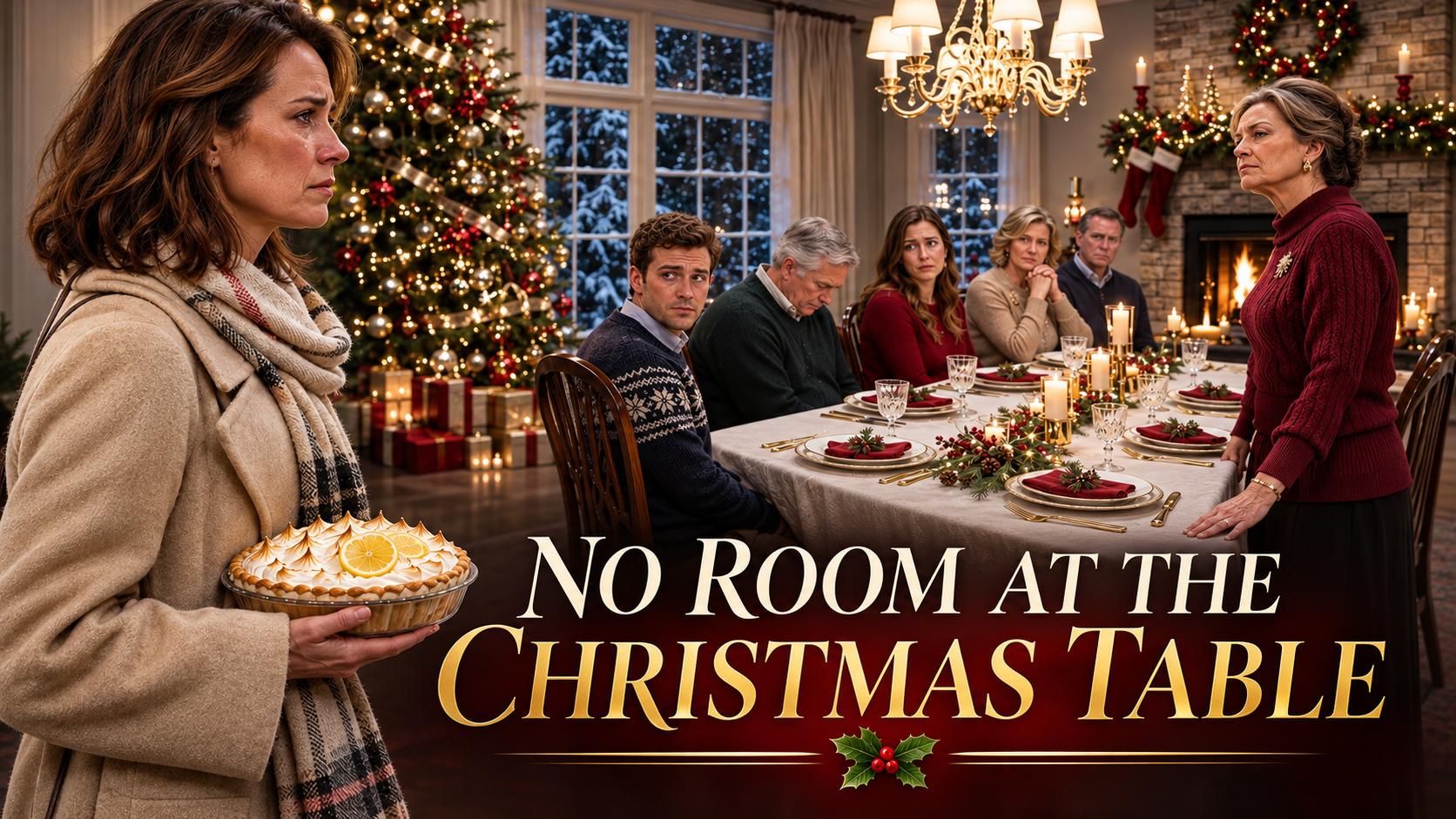
The first thing I noticed when I returned to my parents’ house wasn’t the Christmas tree.
It was the police car parked across the street.
The second thing I noticed was my sister standing on the front porch without a coat, crying into her hands.
Grace looked up when I stepped out of my car.
“Adele.”
I stopped at the bottom of the steps.
For most of my life, that single word had been enough to make me run toward her.
This time, I stayed where I was.
“Tell me what’s happening.”
She wiped her cheeks.
“Brent’s gone.”
“Gone where?”
“I don’t know. His phone is off.”
“And Mom?”
“Inside.”
I looked toward the front windows.
The house glowed with Christmas lights, exactly as it had when I’d driven away.
But something had changed.
For the first time, I wasn’t afraid of disappointing anyone inside.
Rebecca had advised me not to attend a confrontation alone, so she had come with me.
She stepped out of her car behind mine, carrying a leather folder.
Grace stared at her.
“Who’s that?”
“My attorney.”
My sister’s face went pale.
We entered together.
Mom stood in the dining room beside the same table where she’d refused me a seat.
The Christmas decorations were still there.
The red napkins.
The silver candlesticks.
The pine centerpiece.
Only the plates were gone.
Dad sat near the fireplace, looking exhausted.
Uncle Neil was nowhere to be seen.
Mom’s eyes moved from me to Rebecca.
“Really, Adele? A lawyer?”
“Really, Mom? My signature on two loans?”
Her expression changed.
Not much.
Just enough.
“I can explain.”
“Good. Start with the lake house.”
She folded her arms.
“We were going to tell you.”
“When?”
“After Grace’s wedding.”
I stared at her.
“Why was my name on the loan?”
Mom looked toward Dad.
He didn’t move.
“Your father needed help.”
“Then why didn’t he ask me?”
“Because you were already doing so much.”
I almost laughed.
“So instead of asking, you forged my signature?”
Mom’s mouth tightened.
“Don’t use words like that.”
Rebecca stepped forward.
“Mrs. Morgan, an unauthorized signature on a lending document is a serious matter. My client is entitled to a full accounting.”
Mom looked offended.
As though the real crime was bringing someone into her home who wouldn’t be intimidated by her.
“I did what was necessary for this family.”
I looked at her for a long moment.
“Which family?”
Nobody answered.
See more Stories :
Then Grace spoke.
“Tell her about Brent.”
Mom’s face drained.
“Grace, don’t.”
“No. You don’t get to do that anymore.”
My sister walked to the table and dropped a thick envelope onto the white tablecloth.
Inside were photographs, copies of financial records, and a marriage certificate.
Brent Callahan had been married for eleven years.
His wife’s name was Melanie.
They had a seven-year-old son.
And according to the documents Grace had obtained, Brent had never filed for divorce.
I stared at the marriage certificate.
“How long have you known?”
Grace swallowed.
“Three weeks.”
I looked at Mom.
“And you?”
She said nothing.
Grace answered for her.
“Six months.”
The silence was devastating.
Six months.
My mother had known my sister was engaged to a married man.
She’d known about his financial problems.
She’d known he was using my identity.
And she had still given him my seat at Christmas dinner.
“Why?” I whispered.
Mom looked toward the window.
“Because he promised Grace a future.”
I felt something inside me finally break.
Not dramatically.
Not with tears.
It was quieter than that.
Like a rope that had been pulled too tightly for too many years finally snapping.
“What future?”
Grace began crying again.
Mom sank into a chair.
“Brent said he could make an investment that would pay off all our debts. He said the business needed temporary financing, and once the contracts cleared, everyone would be comfortable.”
“With my credit?”
“He said you wouldn’t be responsible for anything.”
I stared at her.
“You believed him?”
“He was very convincing.”
“No, Mom. He was convenient.”
She looked up sharply.
I continued.
“He promised Grace money. He promised you security. And you gave him access to the one person in this family who always paid when something went wrong.”
Dad lowered his head.
Rebecca opened her folder.
“The accounts will be disputed, and any suspected identity theft will be reported through the appropriate channels. We have already preserved the relevant records.”
Mom’s eyes filled with tears.
“Adele, please. You wouldn’t send your own mother to prison.”
I looked at her.
“I didn’t make these decisions.”
For once, she had no answer.
Then Dad stood.
“Patricia, tell her the rest.”
Mom shook her head.
“There’s nothing else.”
“Tell her.”
Something in his voice made everyone turn.
I had never heard my father speak to her that way.
He walked toward the fireplace and removed a small brass key from his pocket.
Then he handed it to me.
“Your grandmother’s cedar chest.”
I frowned.
“Grandma Evelyn’s?”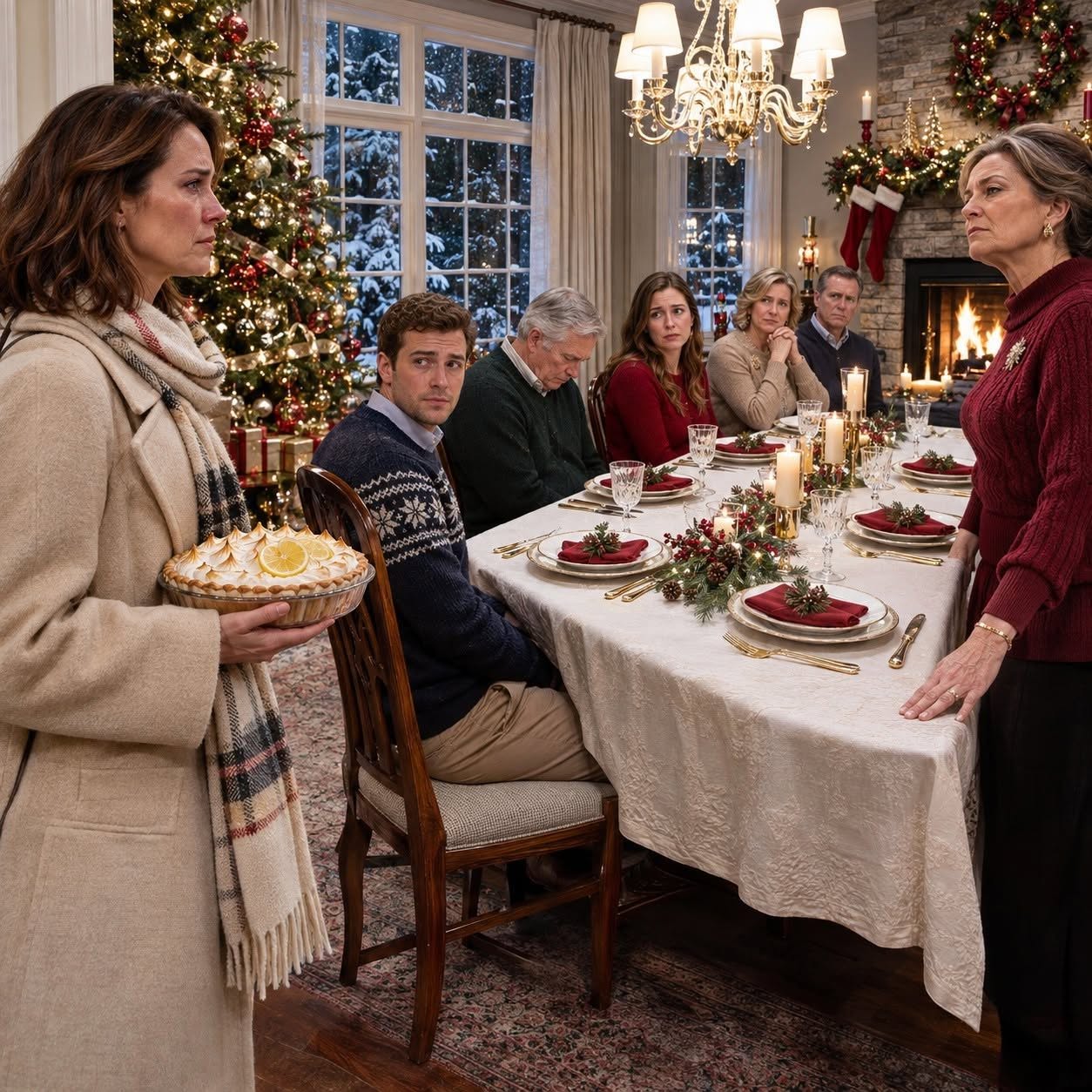
He nodded.
“Your mother kept it in the attic after she died.”
My grandmother had passed away fourteen years earlier.
She’d been the one person who never told me I was strong enough to handle everything.
When I was a child, she’d simply asked whether I was happy.
I hadn’t realized how rare that question was until she was gone.
“What does her chest have to do with this?”
Dad looked at Mom.
“Everything.”
We went upstairs.
The attic smelled of old wood and winter dust.
Behind a stack of holiday decorations stood the cedar chest I’d remembered from childhood.
I opened it with trembling fingers.
Inside were folded quilts, photographs, a silver hairbrush, and a sealed envelope.
My name was written across the front.
ADELE.
In my grandmother’s handwriting.
I sat on the floor and opened it.
The letter was dated three months before her death.
“My darling Adele,
If you’re reading this, I hope you’ve finally learned something I tried to teach you when you were little.
Love should never require you to disappear.
You have spent your whole life making sure everyone else has enough. Enough food, enough attention, enough comfort, enough forgiveness.
But I have watched you give away pieces of yourself until there is almost nothing left for you.
So I am leaving you something that belongs only to you.
Not because you earned it by being useful.
Not because you sacrificed.
Simply because you are my granddaughter, and I love you.
Please promise me that whatever you do with it, you will build a life that makes you happy.
Love always,
Grandma Evelyn.”
My eyes blurred.
Beneath the letter was a copy of a trust agreement.
I read the first page.
Then the second.
Then I stopped breathing.
My grandmother had established a trust for me.
It included a small commercial property in downtown Buffalo and an investment account.
I looked at Rebecca.
“Is this real?”
She examined the documents carefully.
“It appears to be an executed trust agreement. We need to verify the current records and administration.”
Dad sat down on an old wooden trunk.
“Your grandmother wanted you to have the building when you turned thirty.”
I looked at him.
See more Stories :
“I turned thirty twelve years ago.”
He nodded.
“Your mother said it wasn’t the right time.”
My hands went cold.
“She knew?”
Dad couldn’t meet my eyes.
“Yes.”
I looked toward the attic doorway.
Mom stood there, her face pale.
“You hid this from me?”
She began crying.
“I was afraid you’d leave.”
I stared at her.
“What?”
“Your grandmother knew you wanted to open a bakery. She knew you wanted to move away. I thought if you had that building and the money, you wouldn’t need us anymore.”
For a moment, I couldn’t understand the words.
Then I remembered being twenty-eight, standing in my parents’ kitchen with a folder full of bakery plans.
I had found a storefront.
I’d saved money.
I had recipes, a business plan, and a dream.
Mom told me it was selfish to move away when Grace was struggling.
Dad needed help with the house.
The family needed me.
So I stayed.
I took a corporate accounting job.
I told myself the bakery could wait.
Years passed.
The dream became something I mentioned only when people asked what I would do if money didn’t matter.
And all that time, my grandmother had left me the very thing I needed.
I looked at Mom.
“You didn’t keep me close because you loved having me here.”
She sobbed.
“Of course I love you.”
“You kept me dependent on being needed.”
She covered her mouth.
I turned away.
I couldn’t bear to look at her anymore.
Over the next several weeks, Rebecca helped me untangle what had happened.
The trust was genuine.
Its administration had been mishandled, and the attorney who originally prepared the documents had retired years earlier.
The commercial property had been managed through a separate firm, with rental income accumulating in accounts I had never known existed.
The precise amount took time to verify.
But when the accounting was completed, the figures stunned me.
The trust held the downtown property, now valued at approximately four hundred and eighty thousand dollars, along with more than two hundred thousand dollars in accumulated assets.
For years, I’d been sending my parents six hundred dollars every month.
Meanwhile, a future my grandmother had carefully protected for me had been hidden in an attic.
The investigation into the loans continued.
Brent was located several states away, and investigators began examining the documents connected to his businesses.
My mother eventually admitted that she’d signed my name on the lake house paperwork, believing she could replace the money before I discovered it.
She had also provided Brent with personal information he used to apply for credit.
There were legal consequences.
I didn’t pretend otherwise.
But I also didn’t spend my days hoping everyone would suffer.
I wanted the truth established, my credit repaired, and my financial independence protected.
Grace ended her engagement.
For the first time in her adult life, she found a job that didn’t come through a family connection.
She began paying her own bills.
And one afternoon in February, she came to my apartment carrying a small paper bag.
Inside was a lemon pie.
It was slightly burned around the edges.
The meringue had collapsed.
She looked embarrassed.
“I tried your recipe.”
I smiled despite myself.
“You forgot to let the filling cool.”
“I know.”
She sat across from me.
Then she said something I’d waited years to hear.
“I’m sorry, Adele. Not just for Christmas. For all of it.”
I looked at her.
She continued.
“I knew you were always the one fixing things. I knew Mom treated you differently. I just liked being the person who never had to worry.”
Her eyes filled.
“I don’t want to be that person anymore.”
I believed she meant it.
But I also knew an apology wasn’t the same thing as change.
So I told her we could start slowly.
And we did.
Spring arrived in Buffalo with gray skies, muddy sidewalks, and a possibility I’d almost forgotten how to imagine.
The downtown building my grandmother left me had a vacant ground-floor storefront.
It had tall windows, exposed brick walls, and an old-fashioned front door with a brass handle.
The first time I walked inside, I cried.
Not because it was perfect.
It wasn’t.
The floors needed refinishing.
The plumbing needed work.
And the kitchen would have to be rebuilt.
But for the first time in my life, I was standing inside a future that belonged to me.
I named the bakery Evelyn’s Table.
Underneath the name, in smaller letters, I added:
“There’s Always Room.”
By September, the bakery was open.
Grace came on weekends to help with deliveries.
Karen became one of my regular customers, and she brought Neil occasionally, although he was still learning how to apologize without making excuses.
Dad visited one rainy afternoon.
He bought two cinnamon rolls.
Then he stood awkwardly beside the counter.
“I should have protected you,” he said.
I looked at him.
“Yes, you should have.”
He nodded.
“I know.”
It wasn’t forgiveness.
Not yet.
But it was the first honest conversation we’d had in years.
My mother wrote letters.
At first, they were full of explanations.
Then excuses.
Then pleas.
Eventually, one arrived that contained only three sentences.
“I made you believe your worth was measured by what you gave us. I was wrong. I am sorry, and I understand if you never trust me again.”
I read it twice.
Then I placed it in a drawer.
I wasn’t ready to answer.
And for once, I allowed myself to be unready.
On Christmas Eve, exactly one year after I’d stood in my parents’ dining room holding a lemon pie, I hosted a dinner at the bakery.
There were twelve people around the long wooden table.
Grace was there.
Karen.
Two employees who had nowhere else to go.
A widowed neighbor from upstairs.
A young mother and her daughter who had become regular customers.
And a man named Daniel, a quiet architect I’d met during the bakery renovation, who had somehow become the person I most looked forward to seeing at the end of every day.
He stood beside me as I carried the lemon pie from the kitchen.
“Need another chair?” he asked.
I looked around.
Every seat was filled.
Then the doorbell rang.
Through the glass, I saw my father.
He was holding a small wrapped package.
Behind him stood my mother.
She wasn’t smiling.
She looked nervous.
Older.
Uncertain.
Grace came to stand beside me.
“You don’t have to let them in,” she whispered.
I knew that.
And knowing it made all the difference.
I opened the door.
Mom looked at me.
“We weren’t expecting dinner,” she said quickly. “We just wanted to wish you Merry Christmas.”
She held out a small box.
Inside was my grandmother’s silver hairbrush.
The one I’d found in the cedar chest.
“I thought you should have this.”
I touched the worn silver handle.
Then I looked at the table behind me.
For years, I had imagined that a happy ending meant my mother would finally recognize everything I’d done and love me the way I’d always wanted.
See more Stories :
But standing there, I realized something different.
I no longer needed her approval to feel whole.
I had a business I loved.
Friends who showed up.
A sister who was learning to stand on her own.
And a man who never made me wonder whether I mattered.
I looked at my parents.
“Would you like some pie?”
Mom’s eyes filled.
“Are you sure?”
I nodded.
“Pie. Not a promise that everything is fixed.”
She gave a small, trembling smile.
“I understand.”
Daniel brought two folding chairs from the storage room.
Nobody complained.
Nobody asked who deserved to sit where.
And as my mother quietly took her place at the far end of the table, I noticed something that made me smile.
There were fourteen chairs.
But only thirteen people.
One seat remained empty.
Grace noticed me looking at it.
“Did we forget somebody?”
I shook my head.
“No.”
I placed the lemon pie in the center of the table.
“That chair stays.”
Daniel smiled.
“For whom?”
I looked around at the faces illuminated by candlelight.
At the people who had chosen to be there.
At the family I was slowly rebuilding, and the family I’d found along the way.
“For anyone who needs a place.”
Later that night, after the guests had gone, Daniel helped me clear the dishes.
He found an old photograph tucked beneath the cash register.
It showed Grandma Evelyn and me baking together when I was nine.
He studied it.
“She looks proud of you.”
I smiled.
“She was.”
Then I noticed something written on the back.
I’d seen the photograph a hundred times.
But I’d never noticed the handwriting.
It was Grandma’s.
Just seven words.
“One day, this table will be yours.”
I stared at them.
And suddenly, I understood the final gift she’d left me.
It wasn’t the building.
It wasn’t the money.
It wasn’t even the chance to open the bakery I’d dreamed about for half my life.
It was the freedom to decide who belonged at my table.
I pressed the photograph against my chest.
A year earlier, I’d driven three hours through the snow carrying a lemon pie to a Christmas dinner where there was no chair for me.
That night, I’d believed I’d lost my family.
But I hadn’t.
I’d lost the belief that love had to be purchased through sacrifice.
And in its place, I’d built something better.
A life where kindness wasn’t an obligation.
Where generosity wasn’t taken for granted.
Where forgiveness could exist without surrendering boundaries.
And where nobody had to earn a seat by paying for everyone else’s dinner.
The following morning, I opened the bakery early.
Snow was falling softly outside.
I switched on the lights, tied my apron, and placed a fresh lemon pie in the display case.
Then I turned the sign on the door.
OPEN.
And for the first time in forty-three Christmases, I wasn’t waiting for someone to make room for me.
I’d built the table myself.
THE END.