Scientists Deploy 10km Fiber Optic Cable on Ocean Floor, Detect 56,000 Mysterious Signals in Just 21 Days
In one of the most remote and difficult-to-access places on Earth, researchers have achieved a scientific breakthrough by using a fiber optic cable to monitor a glacier in unprecedented detail.
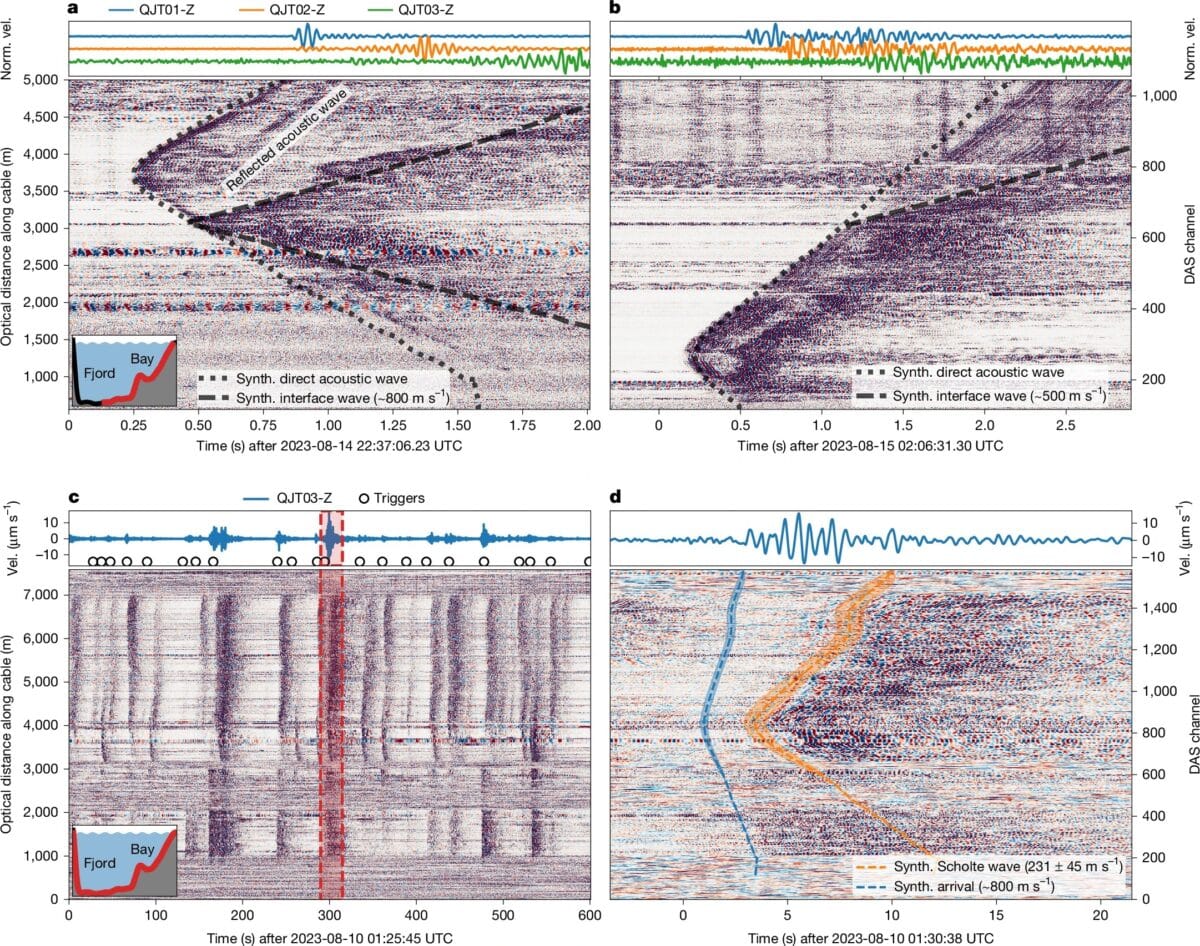
A 10-kilometer-long fiber optic cable laid on the seafloor near a glacier in southern Greenland recorded an astonishing 56,000 ice-breaking events in only three weeks. The experiment has provided remarkable new insights into how glaciers crack, collapse, and reshape the surrounding ocean.
Glacial calving — the process where large chunks of ice break off from glaciers into the sea — is one of the most visible signs of change in polar regions. Along Greenland’s coastline, these events happen constantly, ranging from small fragments to massive icebergs. However, most of this activity occurs underwater and has been very difficult to observe directly.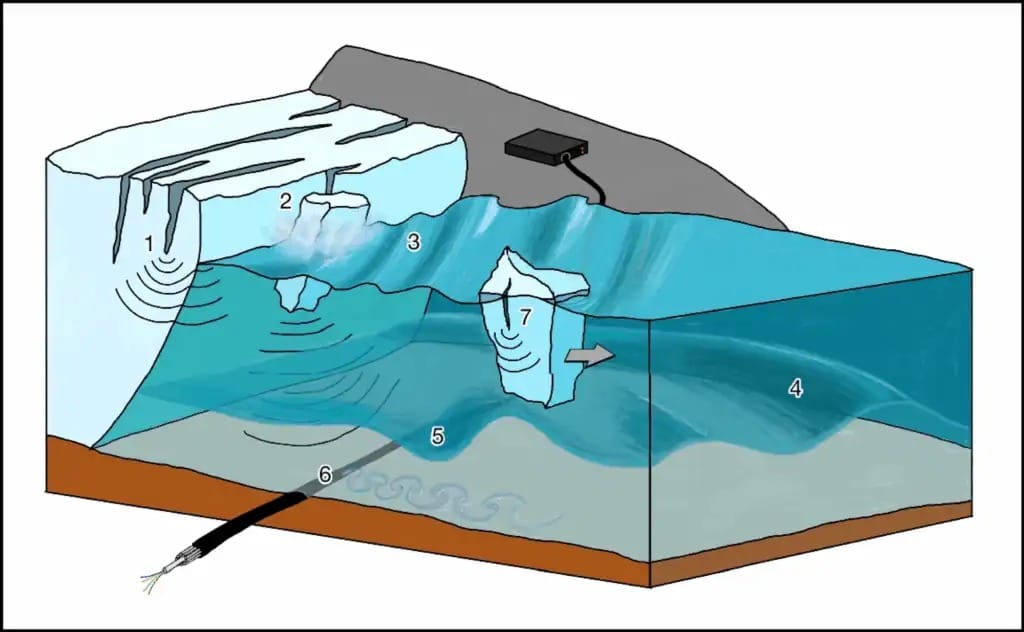
To address this challenge, a research team led by Dominik Gräff from the University of Washington deployed a 10km fiber optic cable across a fjord near the Eqalorutsit Kangilliit Sermiat (EKaS) glacier. The cable was positioned approximately 500 meters from the glacier’s front, turning the seafloor into a continuous sensing system.
The installation required careful navigation through thick “ice mélange” — a dense mixture of sea ice and floating icebergs. The system uses Distributed Acoustic Sensing (DAS) and Distributed Temperature Sensing (DTS) technology. Laser pulses sent through the cable detect tiny vibrations and temperature changes along its entire length, allowing scientists to monitor events lasting just fractions of a second.
This innovative approach has revealed detailed underwater processes that were previously hidden from view, offering valuable data on glacier dynamics and their contribution to sea level rise.